 | |
| Coat of Arms of Israel (Wikipedia) |
It seems few Israelis realized those institutions, that they take for granted, yet often evoke, are under attack--from within. For years Israel has identifed threats to its thriving democracy as country's like Iran or the terrorist organization turned Palestinian political party Hamas (which still refuses to acknowledge Israel's right to exist). For the far right, the threats may also exist in what they call the "Fifth Column" of their society, Arab Israelis. Although there is debate to what qualifies as the Israeli right-wing now, this latter belief has been a benchmark of hardliner Israelis since the nation was founded in 1948.
First some background. Israeli politics have always been, er tumultuous. The Knesset, the Israeli Parliament, was based on the Yishuv that ran Jewish affairs under the British Mandate. After the UK left Palestine, the independent State of Israel formalized an electoral system in which voters choose parties rather than individual candidates in constituencies or districts (South Africa actually does something quite similar). The parties receive seats roughly in proportion to the vote tally they win. The result, is often a situation where no party has a majority, typically a prerequisite of forming a government (by way of comparison, the African National Congress dominates South African elections).
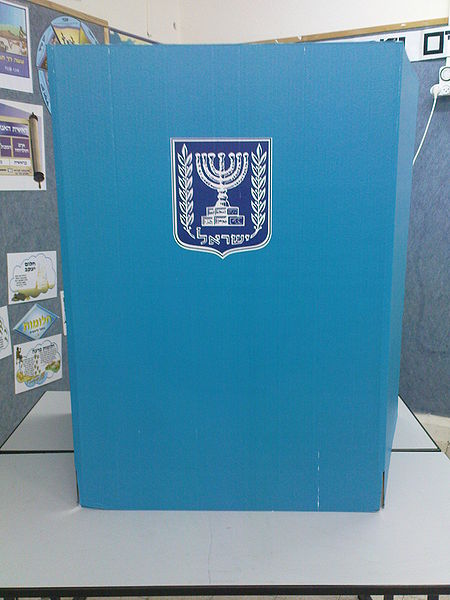 |
| Israeli Voting Booth (Wikipedia) |
Since that time, Israel has rebuffed prodding by President Barack Obama to restart peace talks and shuddered as its neighbor and Egypt underwent a dramatic transformation earlier this year. There was talk of an absurd oath requirement that would have run aground of the secular principles the nation's early founders wanted for their country. Laws were debated and defeated that could have undercut the Israeli Supreme Court's independence. Then the Knesset passed perilously anti-free speech boycott bill earlier this month. It was followed by a measure that would investigate the country's left-leaning Non-government organizations. That bill failed spectacularly, due in no small part to several MK's walking out on the vote. Political observers noted that Prime Minister Netanyahu bailed on the earlier boycott bill, while coalition partner and one-time Labor Prime Minister Ehud Barak skipped the NGO bill.


 Posts
Posts


