Google
Showing posts with label James Welch. Show all posts

Monday, February 13, 2012

Testing Home Rule...

Legislators, aides and union officials at Friday's Meeting
(WMassP&I)
With city schools already more than a week behind schedule and many students still living in temporary housing after last year's tornado, Springfield City Councilors and the city's Beacon Hill delegation are looking to delay the city's participation in Massachusetts Comprehensive Assessment Systems test.  However, the proposal has received a cool reception from state education officials.  A spokesman for the Commissioner of Elementary and Secondary Education seemed to foreclose any delay of more than a few days.

On Friday, at-large Councilor Kateri Walsh, chairwoman of the Intergovernmental Relations Committee held a hearing on home rule legislation allowing the city to push back MCAS testing from March-April to April-May.  The proposal is cosponsored by Walsh, at-large Councilor Thomas Ashe, Ward 2 Councilor Mike Fenton and Ward 8 Councilor John Lysak.  Representatives Sean Curran and Mike Finn and Senator Jim Welch attended.  Staffers from Representative Brian Ashe and Ben Swan and officials from Springfield teachers unions were also present.

The original mover behind this legislation was, according to those present, Springfield Education Association president Timothy Collins.  Collins himself was unable to attend the committee meeting as he was in Washington for an event with US Secretary of Education Arne Duncan.

While there was a consensus among all present that Springfield school children deserved the extra time, however that alone may not make it possible.  The Commissioner for Elementary and Secondary Education, Mitchell Chester, seemed to pour cold water on the idea in a letter to Mayor Domenic Sarno dated February 8th.  While Chester implied he had limited power to delay Springfield's testing schedule, he suggested that a Special Act would actually lead the city to default on meeting state education requirements.  Under any circumstances, failure to meet testing requirements would have severe repercussions for the school district and for students including a loss of funding and a loss of students' chances to meet graduation requirements.
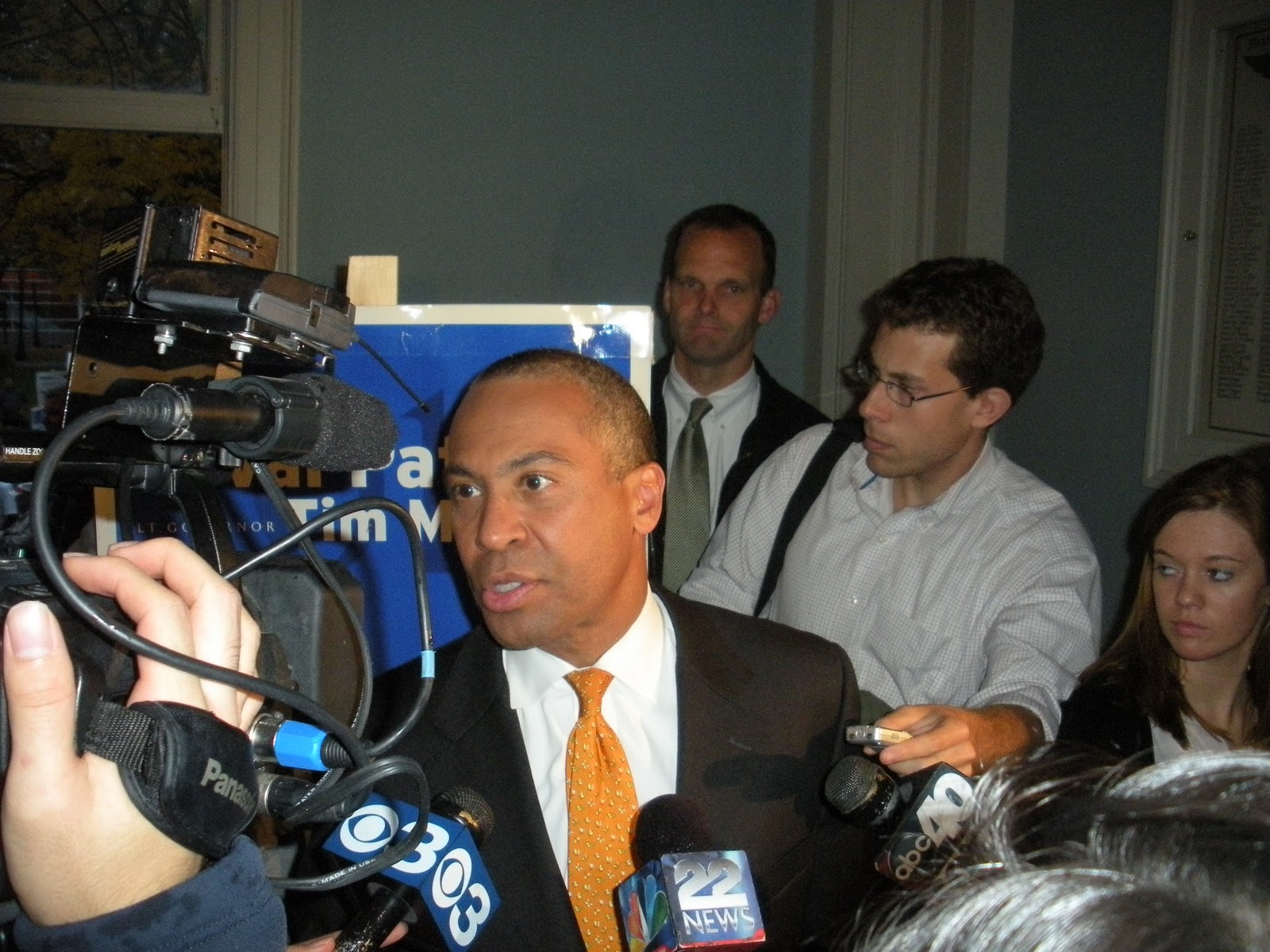
Gov. Patrick in 2010 (WMassP&I)
A home rule petition seems doubly unlikely as would require the Governor Deval Patrick's signature.  As the commissioner is an executive appointee, it is likely that the governor would stand by Chester's assessment and veto home rule legislation that would create an exception to statewide policy the commissioner opposes. 

While unmentioned in Chester's letter, the officials in attendance speculated that cheating among students may be a concern if Springfield takes the test later than its neighbors, which would take the test on time.  J.C. Considine, the commissioner's spokesman, confirmed that the integrity of the test is one, but hardly the sole concern of state education officials

However, the legislative avenue presents other issues as well.  Curran, who sits on the Education Committee and would likely have jurisdiction over the city's home rule petition, said that the legislative process itself could delay a home rule petition beyond March.  Specifically, he noted that the bill would need to clear several committees with lead times of a week or two all before it could be passed by the House, assuming the Speaker puts it on the calendar at all.  A similar process through the Senate would follow.

Councilor Walsh (Facebook)
All officials in the room seemed agreed to pursue a two-pronged effort of home rule legislation and lobbying of the Governor and Chester.  Assistant City Solicitor Thomas Moore assured Walsh that if the Council acted on the petition Monday and the mayor signed it soon thereafter, the measure would be in the office of the clerk of the House of Representatives with a day or so.  However, the Byzantine bill-making process leaves executive action as the likeliest scenario.
Considine, the education spokesman, described the power of the commissioner to give districts a "temporary extension" for testing as narrow.  The commissioner could give districts like Springfield, "a few additional days," but little more than that.   Furthermore, he explained, any longer than that would jeopardize the state's ability to get prompt turnaround from contractors grading the test.  Given that the subject of the March/April tests, English Language, uses many open response answers, the turnaround time is already tight as answers must be graded by humans rather than a machine.  This prompt turnaround has been requested by school districts who want the results to begin planning curriculum for the next year.  Considine said test results in past did not come until some schools had practically reopened for the Fall.

Tuesday, February 07, 2012

The Insight: An Eye To-Ward Greater Representation...

Councilor Edwards (Facebook)
Every individual who runs for office must have some ego.  While Ward 3 City Councilor Melvin Edwards is no different, it is quite obvious after only a few minutes with him that he keeps humility in a sizable reserve.  If that’s a strength, he is going to need all he can get and more as he takes on Senator James T. Welch in what may be the most highest profile primary race for state office in the area this year.

Edwards, a sophomore member of the Springfield City Council, and among the first batch of ward-elected councilors for the city in over fifty years, is not the council’s loudest or highest-profile member.  However, when he does speak, it easy to identify him as among those who may be the body’s conscience, never rushing to a decision and often excoriating councilors, the mayor and others for forcing the body to rush things needlessly.

Whether soft-spoken or eloquently speaking more forcefully at a council meeting or other public venue, it is clear that Edwards possesses a true and real love for Springfield.  That passion for the city is not just boilerplate polito-speak.  Rather it is the conviction of his tone coupled with factoids about Springfield‘s prouder aspects.  (like how Springfield’s Forest Park and Central Park share a connection through fabled parks designer Frederick Law Olmstead).   “My passion is for Springfield,” he said during an interview with Western Mass Politics & Insight.

It is no surprise that Edwards's tone moves between a soft conversational and ministerial, but never sanctimonious.  His mother was a Pentecostal minister, just one piece of the mosaic that forms his background, which includes roots in Pakistan, the West Indies and Native American tribes.  A resident of Springfield for virtually his whole life, Edwards raised his family here with his wife Suzanne.


Councilor Edwards at his desk (WMassP&I)
Edwards won reelection unopposed, like seven out of eight of the city’s ward councilors last year.  However, his initial victory in 2009 was made possible by the circumstances of the city’s changing municipal government.  The race was the inevitable next step for someone who had gone from sprucing up the Maple Heights/Six Corners neighborhood where he lives to becoming President of the neighborhood civic association.  Additional honors of late have included introducing Democratic Senate candidate Elizabeth Warren at a fundraiser for her in Springfield last year.

In an interview with WMassP&I, Edwards described his transition from citizen to public servant.  Well before ward representation was a reality, Edwards and his wife, tired of the condition of their neighborhood, among the city’s poorest, took to picking up garbage on the side of the road.  Their work quickly gained the accolades of other fed up residents and would become the genesis for Keep Springfield Beautiful.  It would be that early activism that led others to encourage Edwards to attend and participate in Maple High/Six Corners Neighborhood Council.

At the neighborhood council, Edwards ascended to president, a position he holds to this day.  However, even the president of the neighborhood council would find it difficult to get adequate responses from city departments.  The police often asked if a gun was involved before sending help on the way, a questionEdwards says is not posed to all neighborhoods calling the cops.  Facing these harsh realities where even the head of a neighborhood council could not get the answers he wanted from City Hall, Edwards and Ward 3 would find an opportunity in ward representation.  Edwards said that in the run up to the 2009 election, many in the neighborhood came up to him and urged him to take up the challenge and represent their ward at 36 Court Street.

Tuesday, January 31, 2012

Our One Hundredth: Invest...in Hamburgers...

Elizabeth Warren Greets White Hut Patrons (WMassP&I)
WEST SPRINGFIELD—Cameras and reporters jockeyed for space in the small dining room of the White Hut restaurant on Memorial Avenue.  It was official.  The race for the United States Senate had truly arrived to the greater Springfield area as Elizabeth Warren greeted voters and sampled the cuisine (hamburger w/ onions) at the legendary burger joint.

Warren arrived at White Hut with State Senator James Welch and Representative Michael Finn, both of West Springfield at about 12:30.  She spent the first few minutes of her visit slowly moving down the line of patrons sitting on the stools facing the counter.  Warren, who has never run for office before, showed off how much of a natural she is at retail politics, which has surprised many within an often skeptical media.  Patrons and staff, in response received her warmly and offered more than a few words of encouragement.

Reporters chatted with patrons and Warren staffers as the candidate conversed with Welch and Finn over some of the restaurants trademark hamburgers.  Patrons came and went during the busy lunch hour some bewildered by the mob, some stopping to greet Warren as she and the West Springfield elected officials lunched.


Sen. Scott Brown last summer (WMassP&I)
Meanwhile more than three hundred miles away, the man Warren seeks to unseat, Scott Brown, was making his own moves to secure reelection.  Working in tandem with several Democrats and armed with 90+ votes on a procedural action in the Senate, Brown touted the Stop Trading on Congressional Knowledge Act.  That proposed law would ban members of Congress, their families and their staffs, from using material information they glean from their duties to make stock trades. 

Originally, Brown and New York Democrat Kirsten Gillibrand introduced two separate bills, but they have since been merged into one committee bill.  Brown’s bill was the weaker of the two and attracted considerably less support than Gillibrand’s, but as Brown is a member of the committee with jurisdiction he has been given equal billing with Gillibrand.  Until recently, Brown’s public statements on the bill omitted any mention of Gillibrand.  The New York senator’s public comments, by contrast, often alluded to Brown.

The STOCK Act became the latest political football in the Massachusetts senate and the latest in a line of efforts on the part of Brown to appear more moderate since Warren announced in September.  Brown has voted somewhat more often with Democrats since last Fall in contrast to the first half of his term.  Indeed, Brown hurriedly walked up to President Barack Obama after the State of the Union to pitch the bill.  The president had alluded to the issue of congressional insider trading in his address.


Warren w/ Rep. Mike Finn and Sen. Jim Welch (WMassP&am
During an impromptu press conference Warren held after lunch, several reporters asked Warren about the insider trading legislation.  Mirroring comments she made on The Last Word with Lawrence O’Donnell last week, Warren said she is “delighted to see it go forward.”  However she added an important caveat.  She wants to see the legislation take on stronger language. 

Specifically, Warren called on Congress to ban legislators from owning stock.  The thinking being that legislators should not be writing laws that could benefit the companies they own through shares.  For her part, Warren has committed herself to selling long held shares in IBM once elected to the Senate.  Brown, by comparison, is said to own shares in banks that benefited from the weakening of the 2011 Wall Street reform law, concessions Brown extracted from Democrats in exchange for his filibuster-ending vote.

Almost on cue, Warren’s request became a reality and entered the consciousness of the Senate thanks to a Senator Brown.  Not the Massachusetts Republican.  It was Sherrod Brown, Democrat of Ohio, who announced today that he would propose an amendment to the STOCK Act that would ban the ownership in company shares for elected federal officials.  As reported by Greg Sargent of the Washington Post, the Ohioan is quoted saying, “I want to see us go further. Why should members of the Senate vote on issues that affect the oil industry while owning oil industry stock? This is pure, it’s simple, it’s clean, it’s direct.”
  

Sen. Sherrod Brown D-OH (Official Site)
Whether Sherrod Brown's amendment finds its way onto the bill or not, it has the effect of upending Brown’s good press on the subject.  If Scott Brown supports the amendment, Warren gets to one-up him as she pushed for the change from the outside.  If he opposes the amendment, Warren can hammer him.  Even if the amendment never gets a vote, Warren can still hang it around the Massachusetts Republican’s neck.

For all of the talk of the STOCK Act and the policy that will play a huge part of the campaign, Warren seemed to genuinely enjoy her White Hut outing.  She noted that the restaurant had been in business for three generations and that it was encouraging to see a small businesses like that prosper.  Warren added that she liked being able to talk to people.  When asked what patrons said to her as she greeted them, Warren said they were telling her, “Keep it up, girl.”


Warren also fielded questions about her and Brown's historic anti-SuperPAC pact and her work for Travelers Insurance.  Warren consulted for the insurance company on a Supreme Court case which, if decided, differently, could have damaged the effectiveness of compensation funds for victims.

Warren departed for Springfield to meet with Mayor Domenic Sarno and tour tornado damage in the city.  That meeting and tour were closed to the press, but was followed by a public visit to Lenox Tool in East Longmeadow.

Wednesday, January 04, 2012

Another Battle for the Senate...& Iowa...

We have some pretty big Massachusetts political news bubbling up from the streets of Springfield, but first a quick word on Iowa.  Willard Mitt Romney should have stayed away.  Yes, he won by eight votes, but unlike the polls that raised up and slapped down anti-Romneys before, the effective tie Rick Santorum secured means Romney will be spending valuable time and money batting him away for weeks to come.  Santorum has a heavy lift garnering money and supporters, but with Michele Bachmann out and Rick Perry effectively so, Romney will have to slog through a probable South Carolina loss and a possible a Florida defeat, too.  By Michigan, he should be alright, but he will be damaged and he will still not be the best candidate to lead a fractured GOP into the general election.  

Nevertheless, Democrats should remain nimble.  They have spent a great deal of time sharpening their spears for Romney, but they should at least prepare for the unlikely possibility of a Santorum challenge, if for no other reason that he could be a possible Vice-Presidential nominee.

Councilor Melvin Edwards (Facebook)
Now onto the local political fun.  WMassP&I has confirmed that Springfield Ward 3 City Councilor Melvin Edwards will challenge James Welch in September's Democratic Primary.  Sources close to councilor say he will make a formal announcement within a couple of weeks.  Edwards was elected in 2009 in the city's first Ward elections in decades and was unopposed in November's municipal elections.  He was sworn in Monday for another two year term.

Although Edwards's ward in 2009 featured meek turnout, he won with 62% of the vote.  Since joining the council Edwards has usually been among the more fiscally vigilant bloc of the council.  His ward, which includes the South End and Six Corners sustained heavy damage from the June tornado.  Indeed, Edwards himself recounted his own harrowing experience during the twister at a council meeting following the storm.  Edwards was among the early supporters of at-large Councilor Jimmy Ferrera's bid for council president which many saw as an attempt to smooth over their otherwise less than ducky relationship.  Edwards has on more than one occasion sparred with Ferrera often to the latter's embarrassment.

The opportunity for Edwards to challenge Welch came about from redistricting.  Seeking to avoid the embarrassing violations of the Voting Rights Act during redistricting after the 2000 census, Beacon Hill's redistricting committee significantly rebuilt Welch's district to make it minority-majority.  Agawam was dropped from the district, while several minority portions of Springfield extending as far as Indian Orchard were brought in.  Minority communities in Chicopee were also drawn into the district.  Whiter parts of Springfield, particularly in Forest Park were deposited into Gale Candaras' District as well.

Friday, September 02, 2011

Something Old, Something New...

Sen. Welch Meets Supporters in Springfield (Facebook)
Last night at Samuel's at the Basketball Hall of Fame a fairly common event for politicians took place, but there was, for Springfield, an uncommon element to it.  Senator James Welch, who is in his freshman year as a State Senator, chatted with area politicos and members of the Young Professionals Society of Springfield.  However, none of them were called or received an invitation in the mail.  The event was organized entirely on Facebook.

There is absolutely nothing new about Facebook, Twitter and other social media tools' impact on politics.  However, the Springfield area, and this extends beyond the city itself, has largely lagged behind the times with regard to the march of technology.  The political and democratic infrastructure in the area is rusted over and ossified.  The effect may be partly seen in the disinterest in the city's ward races the rarity of challenges to incumbent legislators either in primaries or in generals.  With the march of this new technology and communication techniques, the reliance on the old means of voter communications have only furthered disaffection among younger voters.

While many members of the YPS are about Welch's age, 35, and therefore came to maturity well before Mark Zuckerberg withdrew from Harvard or before tweets were anything more than bird noises, many are fairly savvy with social media.  Indeed a diverse swath of old guard politicians from Kateri Walsh to Ben Swan are on Facebook, but largely just as individual people.  There is little, if any, utilization of social media beyond this.  Half of the Northampton City Council has active twitter accounts, no members of the Springfield City Council do, Jose Tosado excluded, whose account went active when campaign season began.

The relative success of the fundraiser--about 25 people showed up, filling up the small reserved room--held in an off-year, suggests that future events and fundraisers may rely on Facebook at least as much if not more than traditional mailers and calls.  As the fundraiser also drew some who were not necessarily the typical Valley political hangers-on, use of such social media to organize events may help liberate some idealistic officials from pandering to the same pools of donors that expect access and results.

It is too early to tell what or whether this is the beginning of a trend, but it is an encouraging sign for the Springfield area's democracy in that some are seeking more creative ways to engage the public.  Voter apathy and fatigue are rampant throughout our society, further assisted by outright disenfranchisement that threatens people's access to the polls.  However, the problem has been particularly pronounced in Springfield as compared to Northampton or Boston.  Correcting it could be a step in the right direction in improving the regions economy and civic life.

Thursday, November 18, 2010

Surveying the Wreckage: The View from Beacon Hill...

Gustave Dore's The Enigma
More than two weeks from the election, here in Massachusetts too, bodies litter the political battlefield.  Their stricken bodies lay there, teeth still gnashed, fists clenched, and determined scowls plastered to their faces.  While more than a few Democrats add to this scene, overwhelmingly, the slain are Republicans, many with teabags still in hand.  Democrats swept every Congressional District, 36 out of 40 state Senate seats, and every statewide office, most notably the governor's.  Republicans only made gains on a handful of seats in the Massachusetts House of Representatives.

CT Senator-elect Richard Blumenthal (wikipedia)
This event would be just another Massachusetts political quirk were it not for two things.  One, as a state, we are to some a godsend and to others a culprit for Democrats losing their 60 seat majority in the Senate by sending Republican Scott Brown to fill out the late Edward Kennedy's term.  Two, we were not alone.  In Connecticut Democrats swept statewide races and all Congressional seats, including the open Senate seat going to AG Richard Blumenthal.  In Rhode Island, Democrats took both seats including the open seat of retiring Congressman Patrick Kennedy, son of the Bay State's late senator.  Former Republican Senator Lincoln Chaffee, a liberal, won the governor's office as an independent.  Across the country in Washington state, only one Congressional seat went Republican and the same appears true in California.  While in many crucial Midwest states and others like Florida, Democrats were beaten soundly, in states most akin to Massachusetts the damage was much less severe.  Indeed, only in New Hampshire was there a true Republican takeover (or takeback) in New England.  In Maine, while Republicans did win the Governor's office (by a limp 38% plurality) and the state house, both Congressional seats remained Democratic.

So while Scott Brown's election may have heralded the Democratic losses nationwide, the message was largely ignored or otherwise not felt in the good Senator's own home state.

US Rep-elect Bill Keating (candidate site)
Notably, the only Massachusetts congressional seat that was not secured with an absolute majority was the open seat of retiring Congressman William Delahunt whose South Shore/Cape Cod district went heavily for Scott Brown.  Despite heavy lobbying by the state's Republican US Senator, Norfolk County District Attorney Democrat William Keating beat Cape Cod state House rep Republican Jeff Perry by four percentage points, missing a majority by as many points.  Perry lost traction after his role in a strip search controversy when he was a police sergeant came back to haunt him.  The story had come up when Perry first ran for state rep in 2002.  Notably, Keating pulled off the win despite Deval Patrick losing much of the district.

In other Congressional races, Reps Ed Markey and Stephen Lynch both took in 2/3 of the vote.  Niki Tsongas and John Tierney also held off challengers in their North of Boston districts.  Tierney's race deserves some notice as his wife had plead guilty to tax fraud in an October surprise, but it did not translate into any traction for his opponent Bill Hudak, who filed a lawsuit for defamation in the campaign's closing days.  Barney Frank survived a tough challenge, but secured a respectable majority as well.  Worcester area Congressman Jim McGovern also survived a challenge.  Cong. Mike Capuano, who represents most of Boston, as well as Cambridge and Somerville was unopposed.

Cong. Richard Neal (WMassP&I)
To hear the right-leaning commentators tell the story, the results in Western Mass would suggest wins for Congressmen John Olver and Richard Neal by a hair.  In fact, Olver secured the third highest percentage of the vote of the nine contested Congressional races.  Olver, who by far has the largest district in terms of geography scored several decisive wins in a town by town analysis.  He carried some towns in the conservative Westfield area, including that city.  He won big in the cities, Holyoke, Pittsfield, the Adamses, and Amherst and carried many small towns.  The Republican Bill Gunn scored only significant wins in some towns including, notably Southwick.  Olver lives in Amherst.
 

Richard Neal, by comparison, may not have won by the same margin as Olver, but still cleaned up.  His decisive, if not massive, fourteen point spread was right in the middle of for Mass Congressional victors' margins.  Neal dominated in Springfield, Northampton, and the surrounding suburbs.  His opponent, Tom Wesley, only picked up leads in the far eastern small towns of the district.  However, Wesley, a tea party supported candidate, lost the district's metaphorical eastern punctuation mark, Milford.  The preponderance of Wesley signs belied the actual support he had in the Western more populous end of the district.  Even with low turnout in Springfield, the city's conservative suburbs flocked to Neal, obviating any absolute need for an edge in the city itself.  Had turnout been higher in Springfield, it seems unlikely that Wesley could have broken Neal's four-to-one edge. The city's lowest turnout was in areas that almost universally go Democratic  Neal lives in Springfield.

Gov. Patrick in Springfield  (WMassP&I)
On the statewide level, Governor Deval Patrick scored a major victory by winning, by plurality, a second term.  A graphic from the Boston Globe showed a town by town result of the Governor's race.  It is clear Western Massachusetts, the islands and Metro Boston form the governor's strongest support.  Notably Western Mass exercised considerable sway in this election.  Otherwise, the Worcester suburbs and the North and South Shore suburbs were friendly to Republican Charlie Baker.  These numbers are distorted, however, because the race was a four-way.  While Green Party candidate Jill Stein negligibly hurt Deval Patrick, the conventional wisdom was that Independent Tim Cahill siphoned conservative votes from Baker.  However, Cahill's pro-tea Party proclivities were not widely reported, so it is just as possible that towns that Patrick lost narrowly might have gone to him if some Cahill votes went to him.

Auditor-elect Suzanne Bump (WMassP&I)
Still, Patrick won by 140,000 statewide.  Strong turnout in Democratic bases and in the above areas pushed him over the edge.  Generally good economic news raised Patrick and the spat between Tim Cahill and his staff defections to Baker probably hurt both candidates.  Further evidence of an overall Democratic tilt to the electorate can be seen in the other Constitutional office races.
 

Martha Coakley, who lost to Scott Brown in January trounced political newcomer James McKenna.  Suzanne Bump a former Patrick cabinet member beat out Mary Connaughton, who was this blog's token Republican endorsement also by plurality, the Globe map mirroring Patrick's.  Notably, the Green party candidate in that race captured more of the vote than Stein.

Treasurer-elect Steve Grossman (WMassP&I)
Perhaps part repudiation of his opponent and part his more realistic plans for the office he sought, Democrat Steve Grossman handily defeated GOP candidate state rep Karyn Polito.  Grossman's campaign focused on common sense changes to the Treasurer's office and government openness.  Polito is probably best remembered for slowing down passage of a supplemental spending bill in the State House of Representatives even after her party gave the green light.  Ironically, the bill passed when Polito got caught in traffic on her way to Beacon Hill.

Republicans did pick up a dozen or two State House seats.  In western Massachusetts Nicholas Boldyga defeated Rosemarie Sandlin.  The Agawam Democrat's loss has been attributed, at least in part, to a third party race.  Otherwise, incumbents like Angelo Puppolo and Brian Ashe won their races.  Puppolo's victory was pretty solid.  Ashe won by two points.  In a Republican year, his opponent seemed a shoe-in, but a Democratic bend in Longmeadow, and help from Monson and the lone Springfield precinct in the district along with Republican Marie Angelides poor personal turnout in past elections left her weak going into the race.  The open West Springfield seat vacated by Jim Welch to run the seat of retiring State Senator Steve Buoniconti went to Democrat Michael Finn.

State Senator-elect Jim Welch (Facebook)
In the State Senate, Republicans actually lost a seat as Richard Tisei, Charlie Baker's running mate left an open seat snapped up by state rep Katherine Clark.  Senate President Therese Murray survived a tough challenge, but came out on top by four points.  In Western Mass, Jim Welch won the seat of Stephen Buoniconti (who lost his bid for District Attorney to Mark Mastroianni, who ran as an independent).  Welch only lost the hometown of his opponent City Councilor Robert McGovern.  Gale Candaras won every town in her district except for East Longmeadow.  Senator-elect Welch and Senator Candaras' districts split Springfield in half.

The half and half victories on Beacon Hill for Republicans may actually benefit Deval Patrick more than the GOP as they may form an inadvertent bulwark for any potential Patrick vetoes.  Otherwise, it may simply serve as an incubator for later races for the State Senate or Congress.

The true victory, may not come in the form of Democratic sweeps, but in voters' wise rejection of Question 3, which would have slashed the sales tax to 3%.  The vote would have severely hampered the state's ability to deliver essential services ahead of a projected deficit for the next fiscal year.  This blog has been critical of the increase in the sales tax and remains sure some savings still exist, but the ballot initiative was too far.  Voters, apparently agreed.  Registering some concern for taxes, voters did approve chopping the sales tax from alcohol purchases.  Oddly, polling had until the end consistently suggested the opposite result, but ads that explained, if a little oddly, the double taxation of the alcohol tax won the day.  This will likely signal to Beacon Hill that while voters rejected slash and burn budget cuts, they are not to be taken for granted.  Voters in Massachusetts recognized the need for taxes, however, inconvenient, especially during a recession.  However, the argument that education resonated with voters and having seen layoffs already, voters decided to hold the line to extent that they can.

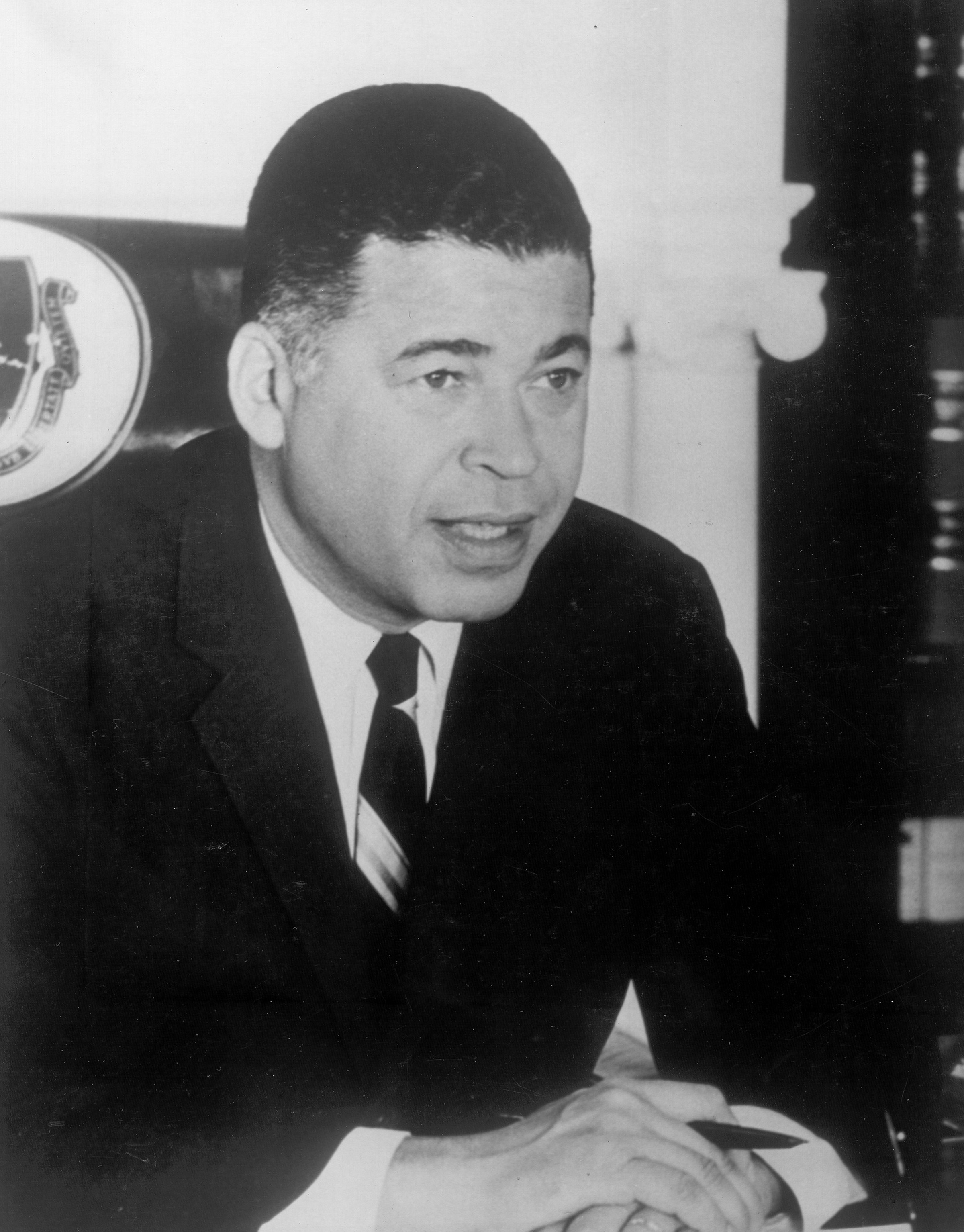
Former US Senator Edward Brooke (wikipedia)
In an election year that the pummeled Democrats, Republicans actually needed victories in New England beyond New Hampshire.  Few thought that they could ever return to their pre-JFK strength in Massachusetts, but at the very least they would like an 80's sized minority and a solid gubernatorial win.  It would have made them competitive in New England generally to hold the line when the GOP loses the districts they otherwise won this year.  Remember, when Democrats lost the House in 1994, the GOP already held seats in Connecticut and Massachusetts that Dems won in 2010 by healthy margins. 
 

Just as importantly, it calls into question the GOP's chances for non-Gubernatorial statewide races.  Treasurer is the only non-Gubernatorial Constitutional office (held by Joe Malone, who lost the Republican nomination for the 10th Congressional district to Jeff Perry) Republicans have won in 40 years.  Before that  Elliot Richardson was the last Republican elected for another statewide office, Attorney General.  His last elected predecessor?  Edward Brooke, the first black Senator since Reconstruction and also the last Republican Senator from Massachusetts until...

...Scott Brown.  The telegenic captain of the New England Republican advance still stands, safely two years removed from reelection, the bodies of his Bay State comrades largely strewn all about.  Looking over his shoulder, Brown now has the target on his back.

Sen. Scott Brown (Boston Herald)