Google
Showing posts with label John Boehner. Show all posts

Friday, April 08, 2011

Shut 'Er Down or Shut Up You Mouth...

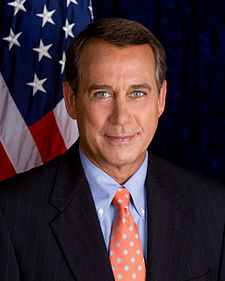
Speaker John Boehner R-OH (Wikipedia)
So this is what it comes down to.  Reports are swirling that the number agreed to by Democrats and Republicans is roughly $40 billion.  While Speaker of the House John Boehner R-OH, insists that a number is not set, it seems likely that it has.  The sticking point, what may very well shut down the federal government tonight is Planned Parenthood.  Republicans charge the institution that provides reproductive health services for many, largely low-income women, should not receive the money because they provide many abortions in the United States.  Under current law, however, the money Planned Parenthood receives only pays for non-abortion services, including birth control, cancer screenings, and care for venereal disease.

This entire debate is in many ways very bizarre.  If in fact the issue is Planned Parenthood in particular and family planning in general, then the Republicans have made a tactical error that will confirm to many voters that they are in fact not worried about jobs.  It also serves to mitigate some claims by tea partiers that they are in fact, libertarian.  Although tea party Illuminati have tried to disavow the cause of social issues or cloak it in fiscal responsibility, many rank and file are not truly libertarian in that they are quite rabid about social issues.  Were this not the case, Boehner, who is ostensibly being held hostage by his right flank, could cut a deal.

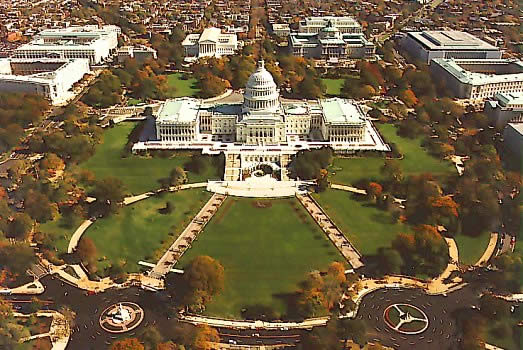
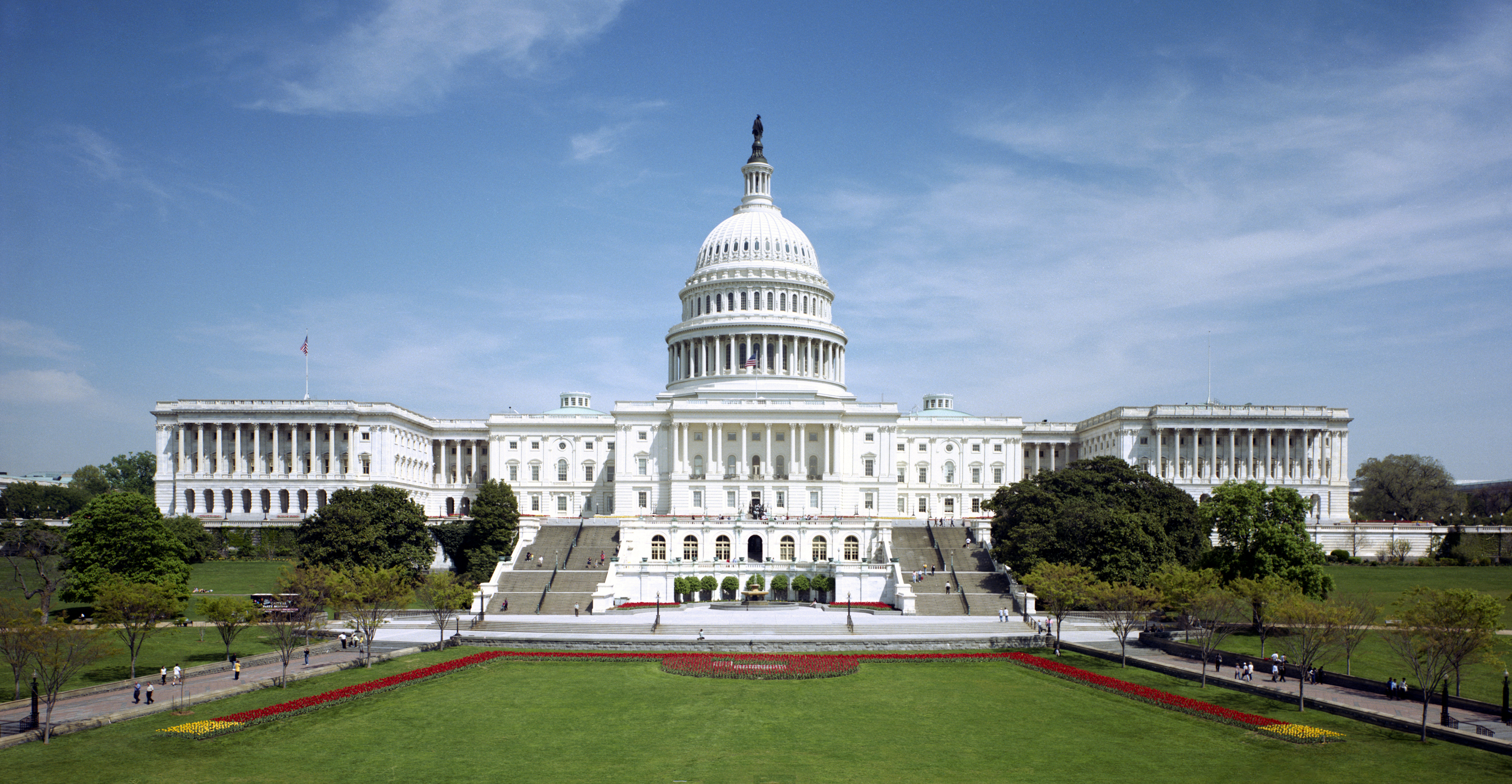
Capitol Hill (wikipedia)
As America's first tanorexic Speaker (no offense to true anorexics), Boehner is in an unenviable position.  As many from the right, left, and middle have said, Boehner, a 20 year veteran of the House, is used to cutting deals.  The bulk of his caucus's freshman are not.  In fact they see deal cutting and compromise as among the evils that have brought on the country's troubles.  Boehner could bring a deal to his caucus and get a fair amount of support for it.  Coupled with Democratic votes, there would be a majority in the House and the Senate, equally eager to end this madness would quickly pass it.  However, that would fracture the GOP House caucus and expose Boehner to a challenge for speaker.  Eric Cantor, compared to a "yapping chihuahua" in a Matt Taibbi Rolling Stone article slamming Boehner for general buffoonery, would gladly come to the fore.  Even worse for Boehner, he could face a tea party challenge back home in Ohio.

For President Barack Obama and Senate Majority Leader Harry Reid, Boehner is by far the lesser of two evils.  Still, to keep him in power would mean giving up everything, which is untenable for Obama and Reid both from a policy and from a political point of view.  The left wing of the Democratic party has been muted throughout this process, especially as defense cuts began to enter the equation (although this is unconfirmed so far).  While the discretionary cuts disgust liberals, they become a bit more tenable if the defense/security budget is open to reduction as well.  Moreover, liberals used to abuse from the Democratic party anyway, know that bigger fights lie ahead and they cannot afford to  start an intra-party war like the one on the other side of the aisle.

Food Stamp Logo (wikipedia)
The cuts themselves are quite painful.  With Republicans in Congress clinging to the trickle-down myth of lower taxes for the rich though, only some carefully chosen cuts can show an effort to seriously and responsibly bring down the deficit (remember many mandatory spending programs, like food stamps are triggered by need and rise when more Americans meet eligibility).  Not to mention, some of the cuts to which Democrats are agreeing are for things they want out anyway.  Still, the cuts are all the more painful since they are only from the 12% of the budget that is non-discretionary and non-security.  Bloated budgets like defense and security are largely left untouched (the contractors which benefit contributing heavily to campaign coffers and dangling jobs in Congressional districts protect it)

Whatever the outcome of this misadventure, Democrats must be wary of allowing the GOP to force debate to the extreme right by passing budgets and legislation that epitomizes extremist lunacy.  Democrats thinking they could pass a budget with zero cuts was a pipe dream.  The best barometer to compare Democratic action is the budget vote earlier this month (that got Scott Brown in trouble) when they suggested a paltry $10 billion in cuts.  From a mere policy perspective that was generous, but politically it was not.  Still, they have been drawn into considering cuts up to four times that amount.  If the same thing happens with Rep. Paul Ryan's budget (oh, just you wait until we get our proverbial hands around his metaphorical neck), then the nation and the Dems are in real trouble.

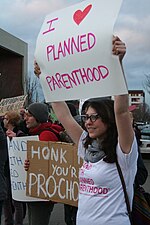
Pro-Planned Parenthood
(wikipedia)
Right now, with Planned Parenthood front and center, it is not surprising some Republicans in the Senate are trying to get the House to drop the issue.  Anti-choice Senators like Tom Coburn and Pat Toomey know they stand less of a chance of becoming committee chairman if (self-proclaimed) "moderates" like our boy Scott Brown are caught voting for another budget that sticks it to women's health.

Still, the House GOP is unmoved.  The right flank wants what it wants.  It believes that government is inherently bad and incompetent.  Unfortunately, they are now a driving force in that government and no less than partly responsible for the bumbling that results in the government shutting down.  If government fails at this point, it is because the tea party/right wing forces it to so, not because government naturally sucks.

Tuesday, January 25, 2011

Mayoral Moves vs. the Record's Reality...

 **UPDATE 1-27-11: Jose Tosado has announced his run for mayor of Springfield according to WFCR.  Tosado was widely expected to announce his run this week.**

Pres. Jose Tosado (Facebook)
What do John Boehner and Jose Tosado have in common?  On spec, not much.  One is corporate Republican the other a Democrat in a non-partisan office.  One has two jobs mentioned in the US constitution the other has a position that could along with the whole city of Springfield, in theory, be wiped away on a whim of Beacon Hill.  One leads a party more than willing to attack Hispanics or any immigrant group at every turn.  The other, well, being Hispanic, that would just be bizarre.

However, there may be a key connection between the Ohio Republican and the head of the Springfield City Council.  Both have set the stage for political promotion by demonizing the actions others and repeating a mantra of cutting spending and promising lower taxes or fees, minus, of course, the record to back it up.  Jose Tosado will likely announce his intention to run for mayor this week, probably Thursday. Tosado was not contacted for this report.


Speaker Boehner (wikipedia)
What equates Tosado to Boehner, is not just his anti-spending tone, but rather its misplaced nature.  Springfield and the federal budget (defense excluded) actually does not have a lot of give unless we want to horrible cuts to critical programs whether it is police and fire in Springfield or food stamps and infrastructure for the feds.  Instead, Tosado turns to the department heads and their salaries not unlike Republicans going after civil servants.  Some slimming is possible, but Tosado wanted no part of it in June and failed to call out Sarno on the use of last year’s surplus to pay for things cut from this year’s budget.


Briefly, this is not a pro-Sarno post.  Sarno is way out of President Barack Obama’s league and Boehner is somewhat shorthand for his party’s claims and contradictions.  Moreover, Sarno has made his share of missteps, which do not go unnoticed and may be at least as unfortunate as Tosado’s posturing.


During the trash fee debate, which lasted little under one City Council meeting, Tosado successfully counter-scheduled his own trash fee repeal--a redundant ordinance--on the same day Sarno’s request for a home rule petition to extend the same fee was up for a vote.


Mayor Sarno (Facebook)
The mayor and his staff blew their chance to keep the trash fee as it was then.  They had failed to describe the financial realities and allowed a healthy fiscal image to be juxtaposed against one that needed the revenue.  Impending local aid cuts were not emphasized.  Moreover, the proposal Sarno unveiled Monday, with three different sized barrels, should have come out much sooner.


What was most telling about that debate was how Tosado phrased it.  Tosado derided spending by the city, oddly enough,  on “spokesmen” by city departments among other things.  He ridiculed the mayor and his staff’s admittedly convoluted assessment of the city’s finances, but then picked the healthier side anyway.  At the same time he attacked supporters (and abstainers) of Sarno’s trash fee proposal for not being “here,” that is city hall, and not seeing what is going on.


However, Tosado’s proposal and his simultaneous denunciation of spending was equally disingenuous.  It was not because Tosado did a 180, like Sarno, on the trash fee (from for to against it).  Rather it was because the council president’s comments simply do not match his record


During last year’s epic budget battle, the City Council actually voted down Sarno’s budget, as they had amended it.  After being advised that by merely acting to amend the budget, they had fulfilled their statutory obligations for passage, the City Council re-voted to save face and passed it.  The amended budget successfully cut less than $500,000 from a half billion dollar budget or less than one tenth of one percent.  Tosado voted for adoption of the budget both times.


Councilor Tim Allen (campaign site)
The record of the budget votes (as obtained from the City Clerk) reflects that Ward 7 Councilor Tim Allen said that he was elected to seek some tax relief after residents suffered years of sharp increases caused by the city’s lopsided property values.  As such Allen and other councilors sought to cut $2-3.5 million from the budget, particularly from the $110 million of the budget that could be legally cut.  Sarno was not at all helpful in councilors’ efforts to find loose change in the city couch cushions, but Tosado then did not call him out on it.

Tosado’s vote does not appear alongside very many of the individual cuts that were suggested by councilors either. In fact, many of the votes he joined, had large support for reduction of personnel-- namely in professional hiring (HR) and finance and administration. Similar sized cuts in DPW and Parks were proposed, but voted down with the help of Tosado's nay. He picked the cuts that would not alienate any particular constituency like personnel and fiscal watchdogs. Alternatively, Tosado could have had then-Council VP Twiggs moderate debate while he proposed his own cuts. The record reflects no such move. That is not to say that the approved cuts to those departments are inherently bad, but they stand out as conspicuous priorities, unless paired with equal pain across city departments.

Property tax rates in Springfield would fall, somewhat symbolically, but due to Sarno’s ability to use property values to his advantage as well as $1 million out of the city’s savings.  It had nothing to do with Tosado’s newfound sense of fiscal restraint.

Bud Williams (Facebook)
What this reveals is what may be a false choice for voters in Springfield come November.  Assuming the contest does become Sarno and the Tosado, the latter will be as much of a creature of the Springfield establishment as Sarno.  In that way, Tosado is very different from Sarno’s last opponent, Bud Williams whose contributors differed from the typical Pioneer Valley names.


Among the names that appear on both Sarno and Tosado’s campaign reports according to the State Office of Campaign and Political Finance: Frank Colaccino, head of Colvest and according to certain sources a major roadblock to planning and zoning reform in Springfield; members of the Callahan family, owners of Palmer Paving and behind the Page Blvd. biomass plant (Tosado is one of 4 members of the City Council that voted for the permit that is still on the council); Gary Cassanelli, the city’s fire commissioner; Heriberto Flores, head of the New England Farm Workers Council; IBEW Local 7; Dot Lortie, a well-known real estate agent; Judith Matt, Spirit of Springfield Director; members of the Picknelly family; and the Pioneer Valley AFL-CIO.


Do not read too much into this, yet.  That any given candidate received money from these contributors does not suggest anything bad itself.  What will be interesting to watch,  Tosado’s contributions rise during the mayoral campaign, is how many contributors donate to both candidates’ campaign possibly blurring any difference between the two.


The Campanile (WmassP&I)
It is one’s record that defines who they are and where they stand, not necessarily their contributors (although it can clear things up).  Tosado inadvertently may have tipped his hand as a consumate insider by saying other councilors were not at 36 Court like he is.  The suggestion is that he is pulling levers, lobbying his colleagues and whipping support, something many councilors lack the time to do.  Consequently he can push his agenda, as in the trash fee, while pulling back from politically inconvenient votes, like cuts to Parks and DPW, whose unions‘ support he will need in the election.


With his announcement due this week, the spotlight will turn to Tosado.  If Tosado wants his anti-trash fee, fiscal restraint proposal taken seriously, he will need to press and vote for cuts that affect the entire city.  Otherwise, Tosado may find himself the target of the same charges of hypocrisy he will likely level against Sarno.

Thursday, January 06, 2011

They're Back...unless They Filibuster...

Speaker Boehner (wikipedia)
The 112th Congress was gaveled into session in Washington, D.C. yesterday  Republicans took over the House of Representatives and swore in Ohio Congressman John Boehner as the Speaker of the House.  While a great deal of the GOP’s support came from tea partiers, Speaker Boehner is a creature of the Republican establishment. 

Despite his lieutenants hyperbolic assessments of the last Congress and the paranoia of his budget committee leader, John Boehner may be the most reasonable man in the room.  Keenly aware of how Newt Gingrich detonated the effectiveness of his caucus’ majority (of which Boehner was a member), he will try to navigate his party‘s new possibly bipolar plans.  However, if President Obama courts (or exploits) him correctly, it will be for the good of the country and at the end of the day even Boehner would be unlikely to dislike the results in his heart of hearts. 


Rep. Pelosi (wikipedia)
Nancy Pelosi handed over control of the House to Boehner, but not before giving a speech highlighting the past Congress’ accomplishments and praising Boehner commitment to family, God and country [no sarcasm, no really].  Pelosi, in passing a conspicuously large gavel selected by Boehner, noted the peaceful transfer of power that indeed, does define our country.  Now, if only Boehner encouraged his people to tamp down on the cruel personal attacks waged against Pelosi during the campaign.

Already the promises of the GOP have been broken, particularly on the budget.  Freshman Republicans, tea partiers included, have run into the warm embrace of Washington’s power structure.  However, some changes may benefit Democrats since the minority will, supposedly, have more access to offer amendments.  The planned reading of the Constitution apparently went by without much problem, although the NY Time's
Caucus blog did report some protesters.  Overridden elements of the Constitution like 3/5 of a person and Prohibition were left out.  The reading was meant to placate tea partiers, who seem to believe that a plain text reading naturally yields to their viewpoint and theirs alone.  Again, look to the New York Times for how it is not quite that simple even with plain text readings.

Over in the Senate, the Republicans gained six additional seats, but otherwise remained in Democratic control.  Only three Senate seats were up in New England.  Republican Kelly Ayotte of New Hampshire and Democrat Richard Blumenthal of Connecticut joined the Senate while Democrat Patrick Leahy of Vermont was sworn in for another term.  There was no changeover among New England Senate seats.

On tap the first day was a host of proposed filibuster reforms.  Indeed, the consensus is that while usually rules changes (which filibuster reform would be) require 67 votes, at the beginning of a new session, the Senate may change its rules with a simple majority. 
The Senate adjourned today without making the changes, but technically the legislative day did not end.  Instead it will be held open while Democrats and Republicans attempt to hammer out an agreement and failing that, they may act unilaterally.

Friday, November 12, 2010

Surveying the Wreckage: The Message from Obama...

Although it will probably not be the 11th, when most are reading this, we would like to take an opportunity to recognize that it is Veterans Day.  Unique among most federal holidays in that it does not float to the nearest Monday, Veterans Day was established to commemorate the end of major fighting in World War I.   Their sacrifice is not diminished or emboldened by the motives or reasons behind their mission, but that sacrifice is always worthy of our thanks and appreciation.

In our second part in looking at the midterms aftermath, we turn west on Pennsylvania Avenue the 1600 block.  Again, the conventional wisdom is that this election was a referendum on the policies of President Barack Obama.  That wisdom may be true to the extent that the left is disappointed and the right emboldened.

It is difficult to exactly place where the Obama administration went off the rails that led to some of the steepest midterm losses for a sitting president in recent memory.  The conventional wisdom does not fully explain what happened because the intuition is that Obama steered right (in the left’s eyes) while simultaneously unveiling his true malevolent side as an arch-socialist (in the eye’s the right, err, far right).  The answer lies in several places.
It should surprise nobody that this blog does not think that Obama sent this country flying to the left.  That sensation, especially for those on the right, is no doubt due to how we had drifted right ward during eight years of Bush.  In other words, if you start off eight feet from the center and suddenly get knocked ten feet left, you feel like you’ve just undergone a massive shift.  In fact you are a mere two feet to left; only a fourth as liberal as you were conservative.  This sensation, coupled with a worsening economy no doubt stirred the tea partiers to action; that and the investment of two uber-wealthy brothers.

Republicans made clear early on they had little interest in playing with the President…well almost all of them made that intention clear.  Little remained of any moderate wing of the Republican party and what did remain like Obama’s eventually successor in the Senate, Mark Kirk, had little or no motive to join House Democrats.  Why risk the leadership’s wrath? (although even common sense votes and cooperation would come back to bite some Republicans).  Some hope remained in the Senate.

While a broad Republican vote for health care was at beast,
doubtful, a handful could have joined for at least some token bipartisanism.  Susan Collins, Olympia Snowe, maybe even George Voinovich and some others could have joined, but something happened.  Yes, they walked away, but more importantly, the left began leaning too hard on some points like the public option.  But Snowe supported a form of the public option, so what happened?  Well, we are not sure, exactly, but what we do know is that the left began to circle its wagons on things like public option, only to not get it.

This is an Obama failure and here’s why.  Obama left too much
legislating up to Congress.  He underestimated both the corrupting power (not corruption) of a massive mandate on liberals in Congress and the disparity of opinion within his party.  Consequently, the Democratic majority had become the vary thing they had abhorred under the Republicans’ thumb: a partisan majority.  Had Obama exerted his influence on Congress to keep Snow and Collins together at all costs, it might have at least left the appearance of bipartisanship while delivering other legislative achievements with the help of Maine’s Senators and Lindsay Graham.

It would be during this time that the tone reached fever pitch and the wheels came off the wagon.  The forces against reform, or really change of any kind, had been marshaled.  Deals would need to be brokered among Democratic Senators and then Massachusetts had a spasm catapulting a little known millionaire who drove a truck into the Senate.  The damage had been done, but Obama thought he could ride it out, until the economy started sputtering as state after state started unloading employees absent better tax returns.

Still, Obama is taking the whole mess a bit too hard.  One picture showed a picture of the president after the midterms, his often beaming face contorted into something uncharacteristically downtrodden.  If there is one coherent message to be gleaned from the election, it was a call for politicians to get something done and therefore work together.  That does not mean, however, that the President roll over and let the Republicans devour and leave him for dead in 2012.  No doubt, Obama, man before president, feels a great deal of guilt for the losses Democrats, perhaps some in particular, suffered.

However, Mr. President, the time has come to stand up, to prepare for war…or peace as needed.
Obama does not need to betray the spirit, if not all the promises of his campaign to recapture its spirit and deliver the American people some of the true changes that it needs and can ill-afford to go without.  Some of those things, he simply cannot achieve legislatively, but others he may.  We said before that John Boehner may not be a wholly unreasonable man or politically partisan hack.  Mitch McConnell probably is, but his caucus is more rambunctious than ever.  This arithmetic could be used to Obama’s advantage, yet.

The first battle lines to be drawn, a point where he can win, he is right, and it will give a semblance of life back to his base is tax cuts.  While some on the left say he should be uncompromising in letting the cuts on the richest 1-2%, the truth is he can compromise and still pull off the bigger win.

It is the opinion of this blog that no extension would have virtually no impact would be felt on the economy.  However, there is little doubt that the economy is fragile and keeping that tax cut intact for one year, and one year only, would be a small insurance policy for better economic health.  A longer extension of the other tax cuts would also permit the cuts on the wealthy be disconnected from the broader tax policy until the country’s temperament is such that an extensive revision of the tax code can be performed rationally.

Should tax cuts on all, but the wealthy be retained, the wealthy cut a tax cut, too.  One of the quirks of a progressive tax system is that a tax cut for the bottom bracket is really a tax cut on all brackets, just not a cut beyond the income threshold for the next bracket.  So a cut on all, but one bracket is a cut for the top bracket just not as big of a tax cut.

We may not have explained that in the best way possible, but that leads us to the next point that is point a retroactive criticism and a guide looking forward for the president.  Many in the president’s staff did their best work during a campaign, but made the mistake of thinking that once they were in office the onslaught would stop or at least people would love President Obama just as they loved candidate Obama.  Because of this and any number of other factors, the president machine simply failed.

Communications, political affairs, legislative affairs, and other
image-making divisions of the White House failed to prepare for sharp, ideological opposition, unwilling to move and ever-willing to mutilate the truth to get power.  The president must recognize this and demand better from his staff or find advisors who can deliver it.  It may require parsing through the Democratic rolodex and even reshuffling some close advisors, but if successful, he need no resort to the “triangulation” that defined some much of the Clinton administration after the 1994 midterms.

The President can be firm, he can be passionate, and he can be a champion, the Republican majority be damned.  Indeed, he must be.  More conciliatory bipartisanship will simply encourage the Republicans to attempt making the President irrelevant (luckily they lack the Senate to do so).  He tried that these past two years and it did not work.  In fact, it delivered them the House.  However, even Republicans are calling their victories a “second chance.”  It is, which mean Obama has far more power than he realized.

Obama can take heart, too.  While not wildly popular, Governor Deval Patrick recovered from a nadir during a  recession, to defeat a seemingly unbeatable challenger.  Two years is a political lifetime or three and Obama has the advantage of sitting out a bloody primary.  Patrick’s victory shows how quickly a state (or country) can turn…and then turn back!


*All photos from wikipedia.  First Obama photo from 2010, Second photo from left Senators Collins and Snowe, Third photo of Obama during 2008 campaign.

Tuesday, November 09, 2010

Surveying the Wreckage: Congress...

Nothing beats an election wave, if we want to call it that, than a tsunami of postmortems on the election itself.  And WMassP&I, never shy to mouth off, would be remiss to not join this cacophony.  The Republicans took 60+ seats in the House and 6 in the Senate.  Outside of districts where Republicans awkwardly held the seat to begin with, no pickups occurred for Democrats.  It was all defense for them and many old guard Dems fell in the onslaught in both the House and the Senate.  Not to put too fine a point on it, but the elections were bad for Democrats, very bad...catastrophic!  Or were they?

Let's start with the Senate.  Frankly, the biggest loss that Democrats had in the Senate was the loss of pickups.  By all right, New Hampshire, Ohio and maybe even Missouri or North Carolina should have been in position for a Democratic pickup.  Kentucky was always on the edge, but even when a more right-wing candidate emerged as the Republican in Rand Paul, outside of a perfect political climate, the Blue Grass state was likely out of hand.  However, in Ohio the Democrats did not field a strong enough candidate.  As things turned out, it is improbably any Democrat could have won, but the Lt. Governor Lee Fisher quickly fell out of competition against former Bush staffer Rob Portman.  New Hampshire bluing over the years has not ended, but Democratic successes there are contingent on capitalizing on a moment.  No such moment this year and that meant GOP wins for Senate and both House seats (the Democratic governor Stephen Lynch, held on).  The real tragedies may be Missouri and North Carolina, where neither of the Republican nominees were particularly popular, but absent the energy of past elections, Dems could not beat the spread.

Outside of those seats, look where Democrats lost Senate seats.  Democrats have won seats in the Dakotas on the strength of some odd luck, because otherwise those states always seemed odd fits for Democrats.  Still, until 2004, Democrats held all federal seats of both states.  In a pro-Republican year with an open Senate seat, for the GOP it was taking candy from a baby.  Moving onto Indiana, we find a state that actually went for Obama, but otherwise seems  not congruent to modern Democratic successes.  Only historic names like Bayh have been able to win statewide recently.  Finally, there's Arkansas.  The only incumbent Senator running for another term who faced a near impossible battle.  However, Blanche Lincoln had, for many Democrats, simply run out of chances.  Progressives had no use for her, which is a problem in Clinton Country, which had remained a Democratic bulwark in the South.  After a bruising primary, her opponents on the barely lifted a finger to help her later.

Senator-elect Mark Kirk R-IL
As to the seats Democrats lost, one can view those defeats as part of something bigger than just the race themselves.  In Illinois, there remained a taint of whole Blagojevich scandal.  Roland Burris' ill-gotten term made the whole race stink and made all the worse by the failure of the bank Alex Giannoulis' family owned.  The only silver lining was the Mark Kirk, the eventual victor also had a tainted, or at least embellished record.  This led Illinois voters to hold their nose one way or another.  Indeed, if you add all the votes on the left (there was a Green party candidate for Senate), the Dems may have kept the seat.  Embattle incumbent Gov. Pat Quinn, who take over after Blagojevich was booted by the legislature, won his race.  Notably, Kirk may be good for the Senate, if not Republicans' agenda as he has a far more moderate record than the GOP average these days.

Pennsylvania may be Democrats' own fault.  From the end of the summer to October, Democrat Joe Sestak, who had taken the nomination from Arlen Specter (himself a GOP to Dem convert) was behind.  Then a poll showed him even or possibly ahead.  By then, though it was too late.  A little bit more money and ground game work might have won the day (Rep. Bob Brady of Philadelphia and other in the city managed an impressive turnout there despite crimped enthusiasm).  Pat Toomey, a former head of the Club for Growth, a self-proclaimed pro-business group, won the day, but only by 2%.  Further complicating Democratic chances was an unimpressive campaign for governor.  Alleghany County (Pittsburgh) Executive Dan Onorato had been lagging behind PA Attorney General Tom Corbett for some time and they may have contributed to the Democratic loss in the Senate.

By far the most troubling loss was in Wisconsin.  Incumbent Russell Feingold, known for his independent and refreshingly honest, if progressive perspective, was taken down by a wholly unimpressive candidate.  Ron Johnson, a plastic packaging maker, financed his own campaign laden with lies (though Feingold, too embellished in his campaign) and an even more vague campaign platform than the average Republican mustered this year.  Still, there, too Feingold may have been dragged down by an unpopular outgoing Governor and an bitter gubernatorial contest that trended Republican.  Republicans made gains in moderate, but left leaning areas in the north due to dampened voter enthusiasm.

Otherwise, Democrats held the line.  Yes, six losses are really bad, but one only has to look at where Democrats kept their seats to see the silver lining.  Victories in California and Washington, though hard fought, were not all together surprising.  Murray's race was divisive though, with her relying almost exclusively on votes from Seattle's King County, though in fairness the county hold a third of the state's voters. 


Sen. Michael Bennet D-CO

Colorado was actually a surprise to many, but incumbent Michael Bennet, who never ran for office before (he was appointed in 2009 to fill out the term of Ken Salazar, now the Secretary of the Interior) beat the challenger, Ken Buck.  Buck had stumbled a bit in the later weeks, a victim, perhaps of his own honesty.  While Buck attempted to stay on the economy, Bennet focused on other issues as well, a strategy that paid off.  Republicans--like Democrats elsewhere--suffered from poor gubernatorial prospects.  Denver's mayor John Hickenlooper ran against Constitution party candidate Tom Tancredo (remembered for his support of illegal immigration vigilantism) and Republican Dan Maes.  Maes and Tancredo split the conservative vote, but Hickenlooper still secured a majority.  Bennet won by plurality.  Bennet, who worked for Hickenlooper as Chief of Staff and as head of Denver's Public Schools, made every effort to pry voters out of Denver and Boulder, the state's liberal bastions and it paid off.

In Nevada, Harry Reid held back Republican Sharron Angle, who seemed to epitomize the "WTF" tendencies of the tea party.  Angle's gaffes, bizarre views, and general absurdity (Harry Reid would call it extremeness) may have doomed her campaign from the beginning.  Her blatantly racist commercials turned off voters (and their national rebroadcasts may have hurt Republicans in CA, CO, and WA).  The highlight of her campaign may have been when she beamed into the camera at the only debate "I'm an optimist" like Ronald Reagan.  Well played pandering to fans of the Gipper, but it seems merely mentioning Reagan's name did not make Nevadans weak in the knees.  Even more absurd, was the campaign's favorite, Christine O'Donnell, who single-handedly made Delaware media capital of the United States, what with her witch-craft, Constitution expertise (we have a separation of church and state?) and gay whisper campaigns against the Republican favorite, Mike Castle.  Senator-elect Chris Coons crushed O'Donnell.
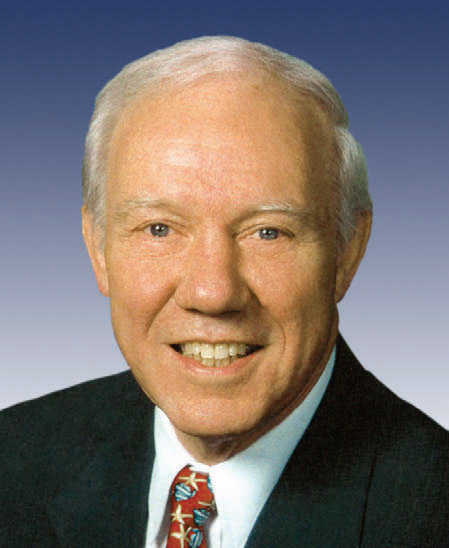
Rep. James Obertar D-MN
In the House things were far worse and expansive, but there, too silver lining for Democrats may yet be found.  Two great tragedies unfolded among Democrats' House losses.  Many longstanding Dems from Jim Oberstar of Minnesota to Ike Skelton of Missouri were ousted (losing such Dems with longevity is not a tragedy to the public, but to Democrats).  The other tragedy was the loss of Dems who were swept into power back in 2006.  There were other noteworthy additions in 2008, like Tom Parriello, who lost last Tuesday.

However, not all of the class of 2006 were lost.  Ed Perlmutter in Colorado and Chris Murphy in Connecticut held onto their states.  Some regions sustained minimal losses.  Out of 22 seats based in New England, only two were lost and both were in New Hampshire.  Only two Democratic seats were lost on the Pacific Coast.  Only one seat flipped in North Carolina, possibly confirming that state's formal transition to purple.

Having captured numerous governor's mansions and state legislatures, the GOP will have a strong hand in drawing Congressional districts.  However, that is not an absolute power and some states leave the job to bipartisan commissions.  The Supreme Court has ruled gerrymandering that depresses minority voices is unconstitutional.  All this means that the Congressional districts of the 2012 will be very different from those of today.  Reapportionment is not thought to be friendly to Democrats this year as states like Massachusetts, New York, and New Jersey will lose seats while Texas could gain four.  However, some winners might help Democrats.  Washington is expected to gain a seat and Florida, being a state ever in flux, could go either way.  The redistricting, though, means that Democrats and Republicans will be scrambling to organize and bring together supporters within the new districts.
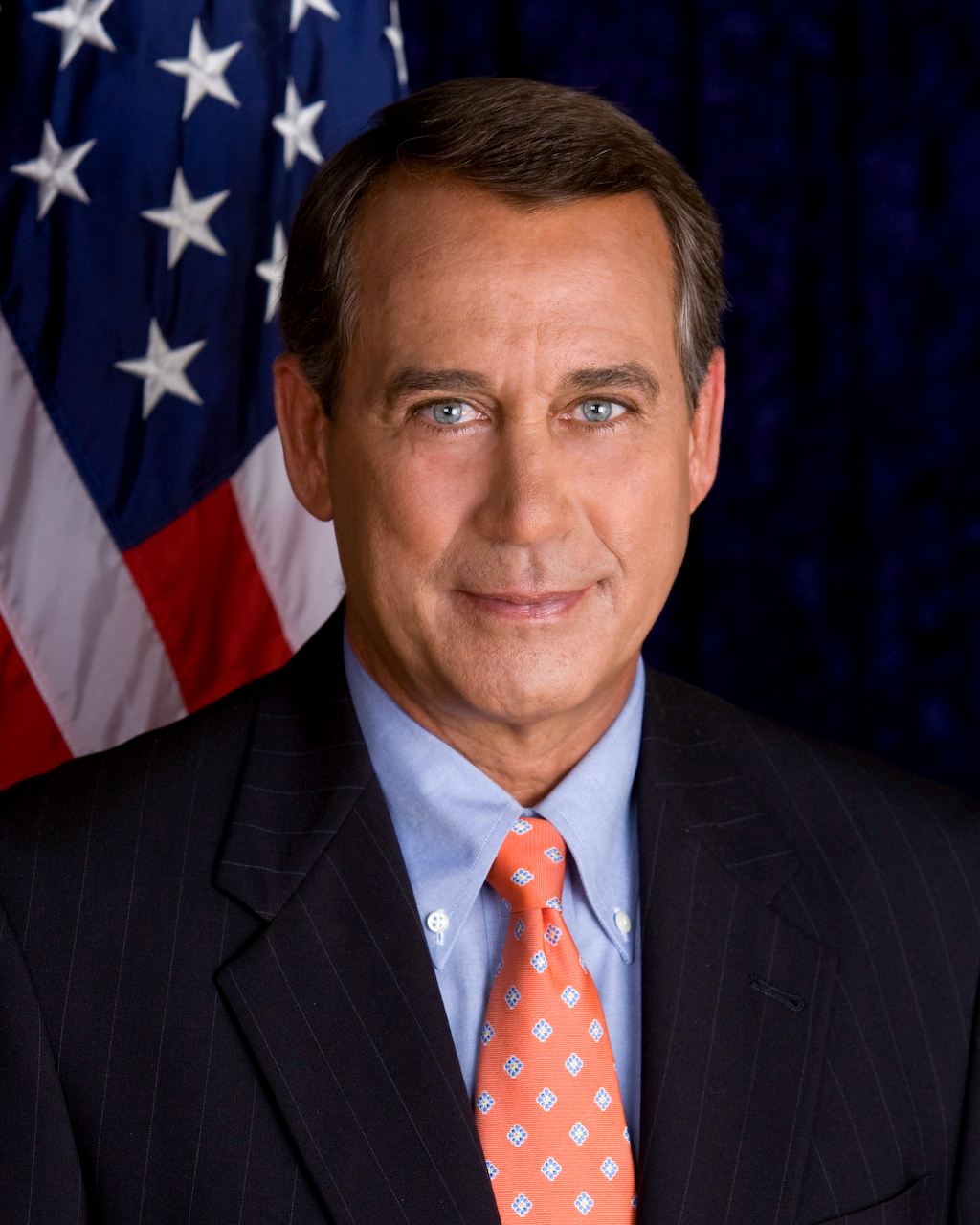

Rep. John Boehner R-OH

As of this writing, Republicans appeared prepared to draw battle lines against Obama on tax cuts.  They seem resolutely against anything less than permanent extension of tax cuts for all income brackets.  Still, John Boehner, the man that likely will be speaker, could be the most reasonable man in the room.  Thus far, the most partisan comments about the issues (health care excluded) have not come from Boehner.  Unlike a presidential administration, leadership in a house of Congress is not a strictly top-down system.  Therefore, noise from leadership is not necessarily indicative of the whole caucus' thinking.  America's first tanorexic speaker could hold the balance between becoming the next Newt and hand Obama a second term, or actively seek out accommodation with the White House for the good of the country.  While in minority, Boehner could afford to lead a party of "no" it had no political cost.  Now that his party leads a majority of only one House of the Congress, incidentally, the spending bill originating House, he has to pony up.

Boehner got misty-eyed on election night, once he knew he would be Speaker.  Although MSNBC personality Keith Olbermann noted snarkily that the Speaker-to-be would cry at the opening of a supermarket, that emotion, however corny, betrays a less craven character.  Indeed, even at his most partisan Boehner has not been quite like Senate Minority Leader Mitch McConnell, who recently changed his middle name to partisan obstructionist.  Boehner, if he wishes to govern responsibly may actually need Democrats.  While the president's agenda may not have any traction, common sense issues may require Democratic votes to counter tea party pull to fiscal Scroogedom.
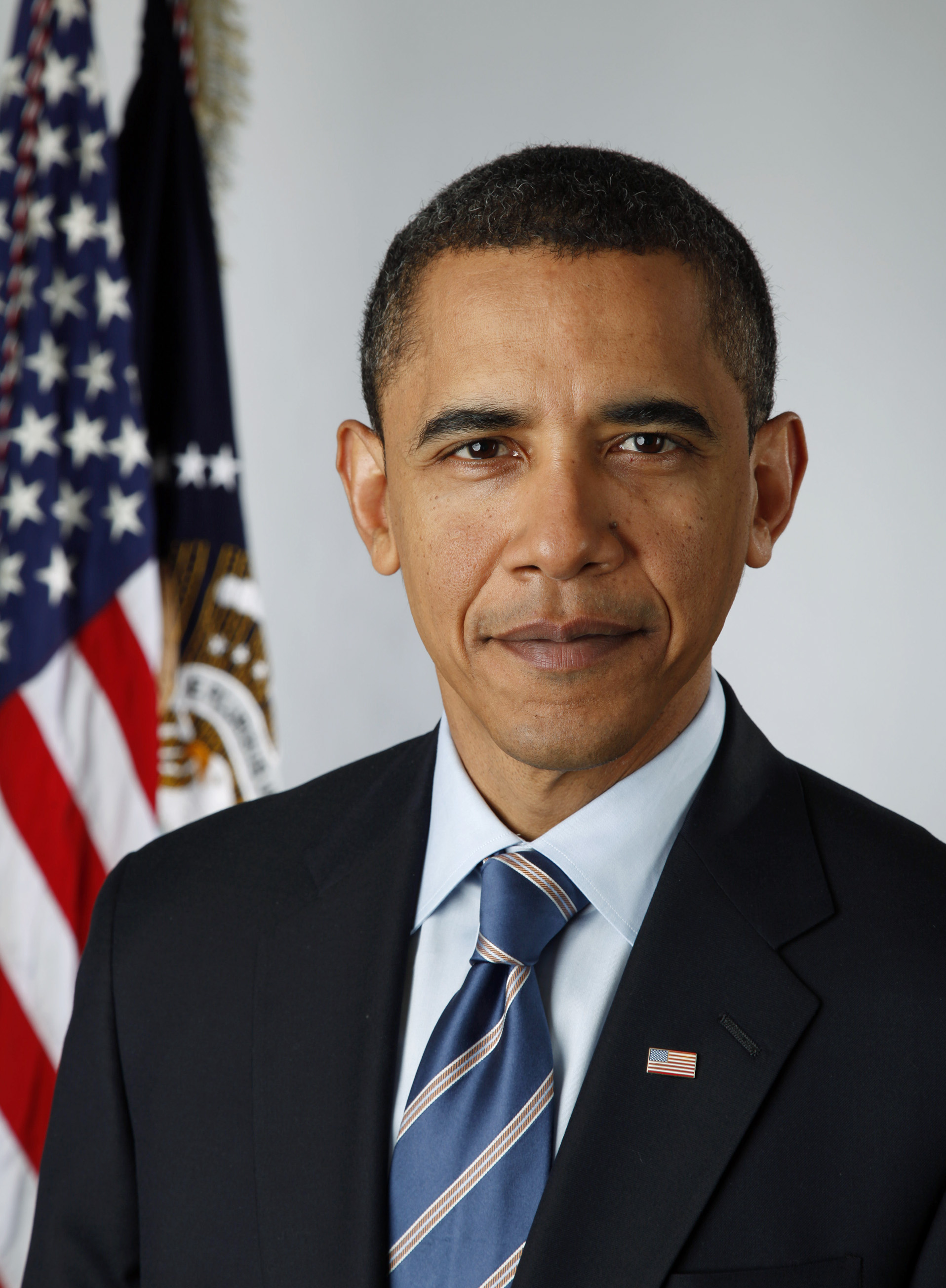
Pres. Barack Obama
The narrative of this election season has been a President who overreached was whipped by an angry electorate.  That story only tells the story conservative want to hear.  We will discuss Obama's issues next time, but we will simply say a drained and not enthused progressive base was simply unmotivated this time around.  Still, more was happening this election than the popular narrative suggests.


Voter turnout, was actually not low in all areas.  In Massachusetts it was at near records for a midterm and in Connecticut controversy erupted over unexpectedly high turnout in Bridgeport (and a lack of ballots for them).  Higher turnout may have made the difference in Nevada and Colorado.

In those two states, Democrats showed their organizing advantage by actively seeking out young people, Latinos, and women.  In Denver, Bennet supporters were trolling neighborhoods looking to prod as many voters as possible, practically "bumping clipboards" with one another.  One can view getting any one of the above named groups or geographic turnout as being key to Bennet's success.  To see how much of a difference not organizing can make, look to Pueblo, a reservoir of Latino voters, perhaps unreached and untapped.  Turnout was low there and the Democratic Congressman for that region lost.

The pattern repeated itself elsewhere.  James Oberstar could not organize his campaign apparatus until it was too late.  Better on-the-ground organization may have saved him.  Massachusetts Democrats took no chances and did that themselves (we'll explore that, too in a later posting) and it paid off.  Democrats must hang onto their system for organizing the ground, which has in recent years been better than that of Republicans.  That will be key to winning back the House and hanging onto the Senate in 2012 as many Democrats will face tough fights having been swept in on a wave in 2006.

This year was bad for Democrats, but the real losers could be the country if Republicans do not grow up and work together with the President.  Already, their calls for adult conversations have gone juvenile as they still refuse to answer reasonable questions about their plains.  If they felt he went too far to the left, they would be remiss to think their positions are already at the half-way point.  There may be hope if Boehner loves his country more than his party and moderates like Mark Kirk can still be elected.  Democrats can still have hope, too.  The President, too, can hope for a better tomorrow...if he gets up off the floor.
*All photos from wikipedia