 |
| Pres. Obama (White House) |
It may be a little premature to announce that President Barack Obama has taken his self-described shellacking and turned it into a force of political and legislative nature. However, with his tax deal with Republicans and the repeal of "Don't Ask, Don't Tell" passing just yesterday, the president has satisfied the country's desire for bipartisanship and fulfilled a campaign promise in only a week's time. Although his New START Treaty with Russia hangs in the balance, the president may yet corral the 66-67 (If Sen. Ron Wyden is absent due to surgery, only 66 votes will be necessary, normally its 67).
Although we never made public any opinions about the deal, this blog reluctantly believes its passage was for the best. To call the extension of the top bracket Bush tax cuts and a lower estate tax odious, harms the reputation of the word "odious." However, in the words of one of many commentators on the issue, most people could not believe what Republicans were willing to give up to maintain tax breaks for millionaires. The exact reasoning among Republicans is difficult to fully understand as many sitting Republican members of Congress thought Bush tax cuts for the wealthy were outlandish nine years ago. The most likely answer is the intractability of GOP Leader Sen. Mitch McConnell, and an ungodly fear of tea partiers. The "Taxed Enough Already" crowd has, like the majority of Americans, actually seen their tax burden drop (unless their earnings relative to inflation have skyrocketed like the income of the tea party's leading faces has). Not to mention, there exists fear among GOP senators up for reelection in 2012, like our dear Senator Scott Brown and Maine's Olympia Snowe, that could face a primary challenge and lose. However, they may risk this anyway as the tea party is not really just an anti-tax, anti-government group, but a solidly anti-Obama and anti-anything good for Obama group.
 |
| "Migrant Mother" (Dorothea Lange) |
The tax deal is for all intents and purposes a second stimulus. While it lacks the infrastructural monies that are associated with the first stimulus, it includes many of the tax breaks that made up the bulk of the stimulus. Also missing was aid to states to minimize budget cuts. The legislation's most important characteristic, beyond the tax cuts, was an extension of unemployment benefits. Under current law, after an individual's standard 26 week state benefits expire, the federal program kicks in for a total benefit time of up to 99 weeks. The funding is largely paid out of the government's pocket, unlike standard benefits which rely on trust funds paid for by employers. During the economic downturn, some states have exhausted their funds are relied on federal loans to continuing paying benefits under the standard plan. Others like Massachusetts, automatically raise the employer contributions to maintain the fund's liquidity.
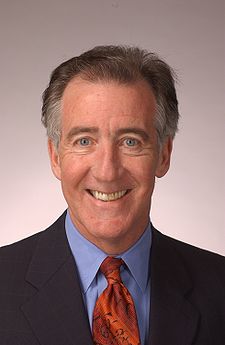 |
| Cong. Neal (wikipedia) |
A curious addition to the bill was a 2% cut in social security contributions on the employee side. All workers must pay 6.2% of their earning, matched by their employer. Unlike income taxes, employees contribute this income regardless of their income level. Even the (working) poor pay into Social Security and do not get any of the money back until they begin to collect. While the tax break will translate into real savings, Cong. Richard Neal, who voted against the deal, worried that it could undermine the solvency of Social Security. Specifically, it would seem he was alluding to concerns that Republicans may demand that the payroll taxes (as Social Security benefits are technically called) remain lower in their increasingly quixotic demand that all taxes fall into oblivion. This concern has merit and Neal's position is based less on the liberal discontent over Republican protection of the rich and a more on a real concern about the health of Social Security.
Still, it was a good thing for President Obama to make the deal and to sign the bill. With little to no hope of pushing through changes absent the 60 votes needed to break a filibuster, this was the only way. Obama knew that some form of economic stimulation by the government was needed to push the economy to begin hiring again and among the most effective things was, ironically, the unemployment extension. In the end, the Democrats who voted for the bill will face less repercussions in two years than the Republicans who forced the issue. More on that next time.
 |
| Military info on DADT (wikipedia) |
The president also achieved a major victory by making good on a campaign promise to repeal DADT. The Clinton-era policy was actually designed as a compromise to what had been a zero-tolerance policy toward gays and lesbians. As conceived DADT would have allowed gay service members, albeit closeted ones. However, due to the idiosyncrasies of the military and an increasing meddling of conservative Christian influence, the rule was often turned on its head, leading eminently qualified, but otherwise gay servicemen and women to a dishonorable discharge--something that follows you for life.
Even in international context, the DADT policy was, well, queer. Most major western armed forces have ended bans, including Russia, Canada, the UK, France, Australia, and most of the European Union. The most notable member of this group is Israel. As the Jewish state is virtually a European country demographically, that it has a similar policy is not surprising. However, what is most telling is its policy on homosexuals in sensitive intelligence positions. Almost the complete opposite of the theory of DADT, the Israeli intelligence services permit gays and lesbians provided that they are not closeted. The theory, presumably, is that a closeted Israeli intelligence agent might be more willing to talk if enemies tried to use their secret against him or her.
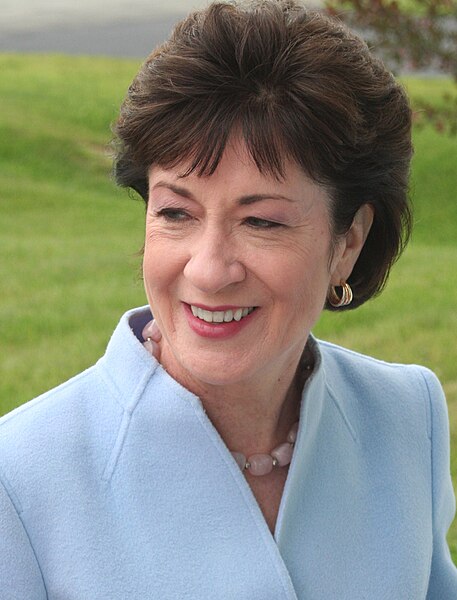 |
| Maine Senator Susan Collins (wikipedia) |
The latest repeal effort was a legislative Hail Mary. According to the New York Times topics database on the issue, the Obama administration dragged its feet to avoid waging another partisan war during the health care debate. However, when lawsuits threatened to upend the ban, Obama and his justice department did not want to be caught defending a law with which he disagreed. Originally attempts to attach the bill to a defense re-authorization bill were thought best, allowing repeal to occur after a survey of troops was completed. It ran into road blocks, first over the survey and then, in the lame duck, over amendments to the massive defense bill. After the last failure of the defense bill, Sen. Susan Collins, who for a while recoiled into her caucus' position, stepped forward with Connecticut senator Independent (read Democrat) Joseph Lieberman and Colorado senator Mark Udall to push a stand-alone appeal. With the tax deal done (but not the budget), Republican publicly in support of repeal came out of the closet themselves to vote for repeal. Very probably part of the reason Republicans who supported repeal voted as such was that very little debate on the measure was necessary and therefore it would not take away an appreciable amount of time from other matters.
The end of a gay ban in the military is really more important than just ending what was itself a wrong-headed and discriminatory policy. It was the end of the last major public policy of the United States that ensconced and endorsed discrimination. Efforts to paint repeal as endangering troops, even in the face of evidence to the contrary, reveal a naked attempt to define and by extension condemn, an individual based on their sexuality, not their humanity. Any opposition within the armed services is likely based on common misconceptions about homosexuals either culturally or religiously based. In any event, as the Department of Defense's brass have said, including Secretary Robert Gates and Chairman of the Joint Chiefs Mike Mullen, this can be mostly corrected with training.
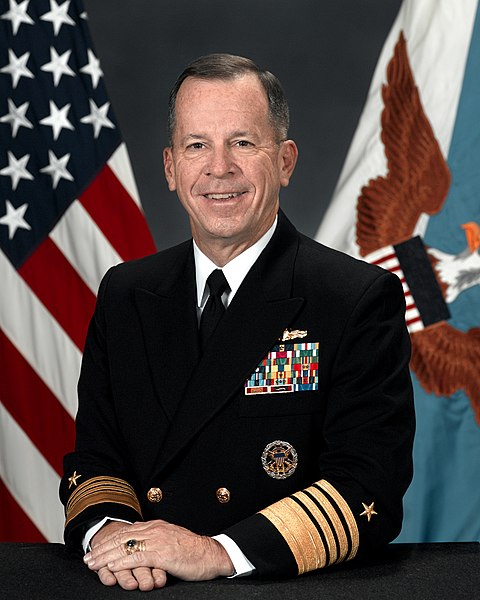 |
| Adm. Mike Mullen (wikipedia) |
With the death of DADT, the United States government has banished active discrimination against homosexuals in the military much as it did against blacks and other minorities when President Truman ordered the armed services desegregated. Then, as now, the primary fear was unit cohesion and national security. However, the repeal bill offers a buffer of time to allow for an orderly change in policy, very likely starting from back office operations and moving lastly to the front lines. Overwhelmingly, the members of the armed forces operate in non-combat support positions. Had the courts weighed in, the result may have been a more immediate and chaotic repeal. Given Supreme Court justice Anthony Kennedy's vote in Lawrence v. Texas, which struck down sodomy laws, the Supreme Court may have endorsed such an action.
While there remains inequities on the subject of marriage and/or domestic rights of gay couples, it would be wrong, outside of those states that sought to quash any hope for such benefits, to say that there exists any national law that actively endorses discrimination. The Defense of Marriage Act may do so to some extent, but largely the worst anti-gay legislation exists on a state level now. Hate crime legislation, though problematic in and of themselves, now include homophobic attacks. Federal protection for employment discrimination is not yet available, but such legislation has Republican support and could pass under the next Congress.
 |
| Pres. G.W.H. Bush and Premier Gorbachev at START signing (wikipedia) |
There exists some concern that the DADT vote could endanger the Start treaty. Essentially, START is the embodiment on the late Ronald Reagan's call to "trust but verify." The treaty, which replaces an older one passed under the elder President Bush, calls for US-Russian teams to inspect nuclear facilities and encourage responsible practices. The Bush I-era treaty has expired leaving the US with no mechanism to verify that Russian nuclear materials are being handled responsibly, particularly that it is kept out of the hands of terrorists. Republicans opposed to the treaty appear obsessed with the notion that the US is not upgrading it own nuclear stockpile fast enough. Such concerns are only tangentially related to the treaty's broader goals of nuclear non-proliferation and arms reduction. Still, some key Senators like Lindsey Graham were disheartened enough by the DADT vote that they threatened to vote against START. Senate Majority Leader Harry Reid sarcastically called similar threats "real statesmanship."
 |
| Pres. Obama in White House East Room (White House) |
START's fate and liberal discontent over the tax cuts notwithstanding, President Barack Obama has achieved a major coup. While many groused about the lame duck session being used this way, those comments reflect the concern that officials are voting contrary to how their successors would vote or had campaigned. Certainly, DADT would not come up for a vote under a Boehner-led House, but would it have not passed? We do not know. Likewise, had all eight Republicans joined Democrats in January to end DADT the result might be the same. For now, Barack Obama has shown that midterm failure has not destroyed him. Pragmatism and persistence can and do mesh well for this president and he has proven it. While liberals feel he caved on taxes, he in fact gave a little to get a lot and with DADT's repeal in his belt, shown those "lines in the sand" he described do exist. The next legislative session may be more acrimonious than some would like, but certainly less conciliatory than liberals fear.




 Posts


