Google
Showing posts with label Martha Coakley. Show all posts

Monday, September 05, 2011

What is the Matrix...uh, Establishment?...

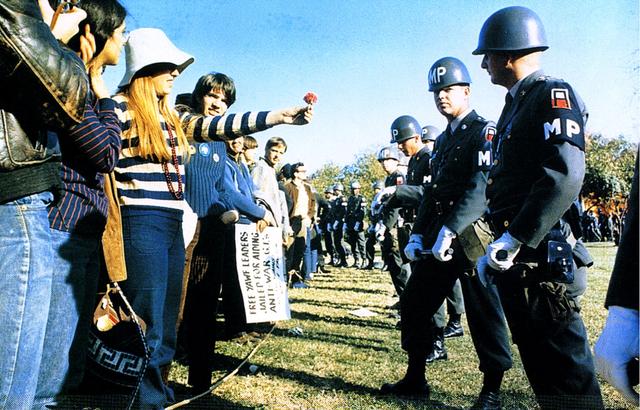
Opponents of Vietnam War at the Pentagon (wikipedia)
The answer to what the "establishment" is has never been clear, but use of the term “establishment” has escalated since it was used as a generic stand-in for the enemies of 60’s radicals.  Today, in political spheres, the term implicitly refers to the power brokers of a party or region, party elders, or special interest groups.  No candidate wants to be affiliated with the establishment or at least be described as such in public.  Still, the malleability of the term suggests that when the media or even other candidates use it to describe another candidate, greater care needs to be taken.

Today in Boston, Elizabeth Warren, the Harvard law professor and consumer advocate who set up the Consumer Finance Protection Bureau at President Barack Obama’s request, spoke to the Greater Boston Labor Council at their annual breakfast.  Her speech was seen as further, if not explicit evidence that Warren is on the verge of joining the race officially.  There was some minor griping by Bob Massie, the one-time candidate for lieutenant governor and liberal activist, that other candidates were not given a chance to address the group.  Others like Alan Khazei, who can be defined as the candidate with the best fund raising record, welcomed Elizabeth Warren to the race, but indicated he would contrast himself her status as the favored pick of Washington and Massachusetts “establishment” Democrats, as the Boston Globe phrased.  But is that description fair?

Elizabeth Warren (Facebook)
The way that Democrats in the nominating race are likely to paint Warren in a bad light by linking her to the establishment consists of two components.  First of all, Democratic Senate Campaign Committee Chairwoman Patty Murray rocked the boat of the implicitly non-establishment Massachusetts Democratic establishment by announcing a new candidate would emerge "in a few weeks."  It has been months.  Murray, who is tasked with holding the US Senate for the Democrats, has been accused of issuing pronouncements to the insult of the Bay State’s grassroots.  At the time, Massachusetts Democratic Party chief John Walsh was supportive of the candidate field at the time.  More recently, he has appeared to encourage Warren’s entry into the race.  Many other Democrats in Washington and in Massachusetts have followed suit.

The other component of the attack will be stirring up the argument that Martha Coakley, too, was the “establishment” candidate and that bore no fruit.  Notably, Coakely announced her intention to run at the same breakfast two years ago that Warren spoke at today.

However, the second part of the attack runs aground the facts.  Coakley, was not, actually, widely pushed by the establishment.  She received substantial backing from state and national party folks, but there was a definite split within the party.  Many Congressman who serve with Rep. Mike Capuano, including Richard Neal, supported their colleague over the popular Attorney General.  Many liberals broke from the centrist Coakley and voted for Khazei, who also ran in 2009.  The splits were deep enough that it became one of a number of secondary contributing factors to Coakely later loss to Scott Brown.

Tuesday, June 28, 2011

Sweepstakes Terms and Conditions...

Internet Cafe elsewhere in the Valley (Spfld Intruder)
The Internet Cafe phenomenon in Springfield (and the region) continues to intrigue and test the limits of state and local law.  The trouble started when Attorney General Martha Coakley ordered Internet Cafes that were alleged to engage in Internet Gambling to shut down, including the 777 Cyber Center cafe at Five Town Plaza on Cooley Street in Springfield.  To not go through all of the history behind the Internet, we refer you to an excellent round-up by the Springfield Intruder.

However, the entire situation continues to be full of questions.  As Bill Dusty aptly puts it, running an Internet Cafe "means big money for those who operate them."  It has required some advertising acrobatics and the term "sweepstakes" to survive as long as the facilities have.  However, Attorney General Martha Coakley, using her authority under M.G.L. 93A §2a, issued emergency regulations in April that prohibited these "Internet Cafes."  During this period, the cafe on Cooley Street, nonetheless continued to operate.  According to a press release from the Attorney General, a Springfield Cyber Cafe (probably 777) failed to convince a judge to halt the Attorney General's regulation in May.

Last week, however, the Attorney General Martha Coakley issued permanent regulations (CMR 30.00) that mirrored the earlier emergency regulations.  Those regulations went into effect last Friday.  However, as of today, Cyber Center 777 appears open for business.  Additionally, the special permit decision of the City Council notes that only five of the facility's 30 units can operate without a permit.  Whether this continues to be case given that the facility does not have a permit (we'll get to that in a minute), is not known at this time.

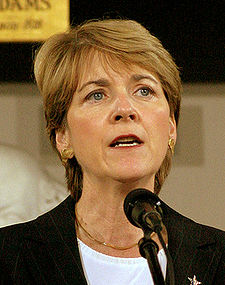
A.G. Martha Coakley (Wikipedia)
Based on the Attorney General's regulations, it would appear that most of these facilities are not legal or no longer are.  The regulations use a weighing test based on whether the legitimate good/service (in this case Internet access) is clearly being outweighed by the sweepstakes chance.  The regulations also target sweepstakes in such a way to not allow the use of that term alone as a fig leaf for any gambling/game of chance establishment.  There is also consideration of whether those who pay get more of an advantage over those who do not.  Other factors include how the instructions explain the good/service over the sweepstakes/lottery/gaming and how the facility is marketed and/or decorated.

Why is the facility still open?  A guess may be that its owners continue to believe they are acting legally.  In their special permit application, 777 Cyber Center's attorney (itself a bone of contention) submitted a copy of the case Commonwealth v. Webb, a Massachusetts Appeals Court case (upheld by the Supreme Judicial Court) as evidence of the facility's legality.  However, despite city documents that do not find much of a difference between 777 and Webb, they are, in fact different.

Tuesday, June 07, 2011

Take My Council, Please: Storm Stories...and Nullification at 36 Court?...

 **UPDATED** The following post has been updated as of 6/9/11.  Data on the slots votes has been corrected.

The Springfield City Council held their first meeting since last week's tornado sliced through the heart of Springfield and neighboring towns.  The council had a great deal of regular business to attend to, but there was also time to bat stories from the disaster back and forth among the councils.  Unfortunately, even a somber a subject as the tornado was unable to escape some political rancor.  The only item that dredged up as much emotion as the tornado, was oddly, the Slot Parlor/Internet Cafe on Cooley Street in the city's Five Town Plaza.

First the boilerplate.  More money was accepted by the Health Department from grants and other sources.  The police department had an order to transfer funds from its salaries account to its equipment account to purchase new vests for police officers.  However, left unclear was why this money was being appropriated now as opposed to in the original budget approved last year.  Motions were made to refer the matter to committee, but between the police sergeant holding a vest in the audience and the admonitions of at-large councilors Tim Rooke and Kateri Walsh about police safety, the motion could not find a second.  The money did not come from reserves, but still a better explanation is merited.

Thomas Belton, right (Masslive)
On a far more positive note, the City Council approved the nomination of Thomas Belton to be director of Veterans Services.  Belton, a former marine and Vietnam Veteran, received hefty praise from Clodo Concepcion, Jose Tosado and Kateri Walsh, whose husband abruptly resigned earlier this year.  After the vote, Belton briefly thanked the council in remarks from which long winded Oscar winners could learn a thing about brevity.

Then the council started veering into some very strange territory.  WMassP&I has not confirmed the original date of the first vote, but the council took up reconsideration of a vote for a special permit for the 777 Internet Cafe on Cooley Street in Springfield.  These Internet Cafes have gained attention as violating the state's laws against gambling.  Essentially, via an elaborate system using tokens and whatnot, proprietors have been able to shirk these laws.  The Attorney General shut down many of them, but others have sought to reopen under narrow exceptions.  Those exceptions require a permit from the city.

777 Internet Cafe on Cooley St (WMassP&I)
The original vote failed by an 8-4 vote (special permits require 9 votes, notwithstanding absences).  A motion had been made for reconsideration, for whatever reason. Apparently there is considerable support for the parlor on Cooley Street, which is very popular and by all accounts far better run than some of the others shut down.  However, per Massachusetts General Law 40A Sec. 16, the matter could not be brought up again for two years after a final decision had been rendered.  The 8-4, according to the City Solicitor, was that final decision, not subject to reconsideration.  

Reconsideration is a parliamentary tactic the council has written into its own rules.  It cannot and does not override the state law, which does not allow for any the do-overs.  The reason is because, as with biomass votes last month, the council was sitting as a regulatory body governed by very specific and complex land use statutes set by the commonwealth.  The elected council just happens to be the body empowered to execute that state statute in the city.  

(WMassP&I)
When the council, as the municipal legislature, votes on an ordinance or monetary transfer, for example, it is acting on general powers granted by the mosaic of special acts, the general laws and the city charter that govern the City of Springfield.  Therefore, it can set its own rules on when issues can be brought up again. Typically under council rules, if an item is not reconsidered immediately after a vote, it cannot be brought up again until the next council is seated.  Still, that rule exists at the council's direction.


Friday, December 31, 2010

The Year in Springfield 2010...

So comes again another year the wide world of Springfield.  As is tradition, WMassP&I will recount the events and news that made 2010 different from 1876 in Springfield.  As both a city and as one of 351 parts of Massachusetts, Springfield saw its share of ups and downs that may come back to haunt, er, define us in the coming decade.  I guess it really depends.

City Hall (WmassP&I)
The year's most important event may very well have been a continuation of an event we mentioned last year.  The Springfield City Council underwent a paramount shift not only in structure, but in composition as it expanded form nine to thirteen in order to welcome new councilors from the city's eight wards.  Five seats remained at-large.  Four of those seats were retained by councilors under the old setup, with former School Committeeman Thomas Ashe filling out the fifth.  The diverse group of newcomers included time-tested figures like E. Henry Twiggs and past city council candidates John Lysak and Clodo Concepcion.  New faces included the city's youngest councilor in its history, Michael Fenton, Tim Allen, Melvin Edwards, Zaida Luna, and Keith Wright, a Springfield schoolteacher.

Not long afterward, Massachusetts rocked the national political landscape by electing State Senator Scott Brown to the United States Senate.  While national Republicans spun a fairy tale that the President Obama's allegedly left-wing policies were to blame, determined tea partiers aside, the result was due to a dismal campaign by Attorney General Martha Coakley.

Beacon Hill was not without its share of attention.  Budget troubles meant more cuts, particularly for cities and towns meant a reduction in school and unrestricted aid.  The entire situation was laid against the backdrop of an election for governor, which even early in the year was thought to be a bruiser for Democrats.  Charles Baker was coming at Gov. Deval Patrick from the right, Tim Cahill, former Democrat, was coming from the further right, while Jill Stein attempted to slip in from the left.  

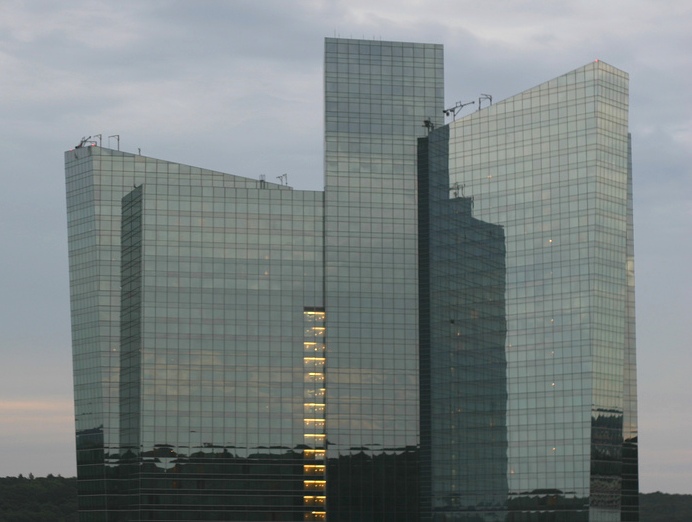
Mohegan Sun (wikipedia)
Casinos, too, became an issue that would crest at the end of the session.  Massachusetts Speaker Robert DeLeo rammed through casino legislation that would have essentially given dying racetracks the right to open slot parlors in an attempt to make it like it never was when Deleo's father worked at the tracks.  Locally Mohegan Sun, who forays into non-Connecticut states has not been without controversy, got behind building a casino right off the Mass Pike in Palmer.

Longtime Hampden County District Attorney William Bennett announced his intention to retire this year. 

Thursday, November 18, 2010

Surveying the Wreckage: The View from Beacon Hill...

Gustave Dore's The Enigma
More than two weeks from the election, here in Massachusetts too, bodies litter the political battlefield.  Their stricken bodies lay there, teeth still gnashed, fists clenched, and determined scowls plastered to their faces.  While more than a few Democrats add to this scene, overwhelmingly, the slain are Republicans, many with teabags still in hand.  Democrats swept every Congressional District, 36 out of 40 state Senate seats, and every statewide office, most notably the governor's.  Republicans only made gains on a handful of seats in the Massachusetts House of Representatives.

CT Senator-elect Richard Blumenthal (wikipedia)
This event would be just another Massachusetts political quirk were it not for two things.  One, as a state, we are to some a godsend and to others a culprit for Democrats losing their 60 seat majority in the Senate by sending Republican Scott Brown to fill out the late Edward Kennedy's term.  Two, we were not alone.  In Connecticut Democrats swept statewide races and all Congressional seats, including the open Senate seat going to AG Richard Blumenthal.  In Rhode Island, Democrats took both seats including the open seat of retiring Congressman Patrick Kennedy, son of the Bay State's late senator.  Former Republican Senator Lincoln Chaffee, a liberal, won the governor's office as an independent.  Across the country in Washington state, only one Congressional seat went Republican and the same appears true in California.  While in many crucial Midwest states and others like Florida, Democrats were beaten soundly, in states most akin to Massachusetts the damage was much less severe.  Indeed, only in New Hampshire was there a true Republican takeover (or takeback) in New England.  In Maine, while Republicans did win the Governor's office (by a limp 38% plurality) and the state house, both Congressional seats remained Democratic.

So while Scott Brown's election may have heralded the Democratic losses nationwide, the message was largely ignored or otherwise not felt in the good Senator's own home state.

US Rep-elect Bill Keating (candidate site)
Notably, the only Massachusetts congressional seat that was not secured with an absolute majority was the open seat of retiring Congressman William Delahunt whose South Shore/Cape Cod district went heavily for Scott Brown.  Despite heavy lobbying by the state's Republican US Senator, Norfolk County District Attorney Democrat William Keating beat Cape Cod state House rep Republican Jeff Perry by four percentage points, missing a majority by as many points.  Perry lost traction after his role in a strip search controversy when he was a police sergeant came back to haunt him.  The story had come up when Perry first ran for state rep in 2002.  Notably, Keating pulled off the win despite Deval Patrick losing much of the district.

In other Congressional races, Reps Ed Markey and Stephen Lynch both took in 2/3 of the vote.  Niki Tsongas and John Tierney also held off challengers in their North of Boston districts.  Tierney's race deserves some notice as his wife had plead guilty to tax fraud in an October surprise, but it did not translate into any traction for his opponent Bill Hudak, who filed a lawsuit for defamation in the campaign's closing days.  Barney Frank survived a tough challenge, but secured a respectable majority as well.  Worcester area Congressman Jim McGovern also survived a challenge.  Cong. Mike Capuano, who represents most of Boston, as well as Cambridge and Somerville was unopposed.

Cong. Richard Neal (WMassP&I)
To hear the right-leaning commentators tell the story, the results in Western Mass would suggest wins for Congressmen John Olver and Richard Neal by a hair.  In fact, Olver secured the third highest percentage of the vote of the nine contested Congressional races.  Olver, who by far has the largest district in terms of geography scored several decisive wins in a town by town analysis.  He carried some towns in the conservative Westfield area, including that city.  He won big in the cities, Holyoke, Pittsfield, the Adamses, and Amherst and carried many small towns.  The Republican Bill Gunn scored only significant wins in some towns including, notably Southwick.  Olver lives in Amherst.
 

Richard Neal, by comparison, may not have won by the same margin as Olver, but still cleaned up.  His decisive, if not massive, fourteen point spread was right in the middle of for Mass Congressional victors' margins.  Neal dominated in Springfield, Northampton, and the surrounding suburbs.  His opponent, Tom Wesley, only picked up leads in the far eastern small towns of the district.  However, Wesley, a tea party supported candidate, lost the district's metaphorical eastern punctuation mark, Milford.  The preponderance of Wesley signs belied the actual support he had in the Western more populous end of the district.  Even with low turnout in Springfield, the city's conservative suburbs flocked to Neal, obviating any absolute need for an edge in the city itself.  Had turnout been higher in Springfield, it seems unlikely that Wesley could have broken Neal's four-to-one edge. The city's lowest turnout was in areas that almost universally go Democratic  Neal lives in Springfield.

Gov. Patrick in Springfield  (WMassP&I)
On the statewide level, Governor Deval Patrick scored a major victory by winning, by plurality, a second term.  A graphic from the Boston Globe showed a town by town result of the Governor's race.  It is clear Western Massachusetts, the islands and Metro Boston form the governor's strongest support.  Notably Western Mass exercised considerable sway in this election.  Otherwise, the Worcester suburbs and the North and South Shore suburbs were friendly to Republican Charlie Baker.  These numbers are distorted, however, because the race was a four-way.  While Green Party candidate Jill Stein negligibly hurt Deval Patrick, the conventional wisdom was that Independent Tim Cahill siphoned conservative votes from Baker.  However, Cahill's pro-tea Party proclivities were not widely reported, so it is just as possible that towns that Patrick lost narrowly might have gone to him if some Cahill votes went to him.

Auditor-elect Suzanne Bump (WMassP&I)
Still, Patrick won by 140,000 statewide.  Strong turnout in Democratic bases and in the above areas pushed him over the edge.  Generally good economic news raised Patrick and the spat between Tim Cahill and his staff defections to Baker probably hurt both candidates.  Further evidence of an overall Democratic tilt to the electorate can be seen in the other Constitutional office races.
 

Martha Coakley, who lost to Scott Brown in January trounced political newcomer James McKenna.  Suzanne Bump a former Patrick cabinet member beat out Mary Connaughton, who was this blog's token Republican endorsement also by plurality, the Globe map mirroring Patrick's.  Notably, the Green party candidate in that race captured more of the vote than Stein.

Treasurer-elect Steve Grossman (WMassP&I)
Perhaps part repudiation of his opponent and part his more realistic plans for the office he sought, Democrat Steve Grossman handily defeated GOP candidate state rep Karyn Polito.  Grossman's campaign focused on common sense changes to the Treasurer's office and government openness.  Polito is probably best remembered for slowing down passage of a supplemental spending bill in the State House of Representatives even after her party gave the green light.  Ironically, the bill passed when Polito got caught in traffic on her way to Beacon Hill.

Republicans did pick up a dozen or two State House seats.  In western Massachusetts Nicholas Boldyga defeated Rosemarie Sandlin.  The Agawam Democrat's loss has been attributed, at least in part, to a third party race.  Otherwise, incumbents like Angelo Puppolo and Brian Ashe won their races.  Puppolo's victory was pretty solid.  Ashe won by two points.  In a Republican year, his opponent seemed a shoe-in, but a Democratic bend in Longmeadow, and help from Monson and the lone Springfield precinct in the district along with Republican Marie Angelides poor personal turnout in past elections left her weak going into the race.  The open West Springfield seat vacated by Jim Welch to run the seat of retiring State Senator Steve Buoniconti went to Democrat Michael Finn.

State Senator-elect Jim Welch (Facebook)
In the State Senate, Republicans actually lost a seat as Richard Tisei, Charlie Baker's running mate left an open seat snapped up by state rep Katherine Clark.  Senate President Therese Murray survived a tough challenge, but came out on top by four points.  In Western Mass, Jim Welch won the seat of Stephen Buoniconti (who lost his bid for District Attorney to Mark Mastroianni, who ran as an independent).  Welch only lost the hometown of his opponent City Councilor Robert McGovern.  Gale Candaras won every town in her district except for East Longmeadow.  Senator-elect Welch and Senator Candaras' districts split Springfield in half.

The half and half victories on Beacon Hill for Republicans may actually benefit Deval Patrick more than the GOP as they may form an inadvertent bulwark for any potential Patrick vetoes.  Otherwise, it may simply serve as an incubator for later races for the State Senate or Congress.

The true victory, may not come in the form of Democratic sweeps, but in voters' wise rejection of Question 3, which would have slashed the sales tax to 3%.  The vote would have severely hampered the state's ability to deliver essential services ahead of a projected deficit for the next fiscal year.  This blog has been critical of the increase in the sales tax and remains sure some savings still exist, but the ballot initiative was too far.  Voters, apparently agreed.  Registering some concern for taxes, voters did approve chopping the sales tax from alcohol purchases.  Oddly, polling had until the end consistently suggested the opposite result, but ads that explained, if a little oddly, the double taxation of the alcohol tax won the day.  This will likely signal to Beacon Hill that while voters rejected slash and burn budget cuts, they are not to be taken for granted.  Voters in Massachusetts recognized the need for taxes, however, inconvenient, especially during a recession.  However, the argument that education resonated with voters and having seen layoffs already, voters decided to hold the line to extent that they can.

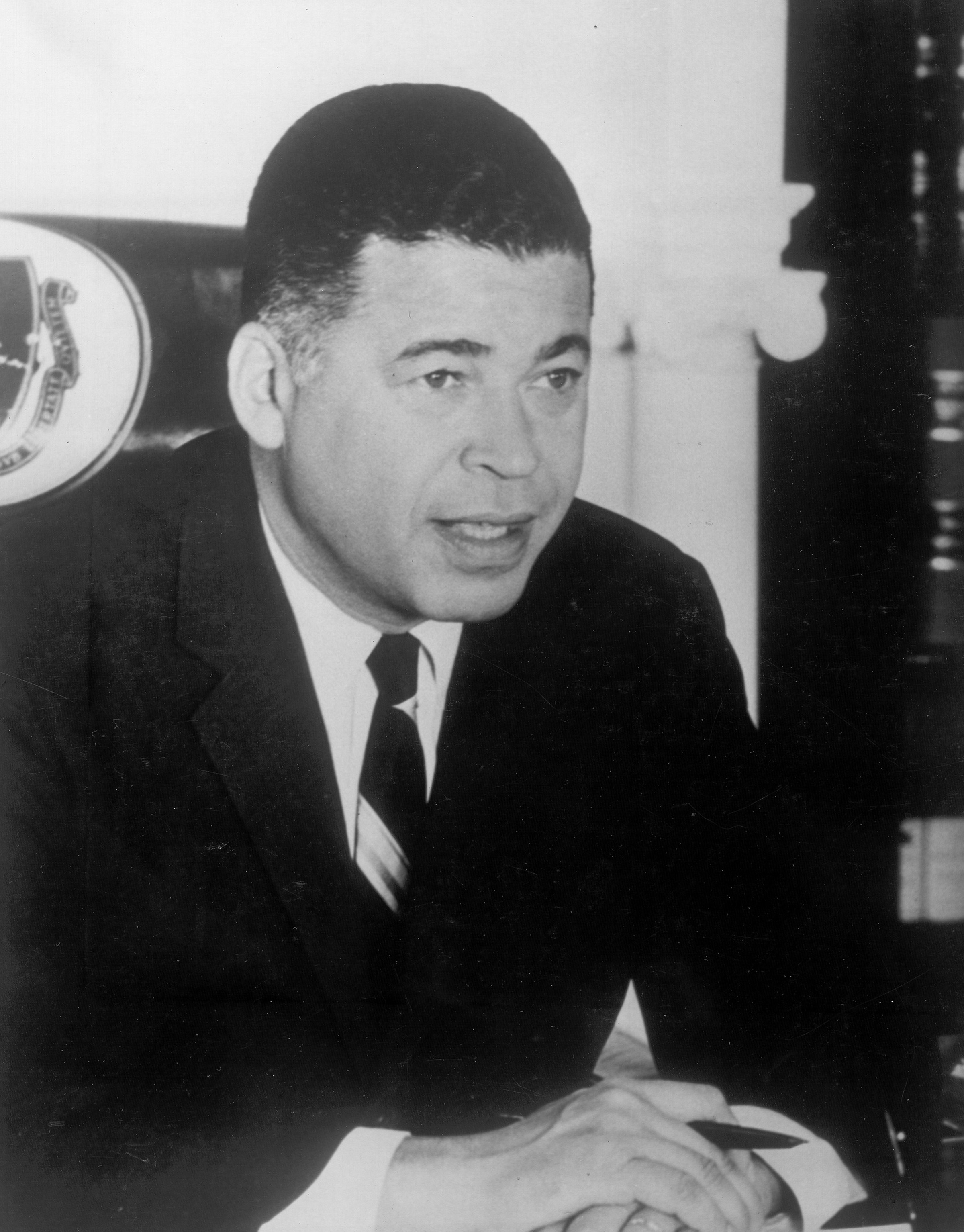
Former US Senator Edward Brooke (wikipedia)
In an election year that the pummeled Democrats, Republicans actually needed victories in New England beyond New Hampshire.  Few thought that they could ever return to their pre-JFK strength in Massachusetts, but at the very least they would like an 80's sized minority and a solid gubernatorial win.  It would have made them competitive in New England generally to hold the line when the GOP loses the districts they otherwise won this year.  Remember, when Democrats lost the House in 1994, the GOP already held seats in Connecticut and Massachusetts that Dems won in 2010 by healthy margins. 
 

Just as importantly, it calls into question the GOP's chances for non-Gubernatorial statewide races.  Treasurer is the only non-Gubernatorial Constitutional office (held by Joe Malone, who lost the Republican nomination for the 10th Congressional district to Jeff Perry) Republicans have won in 40 years.  Before that  Elliot Richardson was the last Republican elected for another statewide office, Attorney General.  His last elected predecessor?  Edward Brooke, the first black Senator since Reconstruction and also the last Republican Senator from Massachusetts until...

...Scott Brown.  The telegenic captain of the New England Republican advance still stands, safely two years removed from reelection, the bodies of his Bay State comrades largely strewn all about.  Looking over his shoulder, Brown now has the target on his back.

Sen. Scott Brown (Boston Herald)