Google
Showing posts with label Springfield. Show all posts

Monday, October 31, 2011

A Community of Coffee and Power...

Columbus Avenue Starbucks, Springfield (WMassP&I)
With chairs cluttered around the power outlets, the Starbucks in Springfield became something of a refuge for residents from across the region seeking coffee and Internet access.  Seats were full at the Columbus Avenue location just off of Interstate-91 Sunday afternoon.  However in the hours and days after record breaking snow storm the café was crowded well after the last snowflakes fell.

Many patrons were drawn the Starbucks because it was one of the few places serving coffee and food.  Others came to take advantage of the Wi-Fi and electrical outlets.  The storm knocked out power for hundreds of thousands of customers in Western Massachusetts, particularly in the Springfield area leaving residents without not only Internet access, but the means to recharge dwindling laptop batteries.

The downtown and South End areas of Springfield did not suffer a loss of electrical power in part due to their urban character.  Both areas are densely built up and operate with buried utility lines decades ago unlike the city's more suburban neighborhoods and the surrounding towns.  The Springfield Starbucks, sitting on the edge of the South End and downtown only suffered from traffic generated by the Pride Station a few doors down.  Margaret Street, the Starbucks' other entrance, was littered with some tree limbs making driving difficult, but not impossible.  Damage in the South End appeared minimal in comparison to the June tornado.  

Margaret Street (WMassP&I)
Otherwise it was business as usual except for the stepped business caused by an influx of un-caffeinated area residents and Internet refugees.

Grace Kim a freelance interpreter fluent in Korean from Agawam, came to the café to finish up work due the day the storm hit.  “It was the only place that has Internet” she explained.  Kim received an extension for her project until tonight Seattle time.

The café also showed off a little bit of community writ small.  Ed, a photographer from Springfield who declined to give his last name, had a power strip into which several patron had plugged their computers.  Ed discovered the open Starbucks Saturday night after searching for electricity to finish up some photography work.  “I got my stuff done,” he said cheerfully.

Others felt the community spirit as well.  Karen Hellstrom of Southampton discovered the Starbucks was open after a harrowing adventure looking for an open gas station.  Saturday night she drove down from Southampton and discovered several stations opened near Springfield’s downtown, which did not lose power.  However, she could not return home that night.  “I spent the night in the Ludlow Rest Area,” Hellstrom said.  She came back to the Starbucks for electricity also armed with a power strip that several patrons had plugged into in order to make the most of the café’s limited outlets.

For others, a visit to Starbucks was about one thing: coffee.  Matt and Rorie O’Connor of Springfield came down to the Starbucks since almost all businesses in their neighborhood was closed.  “Everything’s dark,” Matt O’Connor said of the Sixteen Acres neighborhood.   Both O’Connors agreed the drive down was fine.  Digging out of their driveway and downed power lines provides more of a hazard than slush on the street they said.

Line to Columbus Ave Pride Station (WMassP&I)
Although Starbucks employees are prohibited from speaking to the press and baristas remained busy well into the night serving the drive-through, it was apparent that Saturday and Sunday nights had hit the supplies at the Springfield store hard.  By four o'clock, the pastry and deli cooler was nearly empty.  The stepped up business also required reinforcements in staffing.  At least one barista came in from Northampton.  On Monday WMassP&I overheard a patron recognize the Northampton store employee, which the barista confirmed.

By Monday afternoon, however, reinforcements had clearly come in the form of boxes of pastries (and staffing) and the Springfield Starbucks was noticeably less busy.  Still, a cluster of laptop users craving Internet access huddled around a power strip for the second day in a row.  Nearly every seat was taken and waits for drinks appeared longer than usual.  Pressure was taken off the Springfield Starbucks as the Westfield, Holyoke Mall and Chicopee stores came on line.

As electrical service was restored regionally, Springfield businesses gradually lost their advantage over neighboring towns.  For example Eastfield Mall is still without power while it has been restored to the Holyoke Mall.  Gas stations in the city remain bumper to bumper.  Similar outcomes were playing out in Hartford, which also fared better than its neighbors after the storm.

Throughout the Springfield area there were stories of a community coming together.  Nevertheless it was encouraging to see that happening even amidst the search for baser things like access to the web.  Ed, the Springfield photographer noted how it brought people together from all over. “We had a lot of people helping each other out,” he said, “there are people that have come in form Palmer, Enfield, Northampton."

Thursday, September 15, 2011

Mayoral and Debated Analysis...

Tuesday night's debate at American International College among School Committeewoman Antonette Pepe, Mayor Domenic Sarno and City Council President Jose Tosado would be the last time that three mayoral candidates would appear on the same stage together.  On Tuesday, the voters of Springfield, or at least the ones that show up, will select two candidates that will advance to the general election in November.

Because all of the candidates, but especially the challengers, knew that they may not be up on that stage again, all took the steps necessary to try to make their final case to the voters.  Both Tosado and Pepe, as challengers, hammered the mayor for perceived failures.  Tosado stuck to charges that the mayor left the council out and failed on issues of policing.  Pepe spoke heavily to school issues, but also more pointedly attacked the insider culture at City Hall.  Sarno, meanwhile, parried the attacks (mostly) calmly and by highlighting some city accomplishments.

The debate itself consisted of questions from reporters and the candidates themselves and was moderated by Walter Kroll, the President of the McKnightr Neighborhood Council, which sponsored the event.


Wednesday, September 07, 2011

Another Term, Double the Time...

Mayor Sarno greets Supporters in Springfield (WMassP&I)
Last night at St. Anthony's Maronite Church on Island Pond Road, Springfield Mayor Domenic Sarno kicked off his reelection campaign for a third term as the city's mayor.  While the mayor's incumbency had long been seen as among his strengths going into this election, the June 1st tornado that devastated parts of the city gave the mayor a boost and even sidelined, temporarily, the campaign of his first announced opponent, City Council President Jose Tosado.

It was noted during the speeches that Sarno had announced his campaign for mayor four years ago at the same event hall in the City's East Forest Park section.  The choice of venue took on a more poignant meaning set against the backdrop of the devastation of the tornado that ripped through the neighborhood meters away from the church.  Massive expanses of night sky, once obscured by a near-forest of trees, hung naked and exposed above the church and parking lot.

Inside, however, several speakers extolled Sarno's virtues to a crowd of about 300.  Among those in attendance were city council candidates Bruce Adams and Justin Hurst; former councilor Bill Foley; Ward 5 Councilor Clodo Concepcion; state reps Angelo Puppolo and Cheryle Coakley-Rivera; state senator Gale Candaras,;New England Farm Workers Council head Heriberto Flores; former school committeewoman Marjorie Hurst; Springfield College President Richard Flynn and other Springfield Illuminati.

Thursday, June 23, 2011

Take My Council, Please: Fiscal Discilpline, 30 Years Overdue and Still Fresh...

(WMassP&I)
Tonight a somewhat strange thing happened at 36 Court Street.  The City Council fulfilled one of its legal obligations and actually did so by substantial majorities.  Through relatively few votes, the Springfield City Council cut more than $2.8 million dollars from the budget the mayor filed with the city last month.  Among the council's chief concerns, articulated by City Council President Jose Tosado and Ward 2 Councilor and Finance Committee Chair Mike Fenton, were the significant use of stabilization funds to plug the city's yawning budget gap.  That chasm was created through rising personnel costs, weak tax revenue and yet another cut to local aid from Beacon Hill.

Even with the cuts, the city will ultimately rely on roughly $7.5 million in stabilization reserves and another $5 million from an overlay account administered by the Assessors' Department.  Additionally, the city risks losing additional property tax revenue from damaged homes and businesses caught in the June 1st tornado.  Still, with next year's budget looking even more gruesome than this year's (and it will be paired with union negotiations with virtually all city bargaining units), keeping stabilization revenue intact is essential.

Tosado made some comments early on encouraging fiscal discipline only a year after he had refused to lift a finger to support cuts last year.  Still, the council president, perhaps knowing his mayoral aspirations remain dimmed by the tornado no doubt used the opportunity to jab the mayor, yet still doing what was right.

Councilor Tosado (Facebook)
Councilors kicked off the budget session with a vote to eliminate funding for vacant positions within the budget.  Although the mayor protested and even trotted out Police Commissioner Bill Fitchet to support funding for heretofore unfilled dispatch positions, the council rejected the entreaties and eliminated the positions.  Ward 5 Councilor Clodo Concepcion, who would become among the most reliable votes for the mayor's budget as is, attempted to play to councilors' political fear of cutting from public safety.  However, the council eliminated the unfilled positions.  At large councilors Jimmy Ferrera and Tom Ashe joined Concepcion in opposing the cuts.

Next the council proposed a broad cut of 5% to "other than personnel services" across city departments.  These items could be anything from support services to office supplies, basically anything that is not on payroll.  This cut elicited some minor protest for the mayor, but, representing more than a million and a half dollars all by itself, it passed the council easily 11-2. It made up the lion's share of other the budget reductions.  Ferrera and Concepcion dissented.

Ward 6 Councilor Amaad Rivera made an appeal to cut overtime budgets (which would largely come from police, fire and DPW) to save the jobs of eleven or so employees in the budget.  However, the political sensitivities could not be extended that far.  That cut failed 2-11, Rivera and Ward 3 Councilor Melvin Edwards casting the two yes votes.

Councilor Fenton (Facebook)
Whole swaths of the budget were cycled through without so much as a peep from councilors.  Ultimately proposals for cuts of $100,000 were proposed for Information Technology and Finance each, which will likely result in a handful of job losses.  Concepcion, Ashe and Ferrera were the three noes on the finance cuts.  Cuts to IT were much closer on a 7-6 vote.  Tosado, Fenton, and Ashe joined Ward 8 Councilor John Lysak, Ward 7 Councilor Tim Allen, Ward 1 Councilor Zaida Luna and Ward 4 Councilor E. Henry Twiggs to make those cuts.

Later on, Citistat, an office intended to find efficiencies in city government was all, but gutted by the council.  Although Citistat has made considerable progress for the city, it has been accused of hyping minor fiscal victories for the political benefit of city officials.  It died an ignominious death on a 10-3 vote, Rivera, Concepcion and Ferrera casting the votes to spare the office.

Thursday, June 02, 2011

The Day After...

Monson Steeple Destroyed (CBS3 Springfield)
The tornado that hit Springfield and its environs yesterday was nothing like the ones that struck Joplin, Mo. or Tuscaloosa, Ala.  Still, these devastating cyclones bore down hard on densely settled areas and wreaked havoc, particularly on the city's older buildings and homes generally throughout the region.  As stated in our earlier post, the South End of Springfield was hit hard as were homes along  South Branch Parkway and Arcadia Avenue.  Tree damage is extensive up near the former campus of the MacDuffie School and at and around Cathedral High School and along Watershops Ponds.  Cathedral's building suffered extensive damage to the windows and walls.  In West Springfield, the Merrick section was devastated.  Whole sections of Monson were leveled.

This video of the cycling moving along the Connecticut River, sucking up water and barreling into the CSX and Memorial Bridges are particularly terrifying.


From what we have seen, the most obvious and consistent damage throughout the region is the plethora of trees littering the ground, properties and streets.  Many of these trees obviously also caused damage to cars and buildings.  Traveling down Allen Street in Springfield, just before the Watershops Armory, the number of downed trees appeared to multiply.  None were obstructing traffic, but, travel was slow-going down the hill.  Aerial photography shows damage to the roof of the old Armory building at 1 Allen Street.

MacDuffie Campus (WMassP&I)
Turning onto Rifle Street, the road was covered in branches and tree limbs.  The trees growing along the Mill River seemed bent and out of place.  Johnny Appleseed Park at Locust and Hancock had its share of downed trees none of which, miraculously, appeared to have fallen on the playground.  Mangled trees were the norm until the MacDuffie campus.  Roofs were either covered with debris or clearly damaged.  What used to be a fairly well-shaded ex-campus was now largely exposed to sky.  Fallen trees were more visible than grass.  Across the street limbs and branches littered the roofs and lawns of the historic homes on Maple.

Although some debris remained along the rest of the path to downtown, the street was pretty clear.  By the Central Library it hardly looked like anything was out of the ordinary.  Hillman Street was clear.  Turning left onto Main street was a challenge and cop cars shuttled up and down the city's main drag.  Main Street was cut off below State street by a police barricade.  The photographic evidence from elsewhere suggests that that areas was where the most damage was in "downtown."

(WMassP&I)
Court Square sustained significant damage, but not as bad as early press accounts had suggested.  Several large trees were uprooted taking with them some bricks from the square's walkways.  However, a few large trees survived unscathed.  The monuments and fountain appeared unharmed.  News vans from as far away as Albany lined the square.  Amazingly, no windows appeared broken on the Court Square hotel facing the square, an impressive situation as the ever-ready-to-be-developed building and its windows are not in the best condition.

Circling the block to State Street, some windows did appear broken on the hotel rear end and a storefront on State Street looked bombed out.  Riverfront park, again, like many parts of the city looked bad, but clearly could have looked worse.  An Amtrak repair truck based out of Bear, DE sat by the tracks.  Service had been restored early this morning according to an Amtrak Twitter account.  Trees were down throughout the park and a few lampposts had likewise collapsed.  Still, the park's damage might have been easily mistaken for the overgrowth seen in a recent visit to the Connecticut River Bikeway.

Court Sq. (WMassP&I)
A short drive away in the parking lot of the Basketball Hall of Fame, a massive State Police RV was the locus of the staging area for emergency and recovery vehicles.  Ambulances and police cruisers lines the parking lot.  Trucks, ostensibly with supplies took up a few spots on the UNO's side of the Hall parking lot.  National guard vehicles puttered around Springfield, including along Hall of Fame Avenue (West Columbus Ave).

Upon closer inspection, the East Forest Park area looks pretty bad.  However, the greatest damage was to the trees, particularly the tallest ones.  Most fell onto the street and had already been pushed parallel to the curb.  Others collapsed onto lawns or power lines.  Some fell onto homes, but rather than crash through them, the houses caught the trees who has stood probably since before the neighborhood developed.  Meanwhile, trees younger than Cathedral's present freshman sat virtually undisturbed.

E. Forest Park on Roosevelt Ave (WMassP&I)
Moving closer to South Branch Parkway, however, and the damage grew worse.  Where as along Plumtree Road, the older trees gave way, but other still shaded the street, further north the sky was as naked as it was over Maple Street.  Here unenclosed porches and canopies were not so lucky and some houses had their shingles blown off.  Others were not nearly as lucky.  The Boston Globe reports that Pennsylvania Avenue was hit particularly hard with several homes destroyed.  Based on the landmarks mentioned in the article, that damage coincides with our observations putting along Pennsylvania between South Branch and Ithaca.

On Arcadia Avenue, a street, also along Watershops Ponds, many houses appeared to have suffered wind damage with missing shingles and bare external walls...if any walls at all.  Along Island Pond, near Cathedral, the trees were also pulled down and it may have caused some damage to the rear of the houses that rim Island Pond.  Closer to Watershops pond, however, the body of water was clearly visible as the south side of its belt of trees had now given way to army of half-trucks broken like twigs.   Power lines and telephone poles littered the ground as Western Mass Electric Company workers and tree service crews labored to restore the neighborhood to normality.

(WMassP&I)
The Globe also reported that Gov. Deval Patrick said 200 buildings were destroyed in the storm including 35 in Springfield and 88 in West Springfield.  One may balk at that number 200, but in fact that is fairly small.  That is probably not much comfort to the occupants of those buildings.

It was difficult to assess the breadth of the damage in East Forest Park.  Traffic still cannot pass Plumtree Road beyond South Branch Parkway and Bradley Road was reportedly blocked off last night.  One thing seems at least seems certain.  The neighborhood will recover.  Fighting against the smell of tree sap and leaves was the aroma of more than a few barbecues.  Among the onlookers were many neighbors gathered talking to one another.  The Republican reports electricity is still off.  One family was carrying a box of pizza home from their car.

Mitt Romney, during his announcement of another presidential bid, made no mention of the tornadoes in the state he used to govern.  Meanwhile, Sarah Palin vacationing to attract attention to herself after the media stopped caring, offered a vapid show of support to victims, even as her "bus tour" had to take shelter en route to Boston yesterday.

East Forest Park, Gillette Circle (WMassP&I)
This evening Congressman Richard Neal and Sen. John Kerry are calling for the Springfield area to be declared a national disaster area by President Barack Obama.  In all likelihood the president will do so.  That will unleash additional assistance from the federal government for small businesses and homeowners.  The governor is scaling back the "Emergency" component of the state's operations according to WBUR.  However, recovery and reconstruction efforts are even now underway.   

What is particularly striking about the damage caused by the tornado is how selective it is.  While, trees especially tall ones seemed clearly doomed, houses themselves in Springfield, at least, seemed to be destroyed or otherwise damaged almost arbitrarily.  An intact house doused with branches next to a shingle-less, but stable house next to an open foundation.  Truly there, but the grace of God, it seems.

This Ain't Kansas, Toto, but...

Yesterday, as many of you already know two or more tornadoes descended onto the Greater Springfield area yesterday around 430 pm.  The path of the tornadoes although fairly clear did not distribute the damage evenly.  Some neighborhoods in Springfield, West Springfield and Monson, the communities that received the brunt of the damage, experienced significant damage.  Others simply experienced power losses and downed trees.  The New York Times and Boston Globe reported a total four deaths last night due the storm in both Springfields and Brimfield.

Last night, Senator John Kerry arrived in Springfield with Gov. Deval Patrick.  Both pledged the full resources of the federal and state governments would be made available to communities.  Kerry predicted that the Springfield area would receive a federal disaster designation, which would unleash more federal assistance.  Kerry, Patrick and having arrived today, Senator Scott Brown, took a helicopter tour of the damage and surveyed Monson by foot.  Springfield Mayor Domenic Sarno promised that the city would rebuild.  West Springfield Mayor Ed Gibson said some areas of his city were practically demolished.

At this time it appears that the South End in Springfield and West Springfield near Memorial Avenue was hit the hardest in those communities.  Monson generally was hit pretty hard.  Damage has been reported throughout Western and Central Massachusetts.  We will be back later today with a more thorough roundup as well as our observations from an late morning tour of downtown Springfield.

For now, please check out our photos from that tour here.  The Boston Globe and Masslive also have good photos and video from the storm and the ensuing damage.  If you would like to help, you may contact the Red Cross at their website or 1-800-RED-CROSS (1-800-733-2767).

Tuesday, April 19, 2011

You Must Concede This Much...

Mayor Domenic Sarno (WMassP&I)
Springfield Mayor Domenic Sarno held a somber press conference today announcing that he and his staff were close to recommending a balanced budget to the City Council save for one pesky $5.4 million gap.  To plug it, the mayor is seeking concessions  from non-school city employees.

The conference caught some in the media as well as other councilors by surprise.  The release was sent to the media shortly before 2 p.m.  The press conference itself occurred immediately after a meeting among Sarno, his department heads and labor leaders.

Flanked by his finance team and labor relations director, Sarno drew a contrast to the mantra often repeated by Congressional Republicans by announcing that the city has a "revenue problem, not a spending problem."  Calling the fiscal year 2012 budget "the most difficult in recent history," the mayor called attention to the city's tenuous reliance on state aid (which will be cut by 7% from last year's levels) and minimal discretionary budget.  The mayor can only cut from the city side of the budget as the school's budget is restricted under the state laws that fund the city's schools.  Additional obligations such as debt service and contracts are similarly inflexible.

Still Sarno said his budget and finance teams were able to shrink a projected deficit of nearly $50 million through a series of measures, which included extra money from the assessor's overlay account, departmental reductions, attrition, an increase in the city's hotel tax and a hefty withdrawal from the city's reserves.

CAFO Lee Erdmann
The $5.4 million in concessions would come primarily in the form of a 12 day furlough over the next year in addition to a wage freeze.  Most of the affected unions are expecting a pay raise of approximately 2.5% percent next year.  As of the June 30, 2012, the current contracts with unionized city employees expire.  Should unions fail to agree to these concessions, the mayor said as many as 120 layoffs may ensue and city services could be endangered.

Friday, December 31, 2010

The Year in Springfield 2010...

So comes again another year the wide world of Springfield.  As is tradition, WMassP&I will recount the events and news that made 2010 different from 1876 in Springfield.  As both a city and as one of 351 parts of Massachusetts, Springfield saw its share of ups and downs that may come back to haunt, er, define us in the coming decade.  I guess it really depends.

City Hall (WmassP&I)
The year's most important event may very well have been a continuation of an event we mentioned last year.  The Springfield City Council underwent a paramount shift not only in structure, but in composition as it expanded form nine to thirteen in order to welcome new councilors from the city's eight wards.  Five seats remained at-large.  Four of those seats were retained by councilors under the old setup, with former School Committeeman Thomas Ashe filling out the fifth.  The diverse group of newcomers included time-tested figures like E. Henry Twiggs and past city council candidates John Lysak and Clodo Concepcion.  New faces included the city's youngest councilor in its history, Michael Fenton, Tim Allen, Melvin Edwards, Zaida Luna, and Keith Wright, a Springfield schoolteacher.

Not long afterward, Massachusetts rocked the national political landscape by electing State Senator Scott Brown to the United States Senate.  While national Republicans spun a fairy tale that the President Obama's allegedly left-wing policies were to blame, determined tea partiers aside, the result was due to a dismal campaign by Attorney General Martha Coakley.

Beacon Hill was not without its share of attention.  Budget troubles meant more cuts, particularly for cities and towns meant a reduction in school and unrestricted aid.  The entire situation was laid against the backdrop of an election for governor, which even early in the year was thought to be a bruiser for Democrats.  Charles Baker was coming at Gov. Deval Patrick from the right, Tim Cahill, former Democrat, was coming from the further right, while Jill Stein attempted to slip in from the left.  

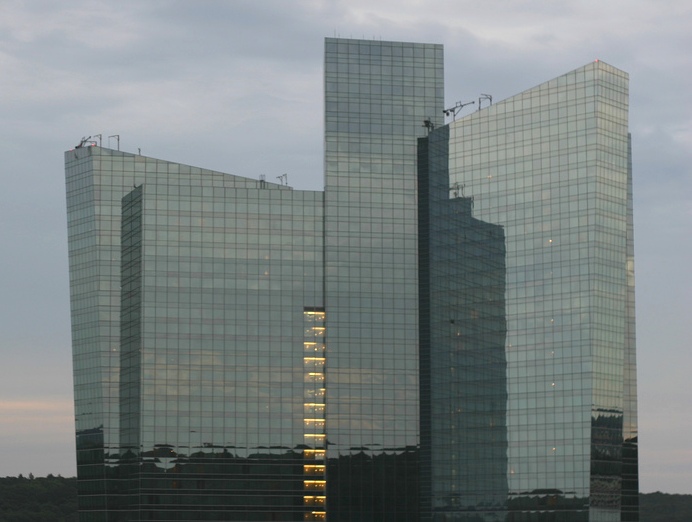
Mohegan Sun (wikipedia)
Casinos, too, became an issue that would crest at the end of the session.  Massachusetts Speaker Robert DeLeo rammed through casino legislation that would have essentially given dying racetracks the right to open slot parlors in an attempt to make it like it never was when Deleo's father worked at the tracks.  Locally Mohegan Sun, who forays into non-Connecticut states has not been without controversy, got behind building a casino right off the Mass Pike in Palmer.

Longtime Hampden County District Attorney William Bennett announced his intention to retire this year. 

Thursday, December 09, 2010

Where There's a Way, There's a Means...

 *Update, WMassP&I has learned the Democratic Caucus has rejected Neal's recommendation from a steering committee.  Sander Levin will be the ranking member on Ways and Means.


Western Mass Politics & Insight has learned that Cong. Richard Neal of Springfield has cleared a major hurdle to become the Democrat's ranking member on the Committee on Ways and Means.  Both the Republican and the Boston Globe confirm this.  At a steering committee meeting, Neal beat out Michigan Congressman, Sander Levin, who has more seniority than Neal.  The news is an incredible coup for the Springfield Democrat putting himself and his district in a position of considerable influence.

Levin has been chairman of the committee since New York Representative Charles Rangel stepped down pending an ethics investigation.  On December 2, the House censured Rangel for those charges.  Technically, California Congressman Pete Stark had more seniority than even Levin, but he stepped aside to hold onto his subcommittee chairmanship.  Two other congressmen held more seniority than Neal, Washington Rep. Jim McDermott and Georgia Rep John Lewis, a pioneer in the Civil Rights movement.  Neither had expressed public interest in the ranking position.

Neal's confirmation as ranking member still requires caucus-wide approval, but the above sources say he expects to receive it.  Levin would likely remain chairman, nominally, until January when Democrats go into the minority.  The minority party's most senior member of a committee is called their "ranking" member.

Ways and Means governs Social Security, Medicare, trade tariffs, unemployment, TANF, and tax laws.  Even in the minority, Neal stands to have a great deal of power as his party's point man  defending Democrats' agenda and as a negotiator with Republicans.  The Republican chairman of Ways and Means in January is expected to be David Camp of Midland, Michigan.

Wednesday, December 08, 2010

Take My Council, Please: Trash Talkin'...

(WmassP&I)
Welcome to a new series on Western Mass Politics & Insight.  "Take My Council, Please," will be a series on the Springfield City Council.  Whenever possible, we will give you news and analysis from City Council meetings plus interviews and updates.  The meeting for 12/6/10 began more or less on time at 7:30.  Prior to its formal start, there was the customary speak out.  Two items dominated the meeting, the trash fee and the Palmer Paving Incinerator, although several others, largely routine, took longer than they should have.

Of the nine speakers at the pre-meeting Speak-out, seven spoke in opposition to the biomass incinerator or otherwise demanded more environmental reviews.  Among the speakers were Springfield activist and blogger Michaelann Bewsee.  All of the speakers spoke to the indefinite science behind the plant as well as insufficient information the company has given both on the original project and the amended plans.  Originally the plant would burn construction waste and now would only burn wood chips.  More on the incinerator in a bit.

Mayor Sarno (city website)
The main event of the evening was actually the trash fee.  Competing proposals to rescind and to extend the trash fee were on the agenda.  Mayor Domenic Sarno submitted a home rule petition to the City Council, which if passed (home rule petitions need 9 votes), would go to the legislature for approval.  The petition was needed due to Rep. Cheryl Coakely-Rivera's amendment to a 2008 city finance bill that required the city to discontinue the fee on June 30, 2011.  There is some confusion as to the effect of the amendment, as it referred to the Finance Control Board's first order, later struck down by a judge and not the second, which was was approved.  Still further confusion remained regarding the finance bill itself as it seemed contingent on the city's repayment of the control board loan.  That loan is now fully paid back.  Nonetheless, legal experts agreed a home rule petition was necessary.

Councilor Tosado (facebook)
Tosado's resolution would rescind the fee effective June 1st, later amended, bizarrely 31 days into next fiscal year on July 31, 2011. Both bills were seen as political given the Mayor's intention to run for reelection and Tosado's widely expected run for the mayoralty himself.  However, Tosado's was the more nakedly political and irresponsible of the two.  If Tosado does run, as his City Council Presidency expires in January, he will lose a prominent platform.  Therefore, gimmicks like this are helpful to take the spotlight, and he can take much of the credit for himself.

The trash fee has never been popular.  It was imposed in the throes of the city's fiscal crisis by the Control Board.  While residents groaned about it, most accepted it as a necessary evil, one that prevented losses of other essential city services.  While the trash fee ostensibly pays for only trash removal, it effectively contributes to overall revenue.  The city can only cut the budget on trash removal before it actually stops trash pickup, which would run afoul of environmental laws.  It has have the added benefit of pushing the city to improve recycling rates, which have risen considerably since single-stream recycling was introduced.  Nonetheless, Springfield residents sucked it up quite admirably, willing to see it as a fee for a service.  This blog's editor, spoke on the issue directly warning about local aid cuts and noting that repeal benefits slumlords who pay the same fee as responsible homeowners.  You can read the full statement here.

Councilor Fenton (Facebook)
And yet the trash fee and the home rule petition went down in flames.  In no small part this was due to the ineffectual explanations of the mayor and his staff as to why it should remain.  Tosado pointed out that the city has come out of the last few budgets with a surplus and has $44 million in the bank.  Consequently the trash fee seems unnecessary.  However, Sarno and his merry men did not explain how the city can have money and yet need more  Ward 2 City Council Michael Fenton noted a "Tale of two Springfields": one with lots of money lying around and the other with a structural deficit.  Fenton and others supported referring both trash fees to committee pending a better fiscal explanation from city financial officials.

What Sarno failed to emphasize enough in his pursuit of "good governance," however, was that the issue is not what the city's picture is today, but what it will be when the legislature doles out local aid.  With the state facing a shortfall of as much as $2 billion, local aid is all but certain to be cut.  Some estimates suggest the city could lose as much as $30 million in non-school aid, which would devastate the budget.  That is the argument Sarno should have made and reminded councilors that unbearable cuts may be needed, with or without the trash fee.  It would be all the worse without the trash fee, which is projected to take in $3.7 million this year.  Consequently, the motion to committee was all the more a reasonable request pending the state's local aid numbers.

Councilor Ferrera (Urban Compass)
However, committee referral was shot down on both measures.  At-large councilor James Ferrera interrogated the mayor, almost to the point of disrespect.  He asked the mayor if he had any support from the local delegation for the legislation, noting Rep. Coakley-Rivera's continued opposition to the trash fee.  Any politician worth their salt will decline to voice support for a divisive measure like the trash fee until it has been formally requested.  Why have a pro-fee statement on record unless there is a reason to?  Ferrera then pronounced that the mayor's measure had no support on Beacon Hill, specious reasoning to say the least.

Fenton, Ward 7 Councilor Tim Allen, and Ward 6 Councilor Keith Wright abstained from both votes on passage, rightfully claiming that they had been insufficiently informed as to the city's true financial condition.  At the meeting itself, Ferrera asked city clerk Wayman Lee if councilors could be made to explain their abstentions.  The clerk said no and councilors discouraged members from doing so.  The mayor excoriated the  abstaining trio for not supporting his measure, but the 5-5 vote on extension would have failed with their support as the petition needed 9 votes.  Tosado's motion later passed on a 6-4 vote.  During the votes, Ward 5 Councilor Clodo Concepcion appeared disoriented and unsure of which measures he was voting on.  Prior to her votes, At-large Councilor Kateri Walsh echoed the concerns taxpayers had brought to her, namely that the trash fee had been accepted, but that taxes were what needed reduction.  At-large Councilor Tim Rooke, apparently cognizant of the impending fiscal woes and no friend of Sarno's, also supported the trash fee.

Tosado's motion would take effect July 31 next year, but with Coakely-Rivera's measure still on the books, the June 30th, 2011 date still controls.  Tosado spoke about money being wasted, but Tosado has a shaky record on fiscal restraint and his tenure stretches back to the Albano era.  He and Rooke are the only two councilors that served while Michael Albano was mayor.  Rooke has since apologize for the council's lack of oversight.  Toward the end of the debate, Tosado engaged in a petulant tirade about some councilors' desire for due diligence saying that "they are not here" everyday.  To be sure, there is no such thing as too much due diligence, especially when it is Tosado's motion, six month's early, which is mugging for the spotlight...and camera.

Councilor Walsh (masslive)
Many of the speakers on the incinerator stayed in the audience throughout the entire meeting to await the council's vote on a resolution on that issue.  Many of them agreed with Walsh's view that the trash fee had been accepted and constituted far too big a loss of revenue especially in light of impending local aid cuts.

The rest of the meeting went by with less rancor, if still colorfully.  The city council revisited an earlier decision to sell land to Springfield College, with several councilors changing their votes.  Ward 4 Councilor E. Henry Twiggs, who voted against the previous approval for sale remained concerned by the amount of land owned by non-profits and the lack of access for the community at large.  He accused the colleges of depressing real estate values to their advantage.  Ward 3 Councilor Melvin Edwards echoed concerns about non-profit land purchases and its effect on tax revenues, but acknowledged there often were few commercial bidders for land like the property at 150 Hickory Street.  Tosado got into the game mentioning efforts to encourage or require payments-in-lieu-of-taxes (PILOT), which the legislature would be unlikely to ever approve.

Councilor Ferrera, showing his trademark foolishness passed off as curiosity, grilled a local state emergency preparedness official who was explaining a grant the city was formally accepting.  Questions included, who are you and what do you do?  Questions  already answered when the official introduced himself.  The charade did not end until Tosado, in his high point of the evening, jumped in and reminded the council they were accepting money.

Councilor Lysak (campaign website)
The council approved a $1 million dollar transfer from savings for the mayor's tax reduction play.  That plan passed this evening with significant business property tax cuts and modest residential tax cuts.  A proposal sponsored by Ward 8 Councilor John Lysak sought a home rule petition for the city to raise its illegal dumping fee to the cost for the city to remove the garbage up to $5,000.  Criminal penalties for severe cases would extend the fine to $10,000.  The petition was modeled on a similar law in Worcester.  The measure passed with the nine votes needed for home rule petitions.

Finally, the council passed a unanimous motion that called the developers of the biomass plant before the council to fully explain their incinerator project.  The audience members had patiently waited throughout the meeting to see the resolution's passage, but at least they were treated to some Springfield Political theater.  The resolution also called for environmental reviews the commonwealth has thus far not required.  The increasingly questionable science has drawn the ire and suspicion of residents particularly those near the plant's location on Cadwell Drive.

So there you have it.  Including speak-out, Monday's meeting clocked in at nearly four hours.  Filled with surprises, political pandering, and elected buffoonery.  We hope to bring you TMCP, as a regular feature so stay tuned.

Thursday, November 18, 2010

Surveying the Wreckage: The View from Beacon Hill...

Gustave Dore's The Enigma
More than two weeks from the election, here in Massachusetts too, bodies litter the political battlefield.  Their stricken bodies lay there, teeth still gnashed, fists clenched, and determined scowls plastered to their faces.  While more than a few Democrats add to this scene, overwhelmingly, the slain are Republicans, many with teabags still in hand.  Democrats swept every Congressional District, 36 out of 40 state Senate seats, and every statewide office, most notably the governor's.  Republicans only made gains on a handful of seats in the Massachusetts House of Representatives.

CT Senator-elect Richard Blumenthal (wikipedia)
This event would be just another Massachusetts political quirk were it not for two things.  One, as a state, we are to some a godsend and to others a culprit for Democrats losing their 60 seat majority in the Senate by sending Republican Scott Brown to fill out the late Edward Kennedy's term.  Two, we were not alone.  In Connecticut Democrats swept statewide races and all Congressional seats, including the open Senate seat going to AG Richard Blumenthal.  In Rhode Island, Democrats took both seats including the open seat of retiring Congressman Patrick Kennedy, son of the Bay State's late senator.  Former Republican Senator Lincoln Chaffee, a liberal, won the governor's office as an independent.  Across the country in Washington state, only one Congressional seat went Republican and the same appears true in California.  While in many crucial Midwest states and others like Florida, Democrats were beaten soundly, in states most akin to Massachusetts the damage was much less severe.  Indeed, only in New Hampshire was there a true Republican takeover (or takeback) in New England.  In Maine, while Republicans did win the Governor's office (by a limp 38% plurality) and the state house, both Congressional seats remained Democratic.

So while Scott Brown's election may have heralded the Democratic losses nationwide, the message was largely ignored or otherwise not felt in the good Senator's own home state.

US Rep-elect Bill Keating (candidate site)
Notably, the only Massachusetts congressional seat that was not secured with an absolute majority was the open seat of retiring Congressman William Delahunt whose South Shore/Cape Cod district went heavily for Scott Brown.  Despite heavy lobbying by the state's Republican US Senator, Norfolk County District Attorney Democrat William Keating beat Cape Cod state House rep Republican Jeff Perry by four percentage points, missing a majority by as many points.  Perry lost traction after his role in a strip search controversy when he was a police sergeant came back to haunt him.  The story had come up when Perry first ran for state rep in 2002.  Notably, Keating pulled off the win despite Deval Patrick losing much of the district.

In other Congressional races, Reps Ed Markey and Stephen Lynch both took in 2/3 of the vote.  Niki Tsongas and John Tierney also held off challengers in their North of Boston districts.  Tierney's race deserves some notice as his wife had plead guilty to tax fraud in an October surprise, but it did not translate into any traction for his opponent Bill Hudak, who filed a lawsuit for defamation in the campaign's closing days.  Barney Frank survived a tough challenge, but secured a respectable majority as well.  Worcester area Congressman Jim McGovern also survived a challenge.  Cong. Mike Capuano, who represents most of Boston, as well as Cambridge and Somerville was unopposed.

Cong. Richard Neal (WMassP&I)
To hear the right-leaning commentators tell the story, the results in Western Mass would suggest wins for Congressmen John Olver and Richard Neal by a hair.  In fact, Olver secured the third highest percentage of the vote of the nine contested Congressional races.  Olver, who by far has the largest district in terms of geography scored several decisive wins in a town by town analysis.  He carried some towns in the conservative Westfield area, including that city.  He won big in the cities, Holyoke, Pittsfield, the Adamses, and Amherst and carried many small towns.  The Republican Bill Gunn scored only significant wins in some towns including, notably Southwick.  Olver lives in Amherst.
 

Richard Neal, by comparison, may not have won by the same margin as Olver, but still cleaned up.  His decisive, if not massive, fourteen point spread was right in the middle of for Mass Congressional victors' margins.  Neal dominated in Springfield, Northampton, and the surrounding suburbs.  His opponent, Tom Wesley, only picked up leads in the far eastern small towns of the district.  However, Wesley, a tea party supported candidate, lost the district's metaphorical eastern punctuation mark, Milford.  The preponderance of Wesley signs belied the actual support he had in the Western more populous end of the district.  Even with low turnout in Springfield, the city's conservative suburbs flocked to Neal, obviating any absolute need for an edge in the city itself.  Had turnout been higher in Springfield, it seems unlikely that Wesley could have broken Neal's four-to-one edge. The city's lowest turnout was in areas that almost universally go Democratic  Neal lives in Springfield.

Gov. Patrick in Springfield  (WMassP&I)
On the statewide level, Governor Deval Patrick scored a major victory by winning, by plurality, a second term.  A graphic from the Boston Globe showed a town by town result of the Governor's race.  It is clear Western Massachusetts, the islands and Metro Boston form the governor's strongest support.  Notably Western Mass exercised considerable sway in this election.  Otherwise, the Worcester suburbs and the North and South Shore suburbs were friendly to Republican Charlie Baker.  These numbers are distorted, however, because the race was a four-way.  While Green Party candidate Jill Stein negligibly hurt Deval Patrick, the conventional wisdom was that Independent Tim Cahill siphoned conservative votes from Baker.  However, Cahill's pro-tea Party proclivities were not widely reported, so it is just as possible that towns that Patrick lost narrowly might have gone to him if some Cahill votes went to him.

Auditor-elect Suzanne Bump (WMassP&I)
Still, Patrick won by 140,000 statewide.  Strong turnout in Democratic bases and in the above areas pushed him over the edge.  Generally good economic news raised Patrick and the spat between Tim Cahill and his staff defections to Baker probably hurt both candidates.  Further evidence of an overall Democratic tilt to the electorate can be seen in the other Constitutional office races.
 

Martha Coakley, who lost to Scott Brown in January trounced political newcomer James McKenna.  Suzanne Bump a former Patrick cabinet member beat out Mary Connaughton, who was this blog's token Republican endorsement also by plurality, the Globe map mirroring Patrick's.  Notably, the Green party candidate in that race captured more of the vote than Stein.

Treasurer-elect Steve Grossman (WMassP&I)
Perhaps part repudiation of his opponent and part his more realistic plans for the office he sought, Democrat Steve Grossman handily defeated GOP candidate state rep Karyn Polito.  Grossman's campaign focused on common sense changes to the Treasurer's office and government openness.  Polito is probably best remembered for slowing down passage of a supplemental spending bill in the State House of Representatives even after her party gave the green light.  Ironically, the bill passed when Polito got caught in traffic on her way to Beacon Hill.

Republicans did pick up a dozen or two State House seats.  In western Massachusetts Nicholas Boldyga defeated Rosemarie Sandlin.  The Agawam Democrat's loss has been attributed, at least in part, to a third party race.  Otherwise, incumbents like Angelo Puppolo and Brian Ashe won their races.  Puppolo's victory was pretty solid.  Ashe won by two points.  In a Republican year, his opponent seemed a shoe-in, but a Democratic bend in Longmeadow, and help from Monson and the lone Springfield precinct in the district along with Republican Marie Angelides poor personal turnout in past elections left her weak going into the race.  The open West Springfield seat vacated by Jim Welch to run the seat of retiring State Senator Steve Buoniconti went to Democrat Michael Finn.

State Senator-elect Jim Welch (Facebook)
In the State Senate, Republicans actually lost a seat as Richard Tisei, Charlie Baker's running mate left an open seat snapped up by state rep Katherine Clark.  Senate President Therese Murray survived a tough challenge, but came out on top by four points.  In Western Mass, Jim Welch won the seat of Stephen Buoniconti (who lost his bid for District Attorney to Mark Mastroianni, who ran as an independent).  Welch only lost the hometown of his opponent City Councilor Robert McGovern.  Gale Candaras won every town in her district except for East Longmeadow.  Senator-elect Welch and Senator Candaras' districts split Springfield in half.

The half and half victories on Beacon Hill for Republicans may actually benefit Deval Patrick more than the GOP as they may form an inadvertent bulwark for any potential Patrick vetoes.  Otherwise, it may simply serve as an incubator for later races for the State Senate or Congress.

The true victory, may not come in the form of Democratic sweeps, but in voters' wise rejection of Question 3, which would have slashed the sales tax to 3%.  The vote would have severely hampered the state's ability to deliver essential services ahead of a projected deficit for the next fiscal year.  This blog has been critical of the increase in the sales tax and remains sure some savings still exist, but the ballot initiative was too far.  Voters, apparently agreed.  Registering some concern for taxes, voters did approve chopping the sales tax from alcohol purchases.  Oddly, polling had until the end consistently suggested the opposite result, but ads that explained, if a little oddly, the double taxation of the alcohol tax won the day.  This will likely signal to Beacon Hill that while voters rejected slash and burn budget cuts, they are not to be taken for granted.  Voters in Massachusetts recognized the need for taxes, however, inconvenient, especially during a recession.  However, the argument that education resonated with voters and having seen layoffs already, voters decided to hold the line to extent that they can.

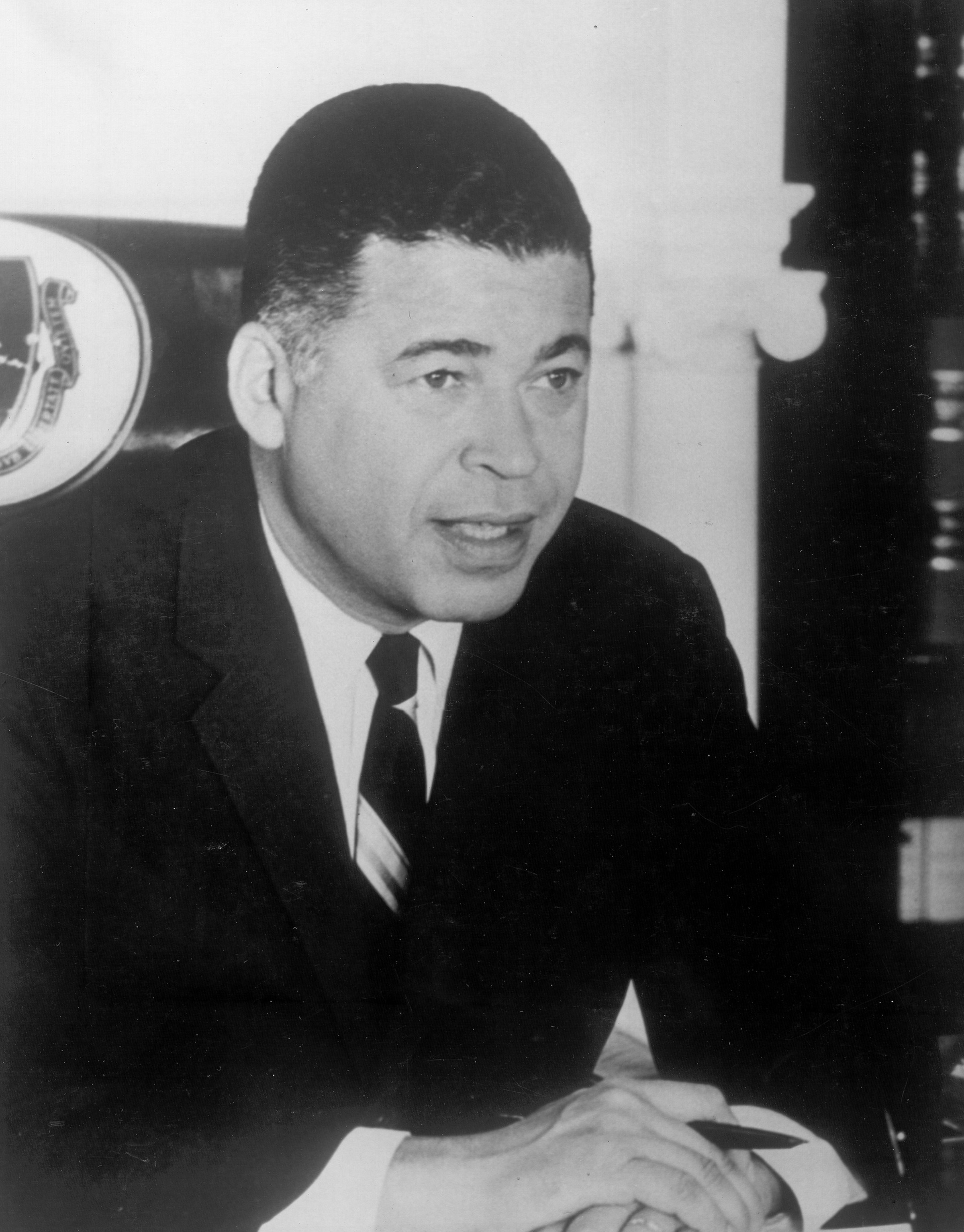
Former US Senator Edward Brooke (wikipedia)
In an election year that the pummeled Democrats, Republicans actually needed victories in New England beyond New Hampshire.  Few thought that they could ever return to their pre-JFK strength in Massachusetts, but at the very least they would like an 80's sized minority and a solid gubernatorial win.  It would have made them competitive in New England generally to hold the line when the GOP loses the districts they otherwise won this year.  Remember, when Democrats lost the House in 1994, the GOP already held seats in Connecticut and Massachusetts that Dems won in 2010 by healthy margins. 
 

Just as importantly, it calls into question the GOP's chances for non-Gubernatorial statewide races.  Treasurer is the only non-Gubernatorial Constitutional office (held by Joe Malone, who lost the Republican nomination for the 10th Congressional district to Jeff Perry) Republicans have won in 40 years.  Before that  Elliot Richardson was the last Republican elected for another statewide office, Attorney General.  His last elected predecessor?  Edward Brooke, the first black Senator since Reconstruction and also the last Republican Senator from Massachusetts until...

...Scott Brown.  The telegenic captain of the New England Republican advance still stands, safely two years removed from reelection, the bodies of his Bay State comrades largely strewn all about.  Looking over his shoulder, Brown now has the target on his back.

Sen. Scott Brown (Boston Herald)