Nothing beats an election wave, if we want to call it that, than a tsunami of postmortems on the election itself. And WMassP&I, never shy to mouth off, would be remiss to not join this cacophony. The Republicans took 60+ seats in the House and 6 in the Senate. Outside of districts where Republicans awkwardly held the seat to begin with, no pickups occurred for Democrats. It was all defense for them and many old guard Dems fell in the onslaught in both the House and the Senate. Not to put too fine a point on it, but the elections were bad for Democrats, very bad...catastrophic! Or were they?
Let's start with the Senate. Frankly, the biggest loss that Democrats had in the Senate was the loss of pickups. By all right, New Hampshire, Ohio and maybe even Missouri or North Carolina should have been in position for a Democratic pickup. Kentucky was always on the edge, but even when a more right-wing candidate emerged as the Republican in Rand Paul, outside of a perfect political climate, the Blue Grass state was likely out of hand. However, in Ohio the Democrats did not field a strong enough candidate. As things turned out, it is improbably any Democrat could have won, but the Lt. Governor Lee Fisher quickly fell out of competition against former Bush staffer Rob Portman. New Hampshire bluing over the years has not ended, but Democratic successes there are contingent on capitalizing on a moment. No such moment this year and that meant GOP wins for Senate and both House seats (the Democratic governor Stephen Lynch, held on). The real tragedies may be Missouri and North Carolina, where neither of the Republican nominees were particularly popular, but absent the energy of past elections, Dems could not beat the spread.
Outside of those seats, look where Democrats lost Senate seats. Democrats have won seats in the Dakotas on the strength of some odd luck, because otherwise those states always seemed odd fits for Democrats. Still, until 2004, Democrats held all federal seats of both states. In a pro-Republican year with an open Senate seat, for the GOP it was taking candy from a baby. Moving onto Indiana, we find a state that actually went for Obama, but otherwise seems not congruent to modern Democratic successes. Only historic names like Bayh have been able to win statewide recently. Finally, there's Arkansas. The only incumbent Senator running for another term who faced a near impossible battle. However, Blanche Lincoln had, for many Democrats, simply run out of chances. Progressives had no use for her, which is a problem in Clinton Country, which had remained a Democratic bulwark in the South. After a bruising primary, her opponents on the barely lifted a finger to help her later.
 |
| Senator-elect Mark Kirk R-IL |
As to the seats Democrats lost, one can view those defeats as part of something bigger than just the race themselves. In Illinois, there remained a taint of whole Blagojevich scandal. Roland Burris' ill-gotten term made the whole race stink and made all the worse by the failure of the bank Alex Giannoulis' family owned. The only silver lining was the Mark Kirk, the eventual victor also had a tainted, or at least embellished record. This led Illinois voters to hold their nose one way or another. Indeed, if you add all the votes on the left (there was a Green party candidate for Senate), the Dems may have kept the seat. Embattle incumbent Gov. Pat Quinn, who take over after Blagojevich was booted by the legislature, won his race. Notably, Kirk may be good for the Senate, if not Republicans' agenda as he has a far more moderate record than the GOP average these days.
Pennsylvania may be Democrats' own fault. From the end of the summer to October, Democrat Joe Sestak, who had taken the nomination from Arlen Specter (himself a GOP to Dem convert) was behind. Then a poll showed him even or possibly ahead. By then, though it was too late. A little bit more money and ground game work might have won the day (Rep. Bob Brady of Philadelphia and other in the city managed an impressive turnout there despite crimped enthusiasm). Pat Toomey, a former head of the Club for Growth, a self-proclaimed pro-business group, won the day, but only by 2%. Further complicating Democratic chances was an unimpressive campaign for governor. Alleghany County (Pittsburgh) Executive Dan Onorato had been lagging behind PA Attorney General Tom Corbett for some time and they may have contributed to the Democratic loss in the Senate.
By far the most troubling loss was in Wisconsin. Incumbent Russell Feingold, known for his independent and refreshingly honest, if progressive perspective, was taken down by a wholly unimpressive candidate. Ron Johnson, a plastic packaging maker, financed his own campaign laden with lies (though Feingold, too embellished in his campaign) and an even more vague campaign platform than the average Republican mustered this year. Still, there, too Feingold may have been dragged down by an unpopular outgoing Governor and an bitter gubernatorial contest that trended Republican. Republicans made gains in moderate, but left leaning areas in the north due to dampened voter enthusiasm.
Otherwise, Democrats held the line. Yes, six losses are really bad, but one only has to look at where Democrats kept their seats to see the silver lining. Victories in California and Washington, though hard fought, were not all together surprising. Murray's race was divisive though, with her relying almost exclusively on votes from Seattle's King County, though in fairness the county hold a third of the state's voters.
 |
| Sen. Michael Bennet D-CO |
Colorado was actually a surprise to many, but incumbent Michael Bennet, who never ran for office before (he was appointed in 2009 to fill out the term of Ken Salazar, now the Secretary of the Interior) beat the challenger, Ken Buck. Buck had stumbled a bit in the later weeks, a victim, perhaps of his own honesty. While Buck attempted to stay on the economy, Bennet focused on other issues as well, a strategy that paid off. Republicans--like Democrats elsewhere--suffered from poor gubernatorial prospects. Denver's mayor John Hickenlooper ran against Constitution party candidate Tom Tancredo (remembered for his support of illegal immigration vigilantism) and Republican Dan Maes. Maes and Tancredo split the conservative vote, but Hickenlooper still secured a majority. Bennet won by plurality. Bennet, who worked for Hickenlooper as Chief of Staff and as head of Denver's Public Schools, made every effort to pry voters out of Denver and Boulder, the state's liberal bastions and it paid off.
In Nevada, Harry Reid held back Republican Sharron Angle, who seemed to epitomize the "WTF" tendencies of the tea party. Angle's gaffes, bizarre views, and general absurdity (Harry Reid would call it extremeness) may have doomed her campaign from the beginning. Her blatantly racist commercials turned off voters (and their national rebroadcasts may have hurt Republicans in CA, CO, and WA). The highlight of her campaign may have been when she beamed into the camera at the only debate "I'm an optimist" like Ronald Reagan. Well played pandering to fans of the Gipper, but it seems merely mentioning Reagan's name did not make Nevadans weak in the knees. Even more absurd, was the campaign's favorite, Christine O'Donnell, who single-handedly made Delaware media capital of the United States, what with her witch-craft, Constitution expertise (we have a separation of church and state?) and gay whisper campaigns against the Republican favorite, Mike Castle. Senator-elect Chris Coons crushed O'Donnell.
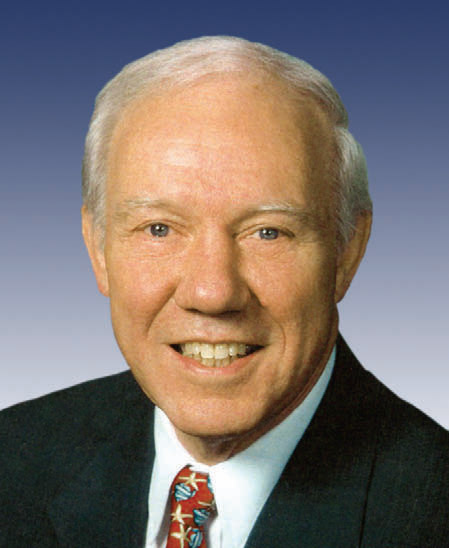 |
| Rep. James Obertar D-MN |
In the House things were far worse and expansive, but there, too silver lining for Democrats may yet be found. Two great tragedies unfolded among Democrats' House losses. Many longstanding Dems from Jim Oberstar of Minnesota to Ike Skelton of Missouri were ousted (losing such Dems with longevity is not a tragedy to the public, but to Democrats). The other tragedy was the loss of Dems who were swept into power back in 2006. There were other noteworthy additions in 2008, like Tom Parriello, who lost last Tuesday.
However, not all of the class of 2006 were lost. Ed Perlmutter in Colorado and Chris Murphy in Connecticut held onto their states. Some regions sustained minimal losses. Out of 22 seats based in New England, only two were lost and both were in New Hampshire. Only two Democratic seats were lost on the Pacific Coast. Only one seat flipped in North Carolina, possibly confirming that state's formal transition to purple.
Having captured numerous governor's mansions and state legislatures, the GOP will have a strong hand in drawing Congressional districts. However, that is not an absolute power and some states leave the job to bipartisan commissions. The Supreme Court has ruled gerrymandering that depresses minority voices is unconstitutional. All this means that the Congressional districts of the 2012 will be very different from those of today. Reapportionment is not thought to be friendly to Democrats this year as states like Massachusetts, New York, and New Jersey will lose seats while Texas could gain four. However, some winners might help Democrats. Washington is expected to gain a seat and Florida, being a state ever in flux, could go either way. The redistricting, though, means that Democrats and Republicans will be scrambling to organize and bring together supporters within the new districts.
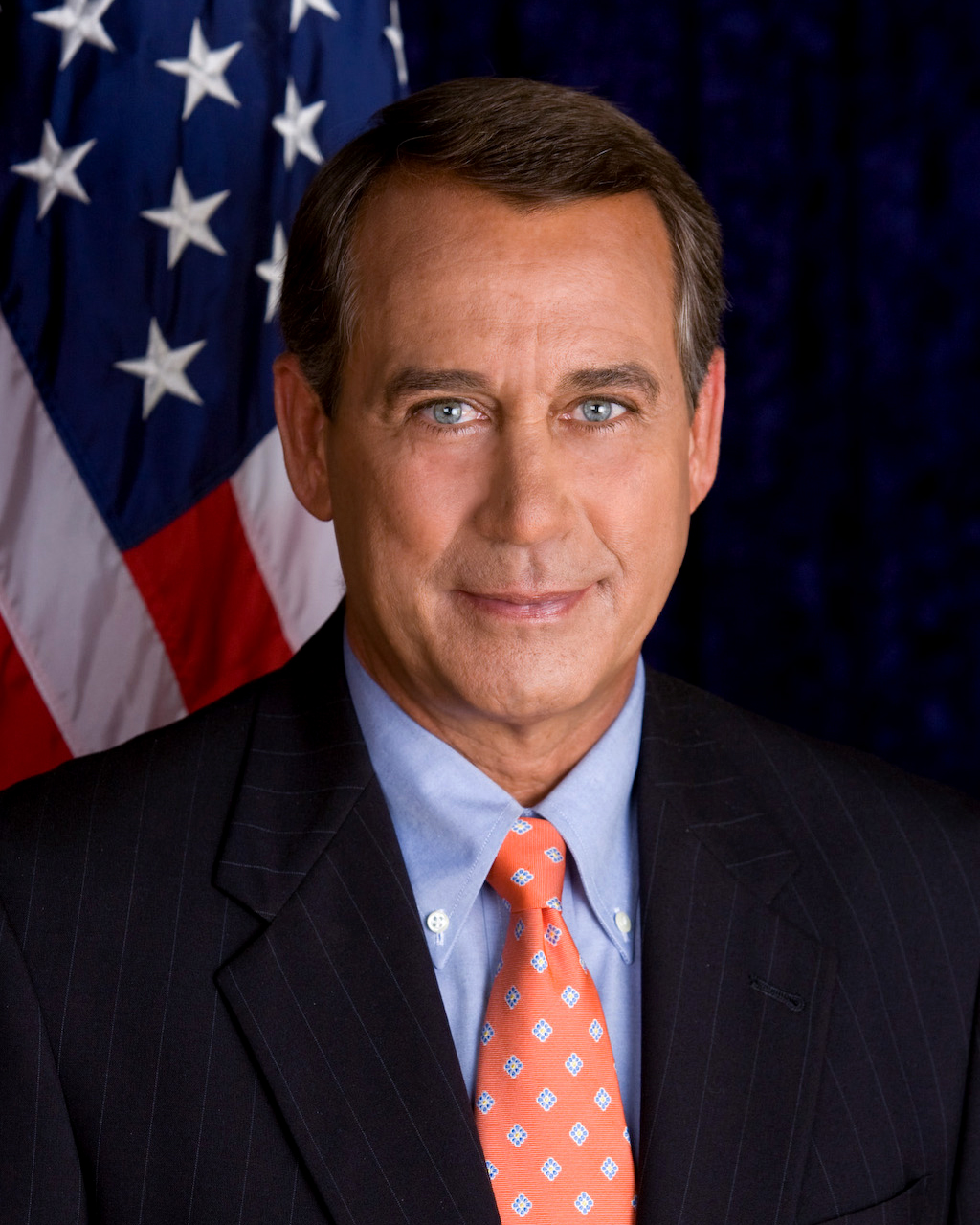 |
| Rep. John Boehner R-OH |
As of this writing, Republicans appeared prepared to draw battle lines against Obama on tax cuts. They seem resolutely against anything less than permanent extension of tax cuts for all income brackets. Still, John Boehner, the man that likely will be speaker, could be the most reasonable man in the room. Thus far, the most partisan comments about the issues (health care excluded) have not come from Boehner. Unlike a presidential administration, leadership in a house of Congress is not a strictly top-down system. Therefore, noise from leadership is not necessarily indicative of the whole caucus' thinking. America's first tanorexic speaker could hold the balance between becoming the next Newt and hand Obama a second term, or actively seek out accommodation with the White House for the good of the country. While in minority, Boehner could afford to lead a party of "no" it had no political cost. Now that his party leads a majority of only one House of the Congress, incidentally, the spending bill originating House, he has to pony up.
Boehner got misty-eyed on election night, once he knew he would be Speaker. Although MSNBC personality Keith Olbermann noted snarkily that the Speaker-to-be would cry at the opening of a supermarket, that emotion, however corny, betrays a less craven character. Indeed, even at his most partisan Boehner has not been quite like Senate Minority Leader Mitch McConnell, who recently changed his middle name to partisan obstructionist. Boehner, if he wishes to govern responsibly may actually need Democrats. While the president's agenda may not have any traction, common sense issues may require Democratic votes to counter tea party pull to fiscal Scroogedom.
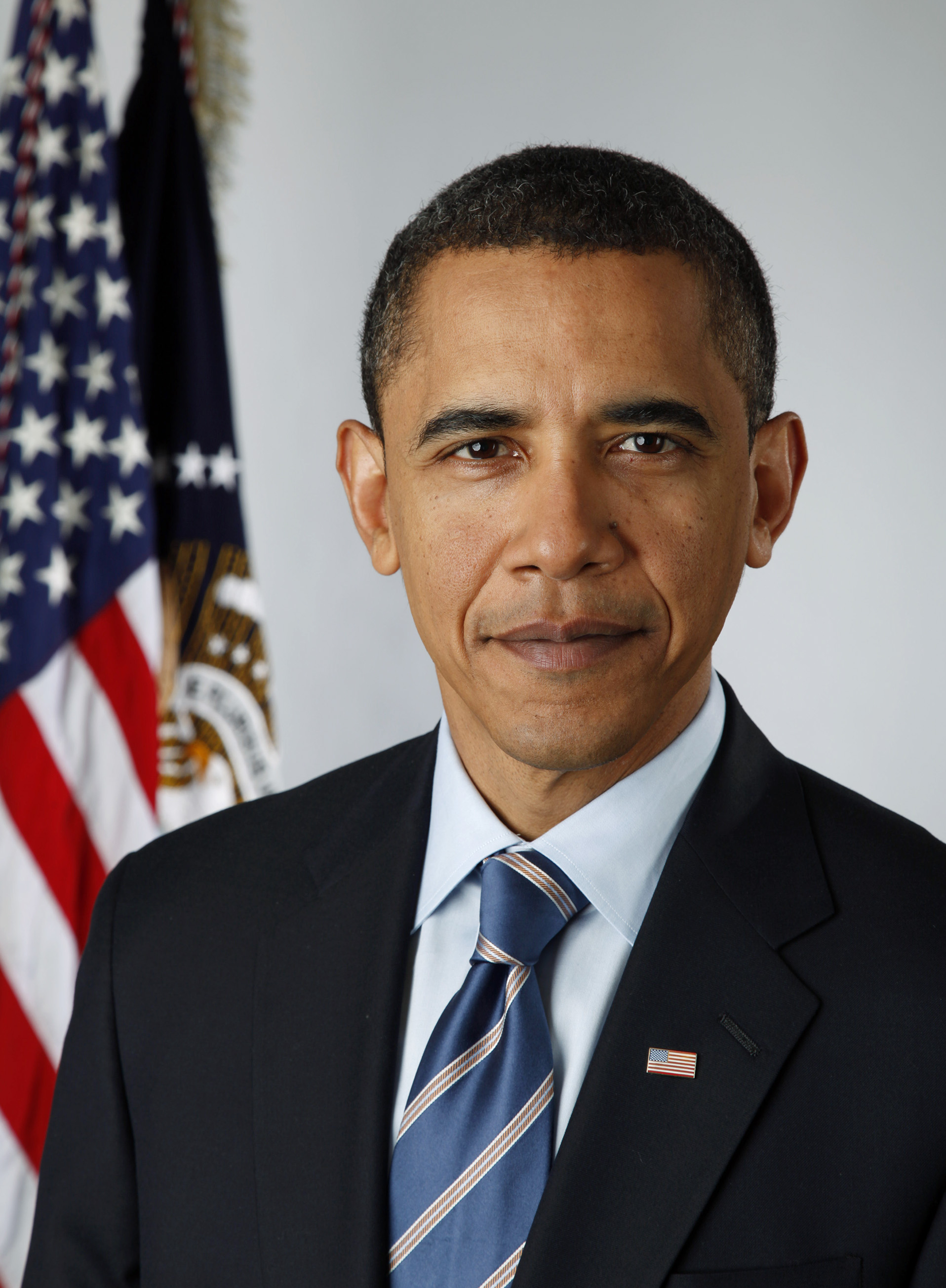 |
| Pres. Barack Obama |
The narrative of this election season has been a President who overreached was whipped by an angry electorate. That story only tells the story conservative want to hear. We will discuss Obama's issues next time, but we will simply say a drained and not enthused progressive base was simply unmotivated this time around. Still, more was happening this election than the popular narrative suggests.
Voter turnout, was actually not low in all areas. In Massachusetts it was at near records for a midterm and in Connecticut controversy erupted over unexpectedly high turnout in Bridgeport (and a lack of ballots for them). Higher turnout may have made the difference in Nevada and Colorado.
In those two states, Democrats showed their organizing advantage by actively seeking out young people, Latinos, and women. In Denver, Bennet supporters were trolling neighborhoods looking to prod as many voters as possible, practically "bumping clipboards" with one another. One can view getting any one of the above named groups or geographic turnout as being key to Bennet's success. To see how much of a difference not organizing can make, look to Pueblo, a reservoir of Latino voters, perhaps unreached and untapped. Turnout was low there and the Democratic Congressman for that region lost.
The pattern repeated itself elsewhere. James Oberstar could not organize his campaign apparatus until it was too late. Better on-the-ground organization may have saved him. Massachusetts Democrats took no chances and did that themselves (we'll explore that, too in a later posting) and it paid off. Democrats must hang onto their system for organizing the ground, which has in recent years been better than that of Republicans. That will be key to winning back the House and hanging onto the Senate in 2012 as many Democrats will face tough fights having been swept in on a wave in 2006.
This year was bad for Democrats, but the real losers could be the country if Republicans do not grow up and work together with the President. Already, their calls for adult conversations have gone juvenile as they still refuse to answer reasonable questions about their plains. If they felt he went too far to the left, they would be remiss to think their positions are already at the half-way point. There may be hope if Boehner loves his country more than his party and moderates like Mark Kirk can still be elected. Democrats can still have hope, too. The President, too, can hope for a better tomorrow...if he gets up off the floor.
*All photos from wikipedia






 Posts
Posts


