Google
Showing posts with label Kateri Walsh. Show all posts

Thursday, March 22, 2012

Take My Council, Please: Cheers & Jeers...

(WMassP&I)
Monday was a day of minor victories, but also grim financial news and schizophrenic behavior at the Springfield City Council.  With three members absent, councilors debated a host of resolutions, put off several measures to committee and even took some further steps on ordinances.  Prior to the meeting, bleak numbers from financial officials cast a pall over a rare Committee of the Whole meeting of the City Council.  While digging into those numbers must wait for another time, the short version is cuts in services, increases in fees, flat wages for workers and other depressing news, absent a turnaround on state aid and property tax revenue.  

At-large Councilor Kateri Walsh, Ward 4 Councilor E. Henry Twiggs and Ward 7 Councilor Tim Allen were absent due to personal reasons.

The agenda itself was a mix of routine announcements, paper pushing and substantive policy.  Reports from utilities were accepted from the council as were financial transfers within and to the fire department.  The Fire Department's Overtime budget has come in way over budget, partly a consequence of chronic underfunding of the department over the last decade.  However, the council also approved transfer of the city's fire-training facility to the commonwealth for $2 million.  The transfer will enable Massachusetts officials to train firefighters in neighboring communities nearby rather than sending them to another facility in Stow.  The city will continue to use the Grochmal Street facility, which will be rebuilt, at no cost aside from electricity and phone service.  City officials said the proceeds from the sale will go into the city's general revenue account.

Area Fire Chiefs Showed up to Support the Transfer of
the training center to the state (WMassP&I)
Two other property transfers in the city's South End were also approved by the Council.

The city also received financial reports for this year that indicate the city will retain about $2 million in free cash at the end of the fiscal year.  The council also approved, by a 10-0 vote an authorization for a bond necessary to cap Bondi's Island.  The bond is required under state law for the owner of any landfill and as the city's primary dump faces closure by the end of this decade, the city must maintain a bond under Department of Environmental Protection rules in order to assure the facility is properly closed.  

Another bond was authorized to pay for design work for Elias Brookings School, one of the school building damaged in last year's tornado.  Ward 2 Councilor Mike Fenton questioned the use of bonds, rather than free cash or stabilization reserves, but finance officials seemed to admit the objective was to preserve stabilization.  However, officials noted that the bond may not need to be used and payment for the design work could come from another source, avoiding interest payments.  Fenton cautioned against the use of this approach in the future, but backed the measure.

Two ordinances were also before the council (with a third brought up to get its second step passage).  The two ordinances on the agenda bulked up the large crowd, which was mostly present in support of one of the resolutions before the council.  The first ordinance, sponsored by at-large Councilors Jimmy Ferrera and Tim Rooke, sought to extend to thirty days from ten, the amount of time merchandise at a pawn shop must be held before it can be resold.  Several pawn shop owners turned out in opposition to the new rule, calling it an unfair burden on business.  Ultimately, on a motion from at-large Councilor Thomas Ashe, the measure was sent to committee before any step was taken.

Wednesday, March 07, 2012

Take My Council, Please: Pushing Paper...

Every now and then the Springfield City Council assembles and does little more than ministerial duties dressed up as discretionary acts.  For example, the city cannot accept a grant or money outside of its own tax base or consistent with a general state law unless the council approves it along with the purpose of the money.  Technically, the city can reject the money or disapprove of its purpose, but seldom does the city turn away money.  Monday was one of those meetings heavy on process and light on policy or politics.  Nothing that needed a recorded vote recorded any opposition.  However, rumblings of future trouble may lie in the background.

The rules of the city council dictate the order in which items may be brought before the council for debate, but that may be set aside if no councilor objects.  Last night featured this en masses as councilors bounced from items on economic development funding to grant acceptances to ordinance revisions.

On the agenda were transfers within departments to purchase a new event tent at the Barney Estate Carriage House in Forest Park, fund an economic development position and pay for additional office supplies in the audit department.  Bracket that last one for now.

Elsewhere the council approved a block of reports on utility work for Verizon and Western Massachusetts Electric.  Grants for the Dispatch department to maintain the facility, Fire Department training, at-risk youths (seemingly not the same as the one in the AWAKE controversy), health and human services, the library and for the construction of a parking garage at Union Station.

Pat Burns, the city Comptroller and a report from the Finance Committee both offered grim pictures for the next fiscal year, but the full details will not be known for a few more weeks.  The City Council also passed the first step of an ordinance to exempt livery vehicles who operate under contract from the state.  This would not apply to "for-hire" livery vehicles like taxis and limousines.  Rather it would apply to buses and vans used by private groups to shuttle people to and from events, for example.  The bill moved to the committee on ordinances where further discussion is expected.

Councilor John Lysak (WMassP&I)
Ward 8 Councilor John Lysak also offered a resolves calling on the Massachusetts to establish a provision in the state's property tax laws to enable to the city to collect a different (read higher) rate on dwellings with four or more units.  Lysak's reasons for the measure would be to relieve some of the upward pressure on business property tax rates.  Lysak also notes that it seems ridiculous that multiple family dwellings are taxed lower residential rates while businesses, also investments pay a higher rate.  He justified the higher rate on the thinking that multiple family dwellings also consume more city services than single family residences.  

The resolution drew opposition from some councilors and the Sears family, notable political Illuminati and owners of Sears Real Estate.  The measure was referred to committee, which is itself a somewhat absurd notion since resolves carry little if any weight.  However, Lysak was resigned to the resolve's fate and stated that he was merely looking to start a conversation.  Among the more bizarre aspects of this situation is that Lysak, allegedly the Council's only known Republican, is pushing for higher taxes, sorta.  However, it has also been stated by council insiders that Lysak is, despite his party identification, is to the left of other councilors confirmed to be Democrats.

The earlier matter to transfer funding in the Audit Department came about after the acting head of that department explained that money for salaries in her department were being used to office supplies.  The transfer was quite simple, but the money came from salary positions that went unfilled.  Indeed, the acting director described herself as the only employee in the Audit Department.  While much of the council seemed nonplussed by this fact, others expressed some concern that the part of the city charged with ensuring the city is spending its money responsible has less than a skeleton crew.

The other detail that raised some flags occurred during a discussion started after Ward 7 Councilor Tim Allen suggested that the Council listen a to a report of the finance committee before taking financial measures out of order in the agenda.  By taking these measures out of order, the council often spent a great deal of time asking questions of officials that would be answered in the report.  At-large Councilor Kateri Walsh correctly noted that Allen could always object and force the agenda be maintained (unanimous consent is needed to go out of order).  At-large Councilor Tim Rooke, the chair of the Finance Committee then offered his report on finances.

(WMassP&I)
What was notable about that report was its suggestion to Allen or any interested party that one attend the budget hearings held before Mayor Domenic Sarno will present his budget.  Allen and others were more interested in budget hearings with department heads rather than just finance officials.  Except, those hearings have not yet happened.  The mayors office confirmed with WMassP&I that none had happened and that none were scheduled.  Thomas Walsh, the mayor's communication director, did intimate that they would happen, but not when.  However, it has been noted that at this time last year the budget meetings had already begun and the mayor will need to present his budget by mid-May at the latest.

There is a rising concern among councilors, or at least ones given to deep contemplation of city business, that the mayor's office may limit these budget hearings.  It is at these meetings that some of the most meaningful budget changes occur in contrast to the often blunter and less surgical cuts the council makes while approving the budget.  Combined with the administration's dire warnings about the FY2013 budget, this may suggest an effort on the part of the mayor to rush the budget and force the council to either unwillingly or blithely accept a budget that may endanger the city's solvency and rainy day funds.

Monday, February 13, 2012

Testing Home Rule...

Legislators, aides and union officials at Friday's Meeting
(WMassP&I)
With city schools already more than a week behind schedule and many students still living in temporary housing after last year's tornado, Springfield City Councilors and the city's Beacon Hill delegation are looking to delay the city's participation in Massachusetts Comprehensive Assessment Systems test.  However, the proposal has received a cool reception from state education officials.  A spokesman for the Commissioner of Elementary and Secondary Education seemed to foreclose any delay of more than a few days.

On Friday, at-large Councilor Kateri Walsh, chairwoman of the Intergovernmental Relations Committee held a hearing on home rule legislation allowing the city to push back MCAS testing from March-April to April-May.  The proposal is cosponsored by Walsh, at-large Councilor Thomas Ashe, Ward 2 Councilor Mike Fenton and Ward 8 Councilor John Lysak.  Representatives Sean Curran and Mike Finn and Senator Jim Welch attended.  Staffers from Representative Brian Ashe and Ben Swan and officials from Springfield teachers unions were also present.

The original mover behind this legislation was, according to those present, Springfield Education Association president Timothy Collins.  Collins himself was unable to attend the committee meeting as he was in Washington for an event with US Secretary of Education Arne Duncan.

While there was a consensus among all present that Springfield school children deserved the extra time, however that alone may not make it possible.  The Commissioner for Elementary and Secondary Education, Mitchell Chester, seemed to pour cold water on the idea in a letter to Mayor Domenic Sarno dated February 8th.  While Chester implied he had limited power to delay Springfield's testing schedule, he suggested that a Special Act would actually lead the city to default on meeting state education requirements.  Under any circumstances, failure to meet testing requirements would have severe repercussions for the school district and for students including a loss of funding and a loss of students' chances to meet graduation requirements.

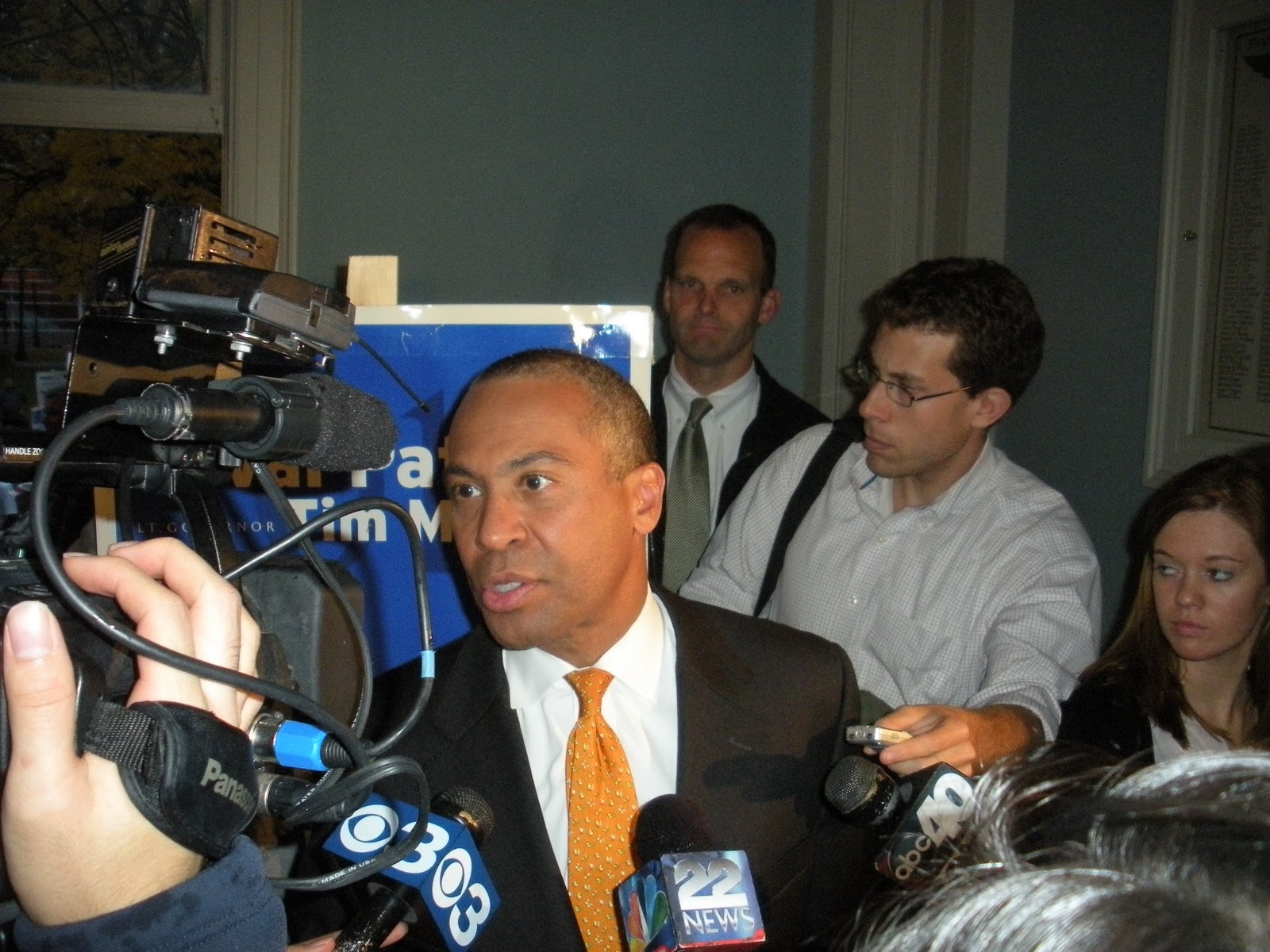
Gov. Patrick in 2010 (WMassP&I)
A home rule petition seems doubly unlikely as would require the Governor Deval Patrick's signature.  As the commissioner is an executive appointee, it is likely that the governor would stand by Chester's assessment and veto home rule legislation that would create an exception to statewide policy the commissioner opposes. 

While unmentioned in Chester's letter, the officials in attendance speculated that cheating among students may be a concern if Springfield takes the test later than its neighbors, which would take the test on time.  J.C. Considine, the commissioner's spokesman, confirmed that the integrity of the test is one, but hardly the sole concern of state education officials

However, the legislative avenue presents other issues as well.  Curran, who sits on the Education Committee and would likely have jurisdiction over the city's home rule petition, said that the legislative process itself could delay a home rule petition beyond March.  Specifically, he noted that the bill would need to clear several committees with lead times of a week or two all before it could be passed by the House, assuming the Speaker puts it on the calendar at all.  A similar process through the Senate would follow.

Councilor Walsh (Facebook)
All officials in the room seemed agreed to pursue a two-pronged effort of home rule legislation and lobbying of the Governor and Chester.  Assistant City Solicitor Thomas Moore assured Walsh that if the Council acted on the petition Monday and the mayor signed it soon thereafter, the measure would be in the office of the clerk of the House of Representatives with a day or so.  However, the Byzantine bill-making process leaves executive action as the likeliest scenario.
Considine, the education spokesman, described the power of the commissioner to give districts a "temporary extension" for testing as narrow.  The commissioner could give districts like Springfield, "a few additional days," but little more than that.   Furthermore, he explained, any longer than that would jeopardize the state's ability to get prompt turnaround from contractors grading the test.  Given that the subject of the March/April tests, English Language, uses many open response answers, the turnaround time is already tight as answers must be graded by humans rather than a machine.  This prompt turnaround has been requested by school districts who want the results to begin planning curriculum for the next year.  Considine said test results in past did not come until some schools had practically reopened for the Fall.

Monday, January 02, 2012

New Government, Old Faces...

The Mayor's Procession Line (WMassP&I)
In a tasteful, but crowded ceremony at City Hall, Springfield swore in its City Council and its Mayor Domenic Sarno for another term.  Sarno will be serving the city's first four year term following enactment of a ballot question in 2009 that extended the mayor's term.  The School Committee is on a different election calendar and therefore members of that body neither faced the voters last November nor needed to be sworn in.

Typically, the city's inaugurations are held in Symphony Hall, however the city still put on a show which included typical guests like Cong. Richard Neal and speakers on behalf of the Massachusetts Senate and House.  State Senator James Welch and Representative Angelo Puppolo spoke on behalf of their respective bodies.

Also in attendance were Sheriff Michael Ashe and District Attorney Mark Mastroianni.

The invocation was provided by Our Lady of Mount Carmel's pastor, Robert White while City Clerk Wayman Lee administered the oath of office to the council.

Cong. Neal in December, 2011 (WMassP&I)
Congressman Richard Neal offered words of support on behalf of the United States House of Representatives.  He waxed somewhat nostalgic about his own service as mayor of the city and as a councilor remarking that he had taken office in that same chamber some thirty-four years ago.  Neal also emphasized the continuity between the council and the public service careers that began as members of that body.

Welch, in his first speech before Springfield's organizational meeting as one of the city's state senators, offered an anecdote about how his mother told him to say "hi" to mayor Sarno as evidence of the mayor's personable demeanor and its benefit to the city.  He also insisted the area have no more storms.  The legendary weather events that plagued the Springfield area played a prominent role throughout the ceremony.

Puppolo, by contrast, offered more direct praise to Sarno, a former colleague of his.  When Puppolo resigned from the council in 2007, Sarno was still a councilor.  Puppolo conveyed his sense that Sarno had the respect and confidence of both governor Deval Patrick and House Speaker Robert DeLeo following the June tornado and October blizzard.

Sarno w/ Judge Mary Hurley (WMassP&I)
Former Mayor and current Chicopee District Court judge Mary Hurley administered the oath of office to Mayor Domenic Sarno along with City Clerk Lee.

In his remarks before the audience, Sarno struck a notably humble tone, noting that the decision by residents to enact a four year term for the mayor was made for a reason.  Specifically, he said that residents were likely looking for more vision and a capacity to limit the short-term impact of politics upon the mayor's office.  

Saturday, December 31, 2011

The Year in Springfield, 2011...

(WMassP&I)
With another year under Springfield’s belt comes another edition of the Year in Springfield.  In its 375th year of existence the City of Homes suffered through one of the most erratic year of weather on record which brought a range of immense destruction and gross inconvenience.  Politically, it was also a tumultuous time from Springfield City Hall to Beacon Hill to the steps of Harvard University.

The year 2011 opened in Springfield with an eye, as in other places, to Washington, where a cadre of increasingly nihilistic “citizens” took their place in Congress and in state capitals across the nation.  While the boat rocked in Massachusetts with a shrunken, but still massive Democratic edge in the State House, Governor Deval Patrick took the oath of office once more. 


However, America was rocked only eight days into January when Arizona Congresswoman Gabrielle Giffords was shot in the head, by quite literally a madman.  Early accusations pointed to tea party extremism, but ultimately mental disease and not right-wing anarchy drove the young man to shoot Giffords and twelve others while murdering six.  Gifford suffered a traumatic shot to the head, be saved by the quick thinking of her intern of five days.


Cong. Gifford w/ her Mother weeks

after the shooting (PK Weis via Facebook)
President Barack Obama, given his first significant opportunity to play the healer-in-chief gave a stirring speech at a memorial service attended by Arizona’s Senators, its governor with Obama has frequently clashed, Giffords’ husband, Mark Kelly and Supreme Court Justice Anthony Kennedy, who oversees the Ninth Circuit within which the slain judge, John Roll, served.

The event took on somewhat of a local relevance when Congressman Richard Neal held a press conference after the shooting noting that he had known Giffords and had raised money for her ahead of what had been a difficult reelection in 2010.  However, he also urged that parties take down a notch the vitriol and anger that had become pervasive in politics whether Loughner was driven by politics or not.


Also in January Amaad Rivera took office as the Ward 6 Councilor following the resignation of Keith Wright.  He took office because the city’s succession law is only written with only at-large councilors in mind and fills vacancies with runners-up.  Technically, Rivera was a runner-up even though he lost the 2009 election.  The chorus of dissent included this blog and came to a head on a vote for eminent domain as part of Forest Park Middle School renovations.  Rivera invoked Rule 20, the council’s parliamentary motion to delay the project to the shock of other councilors.  While we would settle our differences with Rivera, many remained incensed over the use of Rule 20, ironically including some who would encounter similar anger over its usage.


Councilor Amaad Rivera (WMassP&I)
However, the focus on Rivera would lessen as he became one of a super-majority of councilors that opposed a wood-burning biomass plant.  The special permit had been granted in 2008 by the last council on a 7-2 vote.  All ward councilors and two at-large councilors, including Jose Tosado who voted for the permit in 2008.  The Callahan Family, owners of Palmer Renewable Energy and like-named paving company poured money into experts who dismissed, often condescendingly, the health concerns raised by opponents.  Against the din of protests and threats of legal action the council revoked PRE’s permit on a 10-2 vote.

Monday, December 19, 2011

Take My Council, Please: Good Night & Good Luck...

(WMassP&I)
The Springfield City Council closed out the year on a high and uncharacteristically brief note.  Most of the measures were largely uncontroversial approvals of grant money and donations.  An informal caucus was held at the end to select the Council’s officers for next year.

Budget officials announced that the city finances were officially in balance after the council approved reserve funds to fill the budget hole.  Funds were accepted to repave a portion of Sumner Avenue after gas main work, renovate Hubbard Park as part of the UniFirst land swap, and fund health and library programs.

Ward 1 Councilor Zaida Luna unexpectedly withdrew her motion for reconsideration of tax incremental financing for the F.W. Webb project slated for a parcel of the city’s Memorial Industrial Park off of Roosevelt Avenue.  The project has been criticized for creating painfully few jobs while costing the city hundreds of thousands in potential tax revenue over ten years.  With Luna’s withdrawal, the prior acceptance of the financing stands.

The council also gave final approval to an ordinance establishing site assignment fees.  The fees would be used for projects such as the biomass plant, but would have applications beyond the legally uncertain power plant.  Councilors also offered a resolve to encourage the state to push up MCAS testing by several weeks to compensate for lost class time due to the October snowstorm and subsequent eight days without school in Springfield.


Council President Jose Tosado (WMassP&I)
Finally at the end of the meeting, councilors recognized Council President Jose Tosado who, having declined to seek reelection to pursue a mayoral bid, will be leaving the council in January.  Councilors offered a proclamation and a plaque recognizing him for his ten years of service to the council, numerous assignments to council committees and service on the School Committee. 

At an informal caucus after the meeting, councilors made official what had been declared weeks ago.  At-large Councilor James Ferrera was voted Council President.  Ferrera’s acceptance of the presidency and recognition of Tosado and at-large Councilor Kateri Walsh's vice-presidency were executed without any blatant gaffes on his part.  Ward 8 Councilor John Lysak was elected vice-president.  Ferrera’s election was unanimous and included Ward 6 Councilor-elect Ken Shea and once and future at-large councilor Bud Williams.  The unanimity had been a surprise as several councilors were thought to object to Ferrera’s nomination.  Ferrera has been known for his often gratuitous motions, insipid questions and pained understanding of basic council procedure and city business.


(WMassP&I)
Speaking to WMassP&I after the meeting, Tosado said it “feels pretty good,” becoming a civilian again.  For now he intends to focus on his family and full time job at the Department of Mental Health, but will remain involved in the community.  As for any future political activity, Tosado only offered a “Stay tuned.”

For our part, we have in the past been suspicious of Tosado, but in the nearly year and a half since we started “Take My Council, Please,” we have found him to be an imperfect, but diligent member of the council.  It will be strange to cover the council without his fairly effective administration of meetings.  However, as he heads back into civilian the life, we at WMassP&I wish him the best.

Wednesday, December 07, 2011

Take My Council, Please: Who Gives a TIF?...

(WMassP&I)
The gang at 36 Court Street got together once again, but for the most part without the trademark mischief.  The Springfield City Council met again for only the first of two times this week to consider a roster of formal acceptances of grants, approve tax incremental financing approve a permit it lacks the power to approve.

The grants to animal control and the Department of Health and Human Services were accepted late in the meeting, but with nary a word of explanation, an oddity for the council.  The grants to HHS were in excess of $1.2 million in total.  The council also approved the emergency appropriation for the October snowstorm, although Ward 2 Councilor Mike Fenton warned the city may need to issue a type of short-term bond to pay for the disaster pending disaster relief funding from FEMA.

Ward 4 Councilor E. Henry Twiggs spoke about a couple of item that concerned him although no official action was taken at that meeting.  Early on in the meeting he asked that the council investigate or rather asking Code Enforcement to investigate a halfway house going into his neighborhood.  Twiggs’s objection appeared to not be the fact of the halfway house, but rather the fact that it had been established as something other than what it ostensibly was.  The second measure, sponsored with Ward 1 Councilor Zaida Luna, called for assistance to Community Block Development Grand and HOME projects that affected by the June tornado.

The tax incremental financing projects were by far the most contentious items of the evening—or at least one of them was.  The first was an agreement for a TIF to Custom Carbide, which is currently at the corner of Tapley and St. James Avenue.  The company is seeking a TIF, apparently only to finance the move to Dwight Street in a tax-exempt formal postal building.  According to Ward 7 Councilor Tim Allen, the company could move elsewhere as its clients are as diverse and far-flung as Boeing, but wanted to stay in Springfield.  The TIF passed without dissent.


Councilor Allen (Facebook)
The second TIF was less fortunate, indeed its fate remains uncertain.  F.W. Webb, a plumbing supply company wanted to purchase the last bit of the former Smith & Wesson Industrial Park land off of I-291.  Although there is some confusion as to the dollar amount, the TIF called for a 50% break on the taxes on the building for 10 years.  The promised jobs were minimal and total employment at the site was guaranteed to under 20 jobs with the potential for a few more.  Including a sale price of about $1 million and un-exempted tax revenue, the city stands to gain about $6-7 million over ten years from the project.  The project had been in the works for about two years and had surfaced earlier this year, but languished in committee for several months.  Allen, the chair of the council’s economic development committee, presented the project and recommended.

However, Fenton said he could not support the project because the property should be used for a project that will attract more jobs.  By comparison, the Performance Food Group facility nearby has hundreds of employees.  Fenton also noted that there are no assurances for more jobs or assurances that union labor will be preferred during construction.  Ward 6 Councilor Amaad Rivera noted that a similar project with the same company included considerably more concessions from F.W. Webbs, but no TIF was provided.

Wednesday, November 30, 2011

Take My Council, Please: The Walsh Filibuster...

**UPDATED 12/3/11** Following a report by Maureen Turner posted to her Valley Advocate blog "On Springfield" on biomass & campaign contributions, the Republican today singled out Kateri Walsh's hundreds in campaign contributions from the Callahan family and their lawyer Frank Fitzgerald.  The same report notes that City Comptroller Pat Burns found ZERO financial implications to the city if the council appeals PRE's permits to the Board of Appeals.


(WMassP&I)
When Steven Desilets approved a building permit for Palmer Renewable Energy’s biomass plant off Page Boulevard, he had to know it would provoke a rebuke from the City Council.  Five months before he approved that permit, the council voted 10-2 to revoke PRE’s permit on the grounds that the project had changed considerably from its previous incarnation and would pose a threat to human health.  Desilets would approve the permit on the advice of the Law Department, which argued that PRE did not even need a special permit under the revised proposal.

On Monday the Council gathered for a special meeting to formally appeal the building permit.  Because the council is an integral part of the planning and zoning process of the city, it has standing under the umbrella state zoning law to appeal the decision.  It can appeal to both the city’s Board of Zoning Appeals and, if still unsatisfied, to court as well.  Indeed, it seemed as if the council would do exactly that last night…until one councilor made Republican Senate Leader Mitch McConnell proud and filibustered.


Councilor Fenton (Facebook)
Before the meeting began it was well-known where everybody stood.  Ward 2 Council Mike Fenton wisely requested a recorded vote on last week’s non-binding resolves and it revealed that at-large Councilors James Ferrera, Tim Rooke and Kateri Walsh were opposed to any further council action to oppose the biomass plant.  All ward councilors and at-large councilors Thomas Ashe and Jose Tosado were in favor of further action just as they were in favor revoking the permit.

Nevertheless, the opponents tried their best to derail the process.  Ferrera started first by trying to sow the seeds of confusion among the councilors with an assist from City Solicitor Ed Pikula.  Ferrera inquired into who would represent the council if it voted to appeal and Pikula argued that the Law Department may need to recuse itself because it would be obligated to defend the building commissioner.  Ferrera also asked about PRE’s existing suit against the city over the council’s permit revocation.  However, that remains, as Pikula described, a placeholder suit if a court or other board rules the special permit is indeed needed.

Ward 8 Councilor John Lysak took on Pikula’s position directly asking how the Law Department could be defending the city against PRE’s lawsuit on the revocation while maintaining the position that a special permit is not necessary.  Pikula argued that the two issues were parallel, but did not have conflict within each case individually.

At the same time, however, Pikula noted that the council cannot appropriate money on its own for a lawyer.  Though true, Pikula could also not deny that the council could finance counsel out of its own pockets, receive pro bono representation, or even go to court pro se.

However, Fenton noted that the council needed no lawyers to appeal to the Board of Appeals.  The board is an administrative body just like the City Council and like the City Council, appellants to the board appear without any council constantly.  Certainly a lawyer can represent an appellant before the board, but there are no legal documents to serve or actions taken that require a law license to be properly executed.  Thus, before the Board of Appeals, the council needs no lawyer and does not even need to contemplate the need to find money for one until and unless the Board rules against the council.

Thursday, November 24, 2011

Take My Council, Please: Council Talks Turkey on Biomass...

(WMassP&I)
With the holidays around the corner, the turkeys of the Springfield City Council gathered Monday for a Thanksgiving week meeting to handle some issues that had been at a simmer for several weeks now.  Some of the hottest items were taken care of before they boiled over.  Others had the heat turned up higher for next week‘s special meeting.

Among the minutiae before the council was a series of utility reports, permit revocations for non-renewal, several property donations and grants.  The revocations were for underground storage tanks and parking lots permits brought up by the City Clerk because the permittees failed to respond to renewal notices.  The city formally accepted some parcels of property for public use and the council accepted grant money for Health & Human Services, Dispatch Services and tornado relief.


Bill Gibson of Springfield Speaks in Opposition to Biomass
Plant Permit (WMassP&I)
A speak-out before the meeting included several opponents of the biomass facility on Page Boulevard, which controversially received a building permit despite the council’s revocation of its special permit.  Among the speakers were local activist Michaelann Bewsee and a representative from the Conservation Law Foundation, a New England environmentalist group.  Kevin Sears of the Sears Real Estate Company spoke to oppose to the city’s Foreclosure Ordinances adding in an un-sourced claims of retaliation by lenders who would refuse to loan in the city (a legally suspect action, if true).

Budgetary updates showed the city more or less on target, but the monthly reports are off because City Hall was closed at end of the October when the city often receives tax money.  Ward 7 Councilor Tim Allen requested more information on the Tornado and now October Snowstorm costs to the city.  Those numbers were not included in officials’ reports because spending for disasters is done in separate emergency accounts.  Budget officials promised a detailed report on disaster spending by the next meeting.  In a pleasant surprise, the city also clocked in a higher than expected surplus last year of $4.7 million.

Ward 2 Councilor Mike Fenton, chairman of the Finance Committee, also announced an end to the city’s budget drama with the transfer of $6.2 million from stabilization reserves to close the city’s budget deficit.  Fenton praised the council reduction to $6.2 million from $10.5 million from stabilization reserves used to balance the city’s budget.  The reduction was made possible through cuts and an increase in local aid to the city.  Fenton called it a “much more reasonable position,” for the city in light of still-unknown disaster costs, union contract negotiations and another deficit expected next year.  Fenton also alluded to using some stabilization to mitigate an increase in the property tax rate for the city.

Saturday, October 22, 2011

Take My Council, Please: Anatomy of a Feud...

Sorry for the delayed post of this week's Take My Council, Please.  If it make you feel any better, part of the reason was due to the relatively minor items that were before the council.

(WMassP&I)
The Springfield City Council pulled out a quick meeting despite some divisiveness on non-binding issues and ordinance revisions  The meeting took place following a rally of Occupy Springfield and Take Back Springfield, two separate groups arguably focused on the same issues.  Many from those protests, who were on hand to support a resolve against Bank of America and technical changes to the city's foreclosure ordinance, filled the council chamber and milled around city hall.  Although the chamber and the hall were much fuller during the Biomass debates, police were deployed throughout the building.  Ultimately, the proposal fueling much of the crowd's interest was sent to committee deflating the crowd and causing them to release their anger in not-so-veiled, but somewhat overstated political complaints to the council generally.

Disposing of the minutiae, non-controversial ordinance revisions of the city's vicious dog and criminal disposition ordinances passed second steps.  Fire, Library, Health & Human Services and the Health departments all got approval to receive grants.  Director of the Health and Human Services Department Helen Caulton-Harris once again showed off her departments grant-writing prowess with a $100,000+ haul.  The council received reports from Ward 1 Councilor Zaida Luna on a literacy program and Ward 2 Councilor Mike Fenton on prior year bills.  Payment of the bills was approved without objection.  A permit and some zoning changes were approved and deed delivered to the developer of a tax-foreclosed property.

Councilor Rivera (Facebook)
Toward the end of the debate the council considered two resolves.  Once sponsored by Ward 6 Councilor Amaad Rivera called for the city remove its remaining funds from Bank of America and another calling for greater enforcement of the city's residency ordinance.  The residency ordinance encouraged the mayor to negotiate in residency to the upcoming employee contracts while working to see the spirit if not the letter of the residency ordinance is applied to non-bargained employees.  The city ordinance is rarely enforced and Mayor Domenic Sarno has not appointed the enforcement commission as required by law.  More to the point, he frequently uses its exemption provisions.  Councilors ultimately sent the resolve to committee to discuss broader options to enforce residency.  At-large councilor Jimmy Ferrera called for a home rule petition, but such a petition would require the mayor's signature and would almost certainly die in the legislature.  This was a point noted by at-large Councilor Tim Rooke, but he also pointed out the politics behind legislators avoidance of the issue.  However, neither point suggested a way to actually enforce residency broadly nor a recognition that legislating away residency as a negotiable item is political impossible in this political environment.

On the Bank of America resolve, Ward 7 Councilor Tim Allen rose to ask the city's Treasurer-Collector how much money the city really had in the Bank of America account.  The treasurer said that the money is there because one payee to the city continues to wire the money into that account, despite continued protests to the contrary.  The treasurer went on to say that the only reason the city left the bank anyway was because they got a better RFP from Citizens Bank, a Scottish-owned firm.  Allen was uncomfortable singling out Bank of America, however much the institution deserved it, especially in light of the city's broader efforts of the city to  rein in renegade financial institutions.  Rivera, who sponsored the resolve disagreed and voted against an effort to send the resolve to committee, where it went.  The crowd overheated from the earlier rally attempted to call out "shame" for each councilor that sent the measure to committee, but Council President Jose Tosado squelched that.  The crowd exited chanting, "We'll be back!" as if the measure had died, which it did not.  Rivera said afterward that the dialogue of sending the measure to committee was a positive thing, although he would not have done so.

Wednesday, August 24, 2011

Take My Council Please: Grocery Ills...

The Springfield City Council held the equivalent of a double feature Monday night.  A regularly scheduled Hearings meeting, during which the council approves or denies permits, followed a special meeting where numerous items were debated.  City Council President Jose Tosado had scheduled the meeting to complete the final steps to pass ordinances related to foreclosures.  However, like any meeting, councilors could and did tack on whatever they wanted.  As momentous as the foreclosure ordinances were, it did not provoke the same level of back and forth, among the councilors at least, as other items.

First the easy stuff.  The Council formally accepted the withdrawal of a petition for an electronic sign on Dorset Street for the Martin Luther King, Jr Charter School.  Reports came from the General Government and Audit Committee over progress at the Putnam High Construction site, specifically possible violations of the city's Responsible Employer Ordinance.  Also discussed, but ultimately referred back to committee was the agreement to a Tax Incremental Financing for a new warehouse for F.W. Webb, a plumbing supply company.  The TIF is a condition for the city to sell some of the remaining land on the city's Smith & Wesson industrial park.  There is a great deal of controversy over the shockingly low number of jobs the project will create and concerns that the developers will make little or no effort to employ city residents.

(WMassP&I)
The council also undertook the second and third steps necessary to approve two ordinances related to foreclosures.  The first ordinance requires the banks that own foreclosed homes to post a $10,000 bond that can be used by the city to maintain the property.  Presently, the city must cover the cost of maintenance necessary to keep the foreclosed properties from blighting the neighborhood.  This ordinance would transfer that cost, if any, to the banks.  They would recover the bond fully upon sale of the property.  The other ordinance mandates mediation between the bank and homeowner when foreclosure become likely.  Banks would be fined for refusing to attempt mediation consistent with the ordinance.  After the second step passed, many of the people in the council chamber in support of the bill erupted in cheers.  Little did they realize that the ordinance had not yet become law.  As they marched out of the chamber and onto the steps of City Hall the council debated several resolves before finally passing both ordinances with a pair of 13-0 votes.

The foreclosure legislation is believed to be a model in the commonwealth if not the nation as a whole.  There are some rumors that congressional Democrats have contacted City Hall for more information about the ordinance.

Some of the biggest fireworks, however, occurred over a resolve, sponsored by at-large Councilors Jimmy Ferrera and Tim Rooke.  The resolve, whose campy language could appeal to anybody favoring style over substance, called on the mayor, police commissioner and Chief Administrative and Financial Officer to meet with the council to find money to add to the police overtime budget to combat the rise in crime.  In short, the resolve wanted more police overtime money because that would reduce the city's crime rate.  Ferrera suggested that the city should raid its cash reserves and other backups immediately to fight crime, even though the city's overtime budget was left completely intact in the 2012 budget.


Councilor Edwards (Facebook)
Ward 3 Councilor Melvin Edwards, however, was not amused or impressed.  In an impassioned, biting and articulate speech, Edwards slapped Ferrera down for advocating pouring money down a very specific hole to solve a problem as complex as the city's crime problem.  He asserted that he fully supported the police department and whatever it needed to keep the city safe.  However, Edwards rejected the notion that throwing money at the problem (or put another way, playing stat games) was the solution.  "If I choose to strangle my wife in the privacy of my own home," Edwards said, "it would not matter if there were a thousand cops on the street."  Even though Ward 5 Councilor Clodo Concepcion stood up in support of the resolve saying "We're scared,"  it was clear that Edwards speech had a deep and instantaneous impact.

Councilor Rooke, a sponsor of the resolve, quickly pivoted saying the call for a meeting with councilors should and must "look more broadly."  Other councilors also stood in support of the resolve, but with the intention of looking more broadly as Rooke suggested, mindful of their sense that the mayor does not include the council often enough in policy discussions.  When Ferrera spoke again on the resolve, it was clear he was on the defensive.  He hastily pointed out that his resolve called for a meeting and that increasing overtime for the police department was merely an idea.  He even pointed out that the city clerk and not he had put titled the resolve as one advocating more overtime.  Tosado acknowledged Ferrera's concerns and City Clerk Wayman Lee promised that the record would reflect it.  The resolve passed in a brilliant display of political theater.

Friday, July 29, 2011

Moving on Up...

Councilor Rivera (WMassP&I)
The numbers out of the Election Commission indicate plenty of interest in the citywide races slated for this November.  At last count thirteen interested candidates have qualified to compete for the city's five at-large seats and three candidates have qualified for mayor.  As a result there will be a primary in September for both of those offices.  However, the relatively high interest in the city's elected offices at-large were only matched by a near-indifference on the ward level.  The only contested ward race will be in Ward 8 where Orlando Ramos will seek a rematch with current Ward 8 rep John Lysak.  Even ward 6, one of the city's most politically active wards is facing a one man race with Ken Shea seemingly destined to take that seat in January.  

The current occupant of that seat, Amaad Rivera, however, kicked off his campaign for election to one of the city's at-large seats.  At a somewhat humble, but intimate gathering of core supporters, Rivera formally launched his candidacy.  The event was held in the Hall of Local 108 of the Carpenters Union and attended by twenty-five to thirty people, many of them crucial backers of his  2009 run for the Ward 6 seat.

Several long-time supporters of Rivera spoke.  First up was Katie Stebbins a member of the Springfield planning board and wife to former city councilor Bruce Stebbins.  Stebbins, who described both herself and her husband as big supporters of Rivera, recalled several late-night conversations in her kitchen with Rivera regarding issues affecting the city.  Although her husband is a Republican and not necessarily in perfect political sync with Rivera's progressive values, she, her husabnd and Rivera are united in fighting for a stronger Springfield and good government.

Michaelann Bewsee (WMassP&I)
Michaelann Bewsee, the head of Arise for Social Justice, a Springfield advocacy group scolded Amaad for not running Ward 6 because there would be no race there after all (she made a point of noting no disrespect for Shea).  The faux criticism aside, Bewsee extolled Rivera's virtues calling him a "champion for progressive causes" on the City Council.

Arlene Rodriguez, a dean at Springfield Technical Community College called Rivera one of the most "honest, charismatic speakers" that she knows.  She also praised his "passion for people."  Dominic Basile who has known Rivera for years called him an "intensely loyal friend."

Rivera, trying not to play the politician with assurances of a short speech, spoke next.  He led off thanking his family which he described as a group of people where, "It was okay to express what you felt."  He also described how throughout his life in Springfield he felt there existed this (false) notion that there was something wrong with Springfield.  Instead he argued, "We can make a better, stronger Springfield.  

Wednesday, July 13, 2011

The Great Experiment: From the Council's Mouth...to Mayor's Ear...

(WMassP&I)
Today we debut a new series, "The Great Experiment," a look at the transition that has begun at City Hall since the switch to Ward Representation in the City of Springfield.  In the coming weeks and months, it is our goal to investigate the changes that have occurred within the City Council and city government as a result of the somewhat dramatic change in municipal government.  That investigation will look into how councils work in Springfield's peer cities throughout New England as well.

For today, however, we are staying closer to home.  The City Council Finance Committee met today to discuss the remaining items on the budget that needed passage.  Specifically, there were questions about raising the city's hotel tax, increasing the demand fee charged to late and delinquent taxpayers and furloughs.  On top of that were questions about how much money from reserves would be used to cover the remaining gap in the budget.  The council's reasons for cutting $2.7 million from the budget was to limit the use of those reserves.

Councilor Walsh (Facebook)
Some councilors expected to walk into today's hearing, held in a sweltering council conference room, and find an impasse with Mayor Domenic Sarno over reconsideration of the furloughs enacted by his administration.  At-large councilor Kateri Walsh had put forward a proposal not long after the mayor announced furloughs, that would reduce the number of furlough days for lower paid city employees, mitigating the financial impact on their pay.  While the council did not exactly rally behind her proposal, there was concern among councilors that the lowest paid city employees were sharing a disproportionate level of the furlough's impact.

Instead, however, the city Chief Administrative and Financial Officer, Lee Erdmann told the council that the mayor had accepted the premise of the "tiered" furlough.  Erdmann presented a proposal that would reduce the financial benefit of the furloughs to the tune of $250,000.  Still, the furloughs would be redistributed more equitably.  Councilors in attendance, which included at-large Councilor Tim Rooke, Ward 2 Councilor and Finance Committee Chairman Mike Fenton, Ward 6 Councilor Amaad Rivera and Ward 7 Councilor Tim Allen, received the mayor's proposal positively and were grateful for his decision to respond to their concerns.

Elsewhere, the council discussed raising the so-called demand fee charged to late or delinquent tax for the "demand" letter that politely reminds taxpayers they are either late or dirty rotten scoundrels.  This fee would rise to $12.50 from $5.00.  Councilors discussed the possibility of raising the fee more in order to eliminate the processing fee the city now charges taxpayers who pay their taxes with a credit card.  There were legal questions raised by City Solicitor Ed Pikula, but councilors promised to study it further.

Thursday, June 23, 2011

Take My Council, Please: Fiscal Discilpline, 30 Years Overdue and Still Fresh...

(WMassP&I)
Tonight a somewhat strange thing happened at 36 Court Street.  The City Council fulfilled one of its legal obligations and actually did so by substantial majorities.  Through relatively few votes, the Springfield City Council cut more than $2.8 million dollars from the budget the mayor filed with the city last month.  Among the council's chief concerns, articulated by City Council President Jose Tosado and Ward 2 Councilor and Finance Committee Chair Mike Fenton, were the significant use of stabilization funds to plug the city's yawning budget gap.  That chasm was created through rising personnel costs, weak tax revenue and yet another cut to local aid from Beacon Hill.

Even with the cuts, the city will ultimately rely on roughly $7.5 million in stabilization reserves and another $5 million from an overlay account administered by the Assessors' Department.  Additionally, the city risks losing additional property tax revenue from damaged homes and businesses caught in the June 1st tornado.  Still, with next year's budget looking even more gruesome than this year's (and it will be paired with union negotiations with virtually all city bargaining units), keeping stabilization revenue intact is essential.

Tosado made some comments early on encouraging fiscal discipline only a year after he had refused to lift a finger to support cuts last year.  Still, the council president, perhaps knowing his mayoral aspirations remain dimmed by the tornado no doubt used the opportunity to jab the mayor, yet still doing what was right.

Councilor Tosado (Facebook)
Councilors kicked off the budget session with a vote to eliminate funding for vacant positions within the budget.  Although the mayor protested and even trotted out Police Commissioner Bill Fitchet to support funding for heretofore unfilled dispatch positions, the council rejected the entreaties and eliminated the positions.  Ward 5 Councilor Clodo Concepcion, who would become among the most reliable votes for the mayor's budget as is, attempted to play to councilors' political fear of cutting from public safety.  However, the council eliminated the unfilled positions.  At large councilors Jimmy Ferrera and Tom Ashe joined Concepcion in opposing the cuts.

Next the council proposed a broad cut of 5% to "other than personnel services" across city departments.  These items could be anything from support services to office supplies, basically anything that is not on payroll.  This cut elicited some minor protest for the mayor, but, representing more than a million and a half dollars all by itself, it passed the council easily 11-2. It made up the lion's share of other the budget reductions.  Ferrera and Concepcion dissented.

Ward 6 Councilor Amaad Rivera made an appeal to cut overtime budgets (which would largely come from police, fire and DPW) to save the jobs of eleven or so employees in the budget.  However, the political sensitivities could not be extended that far.  That cut failed 2-11, Rivera and Ward 3 Councilor Melvin Edwards casting the two yes votes.

Councilor Fenton (Facebook)
Whole swaths of the budget were cycled through without so much as a peep from councilors.  Ultimately proposals for cuts of $100,000 were proposed for Information Technology and Finance each, which will likely result in a handful of job losses.  Concepcion, Ashe and Ferrera were the three noes on the finance cuts.  Cuts to IT were much closer on a 7-6 vote.  Tosado, Fenton, and Ashe joined Ward 8 Councilor John Lysak, Ward 7 Councilor Tim Allen, Ward 1 Councilor Zaida Luna and Ward 4 Councilor E. Henry Twiggs to make those cuts.

Later on, Citistat, an office intended to find efficiencies in city government was all, but gutted by the council.  Although Citistat has made considerable progress for the city, it has been accused of hyping minor fiscal victories for the political benefit of city officials.  It died an ignominious death on a 10-3 vote, Rivera, Concepcion and Ferrera casting the votes to spare the office.

Tuesday, June 07, 2011

Take My Council, Please: Storm Stories...and Nullification at 36 Court?...

 **UPDATED** The following post has been updated as of 6/9/11.  Data on the slots votes has been corrected.

The Springfield City Council held their first meeting since last week's tornado sliced through the heart of Springfield and neighboring towns.  The council had a great deal of regular business to attend to, but there was also time to bat stories from the disaster back and forth among the councils.  Unfortunately, even a somber a subject as the tornado was unable to escape some political rancor.  The only item that dredged up as much emotion as the tornado, was oddly, the Slot Parlor/Internet Cafe on Cooley Street in the city's Five Town Plaza.

First the boilerplate.  More money was accepted by the Health Department from grants and other sources.  The police department had an order to transfer funds from its salaries account to its equipment account to purchase new vests for police officers.  However, left unclear was why this money was being appropriated now as opposed to in the original budget approved last year.  Motions were made to refer the matter to committee, but between the police sergeant holding a vest in the audience and the admonitions of at-large councilors Tim Rooke and Kateri Walsh about police safety, the motion could not find a second.  The money did not come from reserves, but still a better explanation is merited.

Thomas Belton, right (Masslive)
On a far more positive note, the City Council approved the nomination of Thomas Belton to be director of Veterans Services.  Belton, a former marine and Vietnam Veteran, received hefty praise from Clodo Concepcion, Jose Tosado and Kateri Walsh, whose husband abruptly resigned earlier this year.  After the vote, Belton briefly thanked the council in remarks from which long winded Oscar winners could learn a thing about brevity.

Then the council started veering into some very strange territory.  WMassP&I has not confirmed the original date of the first vote, but the council took up reconsideration of a vote for a special permit for the 777 Internet Cafe on Cooley Street in Springfield.  These Internet Cafes have gained attention as violating the state's laws against gambling.  Essentially, via an elaborate system using tokens and whatnot, proprietors have been able to shirk these laws.  The Attorney General shut down many of them, but others have sought to reopen under narrow exceptions.  Those exceptions require a permit from the city.

777 Internet Cafe on Cooley St (WMassP&I)
The original vote failed by an 8-4 vote (special permits require 9 votes, notwithstanding absences).  A motion had been made for reconsideration, for whatever reason. Apparently there is considerable support for the parlor on Cooley Street, which is very popular and by all accounts far better run than some of the others shut down.  However, per Massachusetts General Law 40A Sec. 16, the matter could not be brought up again for two years after a final decision had been rendered.  The 8-4, according to the City Solicitor, was that final decision, not subject to reconsideration.  

Reconsideration is a parliamentary tactic the council has written into its own rules.  It cannot and does not override the state law, which does not allow for any the do-overs.  The reason is because, as with biomass votes last month, the council was sitting as a regulatory body governed by very specific and complex land use statutes set by the commonwealth.  The elected council just happens to be the body empowered to execute that state statute in the city.  

(WMassP&I)
When the council, as the municipal legislature, votes on an ordinance or monetary transfer, for example, it is acting on general powers granted by the mosaic of special acts, the general laws and the city charter that govern the City of Springfield.  Therefore, it can set its own rules on when issues can be brought up again. Typically under council rules, if an item is not reconsidered immediately after a vote, it cannot be brought up again until the next council is seated.  Still, that rule exists at the council's direction.