 |
| Gustave Dore's The Enigma |
More than two weeks from the election, here in Massachusetts too, bodies litter the political battlefield. Their stricken bodies lay there, teeth still gnashed, fists clenched, and determined scowls plastered to their faces. While more than a few Democrats add to this scene, overwhelmingly, the slain are Republicans, many with teabags still in hand. Democrats swept every Congressional District, 36 out of 40 state Senate seats, and every statewide office, most notably the governor's. Republicans only made gains on a handful of seats in the Massachusetts House of Representatives.
 |
| CT Senator-elect Richard Blumenthal (wikipedia) |
|
This event would be just another Massachusetts political quirk were it not for two things. One, as a state, we are to some a godsend and to others a culprit for Democrats losing their 60 seat majority in the Senate by sending Republican Scott Brown to fill out the late Edward Kennedy's term. Two, we were not alone. In Connecticut Democrats swept statewide races and all Congressional seats, including the open Senate seat going to AG Richard Blumenthal. In Rhode Island, Democrats took both seats including the open seat of retiring Congressman Patrick Kennedy, son of the Bay State's late senator. Former Republican Senator Lincoln Chaffee, a liberal, won the governor's office as an independent. Across the country in Washington state, only one Congressional seat went Republican and the same appears true in California. While in many crucial Midwest states and others like Florida, Democrats were beaten soundly, in states most akin to Massachusetts the damage was much less severe. Indeed, only in New Hampshire was there a true Republican takeover (or takeback) in New England. In Maine, while Republicans did win the Governor's office (by a limp 38% plurality) and the state house, both Congressional seats remained Democratic.
So while Scott Brown's election may have heralded the Democratic losses nationwide, the message was largely ignored or otherwise not felt in the good Senator's own home state.
 |
| US Rep-elect Bill Keating (candidate site) |
Notably, the only Massachusetts congressional seat that was not secured with an absolute majority was the open seat of retiring Congressman William Delahunt whose South Shore/Cape Cod district went heavily for Scott Brown. Despite heavy lobbying by the state's Republican US Senator, Norfolk County District Attorney Democrat William Keating beat Cape Cod state House rep Republican Jeff Perry by four percentage points, missing a majority by as many points. Perry lost traction after his role in a strip search controversy when he was a police sergeant came back to haunt him. The story had come up when Perry first ran for state rep in 2002. Notably, Keating pulled off the win despite Deval Patrick losing much of the district.
In other Congressional races, Reps Ed Markey and Stephen Lynch both took in 2/3 of the vote. Niki Tsongas and John Tierney also held off challengers in their North of Boston districts. Tierney's race deserves some notice as his wife had plead guilty to tax fraud in an October surprise, but it did not translate into any traction for his opponent Bill Hudak, who filed a lawsuit for defamation in the campaign's closing days. Barney Frank survived a tough challenge, but secured a respectable majority as well. Worcester area Congressman Jim McGovern also survived a challenge. Cong. Mike Capuano, who represents most of Boston, as well as Cambridge and Somerville was unopposed.
 |
| Cong. Richard Neal (WMassP&I) |
To hear the right-leaning commentators tell the story, the results in Western Mass would suggest wins for Congressmen John Olver and Richard Neal by a hair. In fact, Olver secured the third highest percentage of the vote of the nine contested Congressional races. Olver, who by far has the largest district in terms of geography scored several decisive wins in a town by town analysis. He carried some towns in the conservative Westfield area, including that city. He won big in the cities, Holyoke, Pittsfield, the Adamses, and Amherst and carried many small towns. The Republican Bill Gunn scored only significant wins in some towns including, notably Southwick. Olver lives in Amherst.
Richard Neal, by comparison, may not have won by the same margin as Olver, but still cleaned up. His decisive, if not massive, fourteen point spread was right in the middle of for Mass Congressional victors' margins. Neal dominated in Springfield, Northampton, and the surrounding suburbs. His opponent, Tom Wesley, only picked up leads in the far eastern small towns of the district. However, Wesley, a tea party supported candidate, lost the district's metaphorical eastern punctuation mark, Milford. The preponderance of Wesley signs belied the actual support he had in the Western more populous end of the district. Even with low turnout in Springfield, the city's conservative suburbs flocked to Neal, obviating any absolute need for an edge in the city itself. Had turnout been higher in Springfield, it seems unlikely that Wesley could have broken Neal's four-to-one edge. The city's lowest turnout was in areas that almost universally go Democratic Neal lives in Springfield.
 |
| Gov. Patrick in Springfield (WMassP&I) |
On the statewide level, Governor Deval Patrick scored a major victory by winning, by plurality, a second term. A graphic from the Boston Globe showed a town by town result of the Governor's race. It is clear Western Massachusetts, the islands and Metro Boston form the governor's strongest support. Notably Western Mass exercised considerable sway in this election. Otherwise, the Worcester suburbs and the North and South Shore suburbs were friendly to Republican Charlie Baker. These numbers are distorted, however, because the race was a four-way. While Green Party candidate Jill Stein negligibly hurt Deval Patrick, the conventional wisdom was that Independent Tim Cahill siphoned conservative votes from Baker. However, Cahill's pro-tea Party proclivities were not widely reported, so it is just as possible that towns that Patrick lost narrowly might have gone to him if some Cahill votes went to him.
 |
| Auditor-elect Suzanne Bump (WMassP&I) |
Still, Patrick won by 140,000 statewide. Strong turnout in Democratic bases and in the above areas pushed him over the edge. Generally good economic news raised Patrick and the spat between Tim Cahill and his staff defections to Baker probably hurt both candidates. Further evidence of an overall Democratic tilt to the electorate can be seen in the other Constitutional office races.
Martha Coakley, who lost to Scott Brown in January trounced political newcomer James McKenna. Suzanne Bump a former Patrick cabinet member beat out Mary Connaughton, who was this blog's token Republican endorsement also by plurality, the Globe map mirroring Patrick's. Notably, the Green party candidate in that race captured more of the vote than Stein.
 |
| Treasurer-elect Steve Grossman (WMassP&I) |
Perhaps part repudiation of his opponent and part his more realistic plans for the office he sought, Democrat Steve Grossman handily defeated GOP candidate state rep Karyn Polito. Grossman's campaign focused on common sense changes to the Treasurer's office and government openness. Polito is probably best remembered for slowing down passage of a supplemental spending bill in the State House of Representatives even after her party gave the green light. Ironically, the bill passed when Polito got caught in traffic on her way to Beacon Hill.
Republicans did pick up a dozen or two State House seats. In western Massachusetts Nicholas Boldyga defeated Rosemarie Sandlin. The Agawam Democrat's loss has been attributed, at least in part, to a third party race. Otherwise, incumbents like Angelo Puppolo and Brian Ashe won their races. Puppolo's victory was pretty solid. Ashe won by two points. In a Republican year, his opponent seemed a shoe-in, but a Democratic bend in Longmeadow, and help from Monson and the lone Springfield precinct in the district along with Republican Marie Angelides poor personal turnout in past elections left her weak going into the race. The open West Springfield seat vacated by Jim Welch to run the seat of retiring State Senator Steve Buoniconti went to Democrat Michael Finn.
 |
| State Senator-elect Jim Welch (Facebook) |
In the State Senate, Republicans actually lost a seat as Richard Tisei, Charlie Baker's running mate left an open seat snapped up by state rep Katherine Clark. Senate President Therese Murray survived a tough challenge, but came out on top by four points. In Western Mass, Jim Welch won the seat of Stephen Buoniconti (who lost his bid for District Attorney to Mark Mastroianni, who ran as an independent). Welch only lost the hometown of his opponent City Councilor Robert McGovern. Gale Candaras won every town in her district except for East Longmeadow. Senator-elect Welch and Senator Candaras' districts split Springfield in half.
The half and half victories on Beacon Hill for Republicans may actually benefit Deval Patrick more than the GOP as they may form an inadvertent bulwark for any potential Patrick vetoes. Otherwise, it may simply serve as an incubator for later races for the State Senate or Congress.
The true victory, may not come in the form of Democratic sweeps, but in voters' wise rejection of Question 3, which would have slashed the sales tax to 3%. The vote would have severely hampered the state's ability to deliver essential services ahead of a projected deficit for the next fiscal year. This blog has been critical of the increase in the sales tax and remains sure some savings still exist, but the ballot initiative was too far. Voters, apparently agreed. Registering some concern for taxes, voters did approve chopping the sales tax from alcohol purchases. Oddly, polling had until the end consistently suggested the opposite result, but ads that explained, if a little oddly, the double taxation of the alcohol tax won the day. This will likely signal to Beacon Hill that while voters rejected slash and burn budget cuts, they are not to be taken for granted. Voters in Massachusetts recognized the need for taxes, however, inconvenient, especially during a recession. However, the argument that education resonated with voters and having seen layoffs already, voters decided to hold the line to extent that they can.
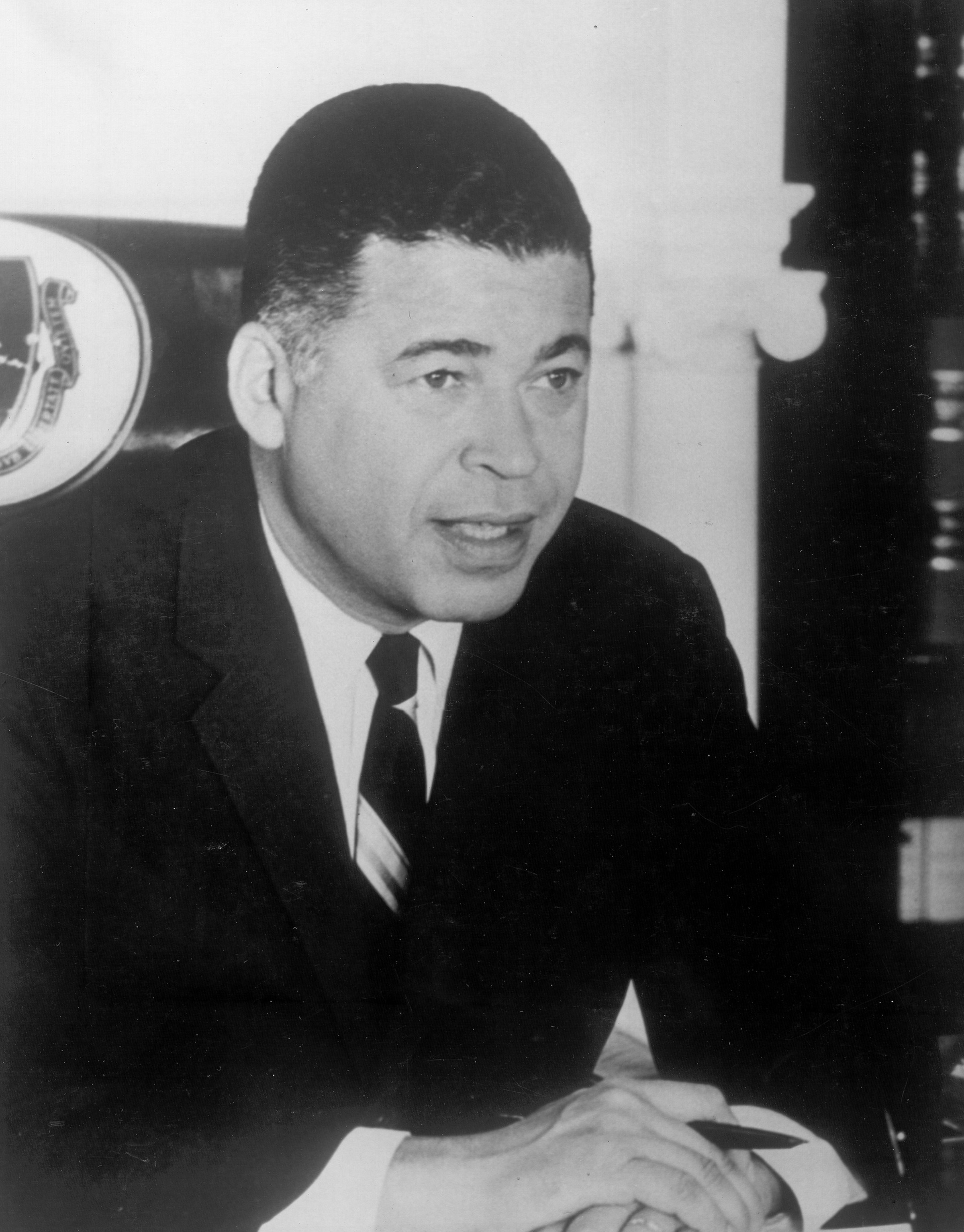 |
| Former US Senator Edward Brooke (wikipedia) |
In an election year that the pummeled Democrats, Republicans actually needed victories in New England beyond New Hampshire. Few thought that they could ever return to their pre-JFK strength in Massachusetts, but at the very least they would like an 80's sized minority and a solid gubernatorial win. It would have made them competitive in New England generally to hold the line when the GOP loses the districts they otherwise won this year. Remember, when Democrats lost the House in 1994, the GOP already held seats in Connecticut and Massachusetts that Dems won in 2010 by healthy margins.
Just as importantly, it calls into question the GOP's chances for non-Gubernatorial statewide races. Treasurer is the only non-Gubernatorial Constitutional office (held by Joe Malone, who lost the Republican nomination for the 10th Congressional district to Jeff Perry) Republicans have won in 40 years. Before that Elliot Richardson was the last Republican elected for another statewide office, Attorney General. His last elected predecessor? Edward Brooke, the first black Senator since Reconstruction and also the last Republican Senator from Massachusetts until...
...Scott Brown. The telegenic captain of the New England Republican advance still stands, safely two years removed from reelection, the bodies of his Bay State comrades largely strewn all about. Looking over his shoulder, Brown now has the target on his back.
 |
| Sen. Scott Brown (Boston Herald) |


 Posts


